
Let’s Face This Together

Dear Friends of The Center: Our doors have been closed since March 14, and our team misses the in-person interaction with our community. We send strength and love to all of you. Over the past two weeks, we have made a swift pivot to taking our mission and programs online. We’re offering story times and singalongs for kids, organizing education workshops on civil rights history, and hosting a Lunch and Learn series that will introduce you to individuals responding to COVID-19 with a focus on human rights. This is something we need to do individually – and collectively. The coronavirus, and the response to it, raises a range of critical human rights issues: access to health care, to an income, to shelter, to education. It forces us to reexamine the obligations a government has to protect the health and security – the basic rights — of its people as well as the responsibilities we have to each other. The epidemic’s devastating path shows how deeply interconnected we are, and how interdependent. Our response must use this connection, and sense of community, as a strength. Finally, we confront a villain that doesn’t discriminate; COVID-19 attacks people regardless of their race or religion or economic standing. In all the ways we respond, we — and our government — must not discriminate either. Please join us for the conversation (digitally for now!). We will face this together. Best,
Statement on the passing of Rev. Dr. Joseph E. Lowery

We mourn the passing of civil rights legend, Rev. Dr. Joseph E. Lowery, and send our deepest condolences to his family and colleagues. We also celebrate his extraordinary life, the movements for justice he built, the leaders he inspired and his love for Atlanta. A world renowned pastor, leader, and activist, Dr. Lowery, dedicated his life to advancing the cause of civil and human rights. Part of his work for the cause included his leadership — along with his wife Evelyn Lowery — in the creation of our institution, the National Center for Civil and Human Rights. Dr. Lowery’s passing reminds us of our profound responsibility to ensure the march continues and to nurture the next generation of advocates for justice. We are forever grateful for his visionary leadership. Considered “the Dean” of the Civil Rights Movement, Dr. Lowery helped found the Southern Christian Leadership Coalition alongside fellow pastor Dr. Martin Luther King Jr., working closely with lifelong friends Ambassador Andrew Young and Congressman John Lewis to end injustice and ensure equality. A brilliant strategist and orator, Dr. Lowery understood the complexity of the entrenched obstacles to progress. Long after the accomplishments of the Civil Rights Movement, Dr. Lowery continued his leadership and advocacy — for prison reform, economic empowerment, marriage equality, and peace. An Atlanta icon, he wielded the soft power of the counselor, helping the city evolve from its historic past. Unafraid to commit his life to justice, Dr. Lowery was shot at by the Klu Klux Klan. He was arrested many times and escaped a hotel bombing. He was an early supporter of President Barack Obama and gave the benediction at his inauguration. Having awarded Dr. Lowery the Presidential Medal of Freedom, Obama later noted, “he carried the baton longer than most.” As we mourn Dr. Lowery’s passing, we celebrate his life, and hold his work as an example and a reminder of the power we each hold to create a more just and humane world.
Alina Diaz

In 2019, Alina Diaz was a Power To Inspire Honoree at the National Center for Civil and Human Rights 2019 Power To Inspire Annual Gala. I believe in social justice and the need to fight for a better world for all. Across the United States, hundreds of thousands of immigrant women and girls work under difficult conditions to produce the food Americans eat. Because of language barriers, geographic isolation, or their legal status, employers or supervisors prey on many of these women and girls, exploiting their vulnerability by demanding sex. Some victims are too ashamed to come forward. Others have trouble navigating the legal system or fear they will be fired, and many cases are never reported because the women are in the United States illegally and they believe they will be deported if they report they have been sexually assaulted. Alina Diaz was vice-president and a founding member of Alianza Nacional de Campesinas and continues as a member of this organization to promote the rights of women farmworkers in the United States, the first of its kind. Drawing on her own experience of abuse and poverty as an unauthorized immigrant from Colombia, Alina became a community educator. Today, she travels to immigrant communities, raising awareness among women about their right to report domestic violence, sexual abuse, and other mistreatment. She helps to make sure the voices of women farmworkers are heard at the national level, where she works to educate policy makers and the public about the dangers women farmworkers face. Learn more about Alina Diaz’s story from The Marshall Project
Joan Trumpauer Mulholland: More Than An Ally
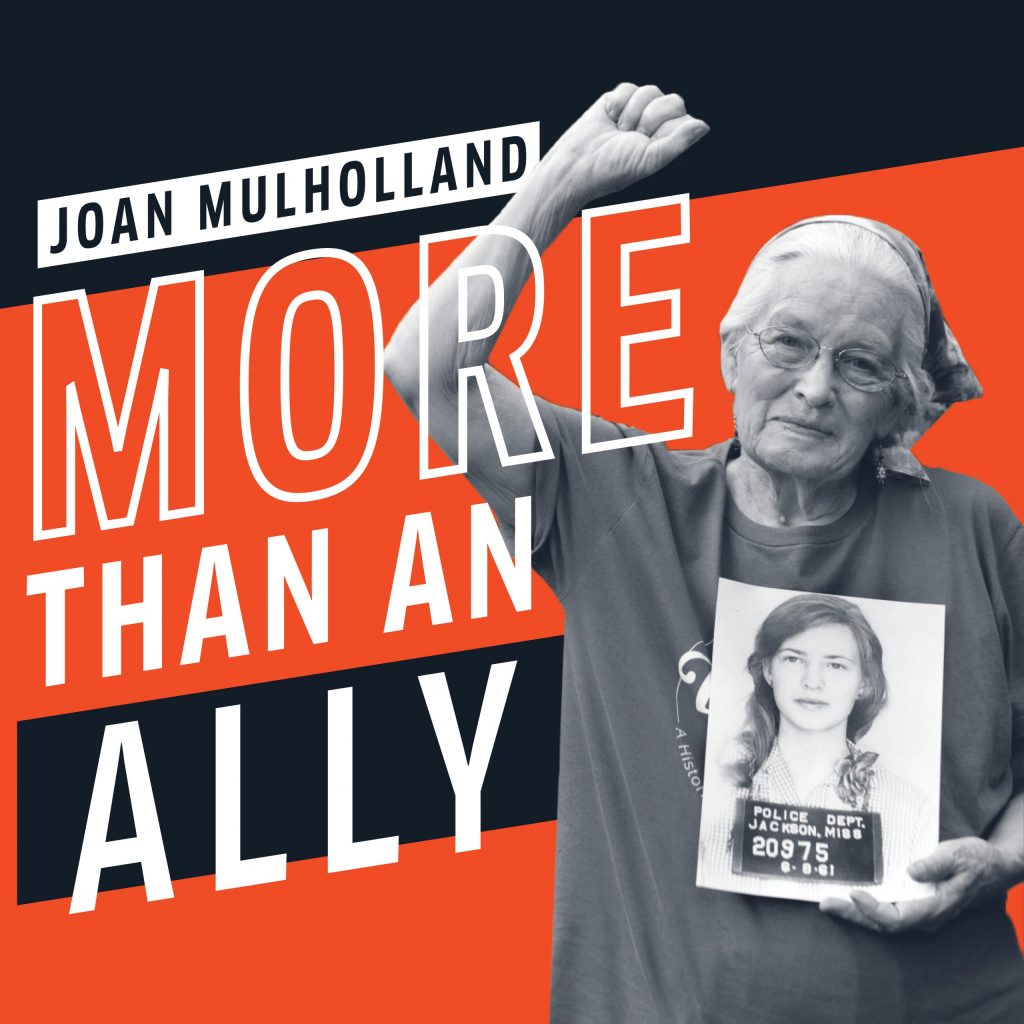
At an early age, Joan Trumpauer Mulholland realized that she needed to be an agent for change and fight for racial equality. As a student at Duke University in 1960, Joan began her life as a civil rights activist, participating in sit-ins and supporting organizations like the Nonviolent Action Group, to the disapproval of her family and the schools administration. After dropping out of Duke, Mulholland joined the Freedom Rides in 1961, and found herself sentenced to Parchman Prison in Mississippi for two months for her participation. She refused bail, and had her sentence extended until she could pay the $200 fine leveled against her as well. Once freed from Parchman, Mulholland continued her activism, integrating Tugaloo College in Mississippi as the first white student and becoming the first white member of Delta Sigma Theta Sorority, Inc. From sit-ins to Freedom Summer training, if there was an opportunity to help the Civil Rights Movement and fight for justice and racial equality, Joan was there. She was alongside Anne Moody in Jackson when counter protesters doused them with food and beverage at Woolworth’s, assisted with the organization of the March on Washington and participated in the march from Selma to Montgomery. Joan Tumpauer Mulholland was and continues to be an example of what ally ship truly embodies, and is able to share those lessons with young people today through the Joan Trumpauer Mulholland Foundation, which “seeks to eradicate racism through education” Learn more about Joan Trumpauer Mulholland and other Fearless Women at The Center. Plan your visit today and experience how we’re more than a museum. STAY CONNECTED WITH THE CENTER & GET THE MOST UP-TO-DATE INFORMATION ON SOCIAL BY FOLLOWING US @CTR4CHR #FEELTHEPOWER
Eleanor Roosevelt: More Than A First Lady

Eleanor Roosevelt, born into New York’s aristocracy, became an advocate for justice after working in tenements as a young woman, and guiding America through the Great Depression and World War II as First Lady. She led in the creation of the Universal Declaration of Human Rights, “UDHR”—the “bill of rights” for humankind that launched the modern human rights movement. Despite being born into a life of privilege, Eleanor Roosevelt always felt like an outsider. After a boarding school education in London, Roosevelt had hoped to go to college and become a teacher, however, her family forbade her. Instead, she served needy families on New York City’s Lower East Side, mentored by women in the settlement house movement who taught her how to confront issues like poverty, protecting workers, and equity in education. Roosevelt married her distant cousin Franklin Delano Roosevelt, “FDR,” in 1905. As FDR ascended in his political career—through elected and appointed offices of increasing influence—Eleanor Roosevelt honed her skills as an organizer, especially for women’s rights, labor and racial justice. When the Roosevelt’s entered the White House during the Great Depression, Eleanor Roosevelt helped shape the New Deal to ensure a social safety net for a destitute nation, fought for refugees escaping Nazism to receive protection in America, and forcefully lobbied her husband on racial justice issues. After her husband’s death, Eleanor Roosevelt launched an entirely new career, leading the effort at the United Nations to create the Universal Declaration of Human Rights, which outlined a standard of basic human dignity that all governments are obligated to protect. In a masterstroke of diplomacy at the start of the Cold War, Eleanor Roosevelt ensured that the UDHR included civil and political rights as well as social and economic rights. Throughout her life, Eleanor Roosevelt worked tirelessly for racial justice for African Americans. She served on the board of directors of the NAACP and was the first donor to the Student Nonviolent Coordinating Committee. When she died, Dr. Martin Luther King, Jr., wrote to Eleanor Roosevelt’s family that “her life was one of the bright interludes in the troubled history of mankind.” Learn more about Eleanor Roosevelt and other Fearless Women at The Center. Plan your visit today and experience how we’re more than a museum. STAY CONNECTED WITH THE CENTER & GET THE MOST UP-TO-DATE INFORMATION ON SOCIAL BY FOLLOWING US @CTR4CHR #FEELTHEPOWER
Letter From Birmingham Jail
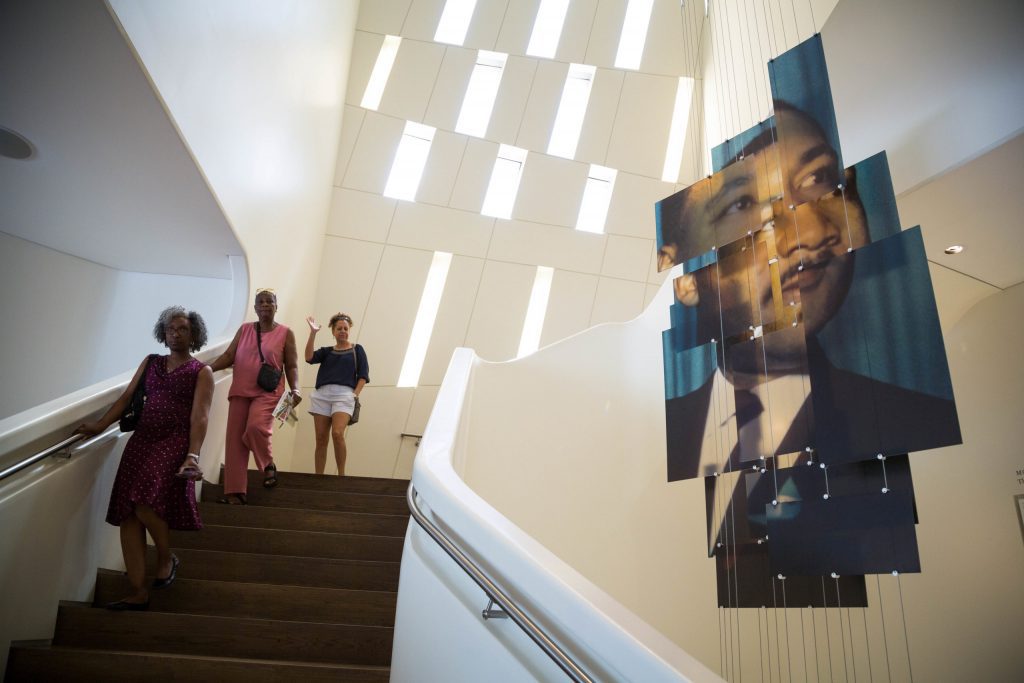
Letter from A Birmingham Jail: The Martin Luther King, Jr. Research and Education Institute, Stanford University. On April 12, 1963, Martin Luther King, Jr., Ralph David Abernathy, Fred Shuttlesworth and many others were arrested and jailed during the massive civil rights protests in Birmingham. While King was imprisoned, eight white clergymen published a letter entitled “A Call for Unity”, accusing King and others of being “outsiders” who should avoid street demonstrations and rely on legal strategies in the courts to achieve desegregation. King responded writing his famous “Letter from the Birmingham Jail.” Declaring that he was tired of waiting for change, King insisted that nonviolent direct action was consistent with his Christian faith since “one had a moral responsibility to disobey unjust laws.”
Freedom Summer—Mississippi Voting
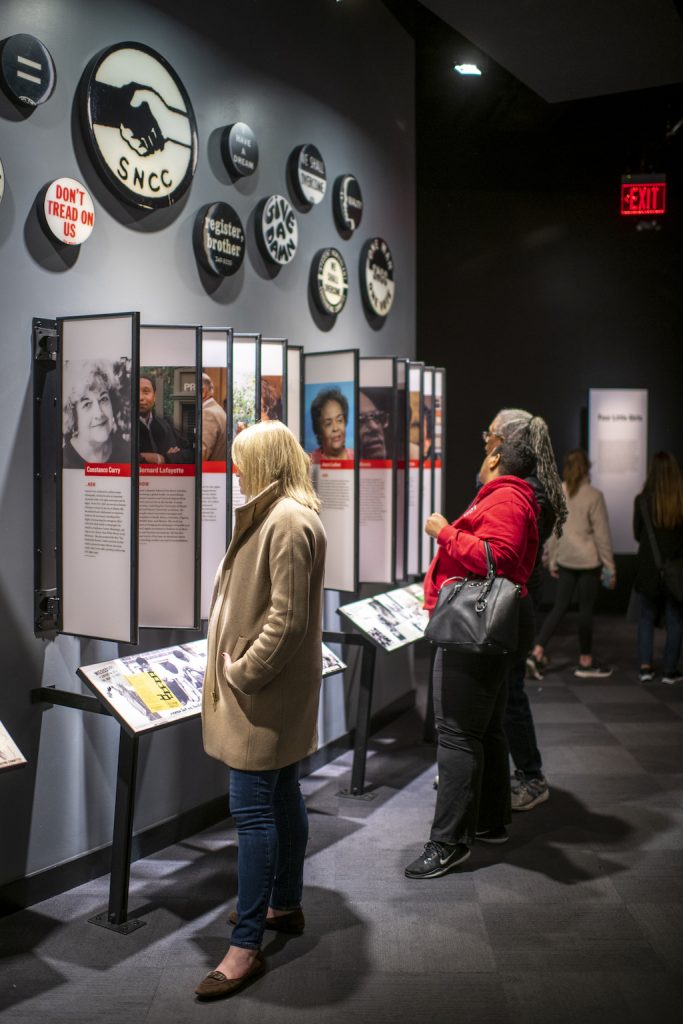
Simmons – Mississipi Voting-HDV 1080i60 from NCCHR on Vimeo. Of course, in the state of Mississippi for the most part, African American people could not register to vote. There were all kinds of ways to prevent that from happening; from just sheer terror to you know counting the number of marbles in a jar, and just all kinds of ridiculous things, so one of the plans that we had for Mississippi’s Freedom Summer was that we were going to show to the world, particularly to the United States, that if black people could register to vote, they would. They would register, and they would vote. And the way we opted to do that was to have mock voter registration, so that people could come and register in a safe place. We would have all the forms, and there would be no repercussions. And then we were going to have elections where they would vote for delegates to the Mississippi Freedom Democratic Party. People understood that we were planning to challenge the regular Democratic Party for those seats, in Atlantic City, where the Democratic National Committee — Convention was being held. So people knew what we were doing. They knew that this was a plan for us to take over the Democratic Party in the state of Mississippi, if we could, and they were all for it. So to me, this was, I mean you know one of the things we taught in the freedom schools was about citizenship you know, and the Constitution and what it meant, and how the government operated at the national level, at the state level. So we had to do a lot of teaching people what it all meant, why voting was so important. And believe you me, those folk who were already a part of the NAACP and activists, they knew. They were very aware. And some of these men who became involved were veterans, so we had that kind of grouping of people there. So it was just an incredible exercise and on the days of the elections, just to see people coming and the box sitting there and people putting their ballots in there, and you know we had refreshments; it was like a very festive kind of occasion and the fact that we had, as a part of our freedom school, literacy classes. So we had people who didn’t read or write coming in the evenings to learn how to do that. But the hunger for knowledge that people had for how our government operates, for how it should operate, that was so inspiring to me just to see that. And so people were not only from Laurel but out in the county — farmers, and others who came in to participate. So it was just so inspiring, just wonderful to be a part of that, and what it taught me about the power of people if you give them information, if you give them just a little bit of help.
Freedom Riders
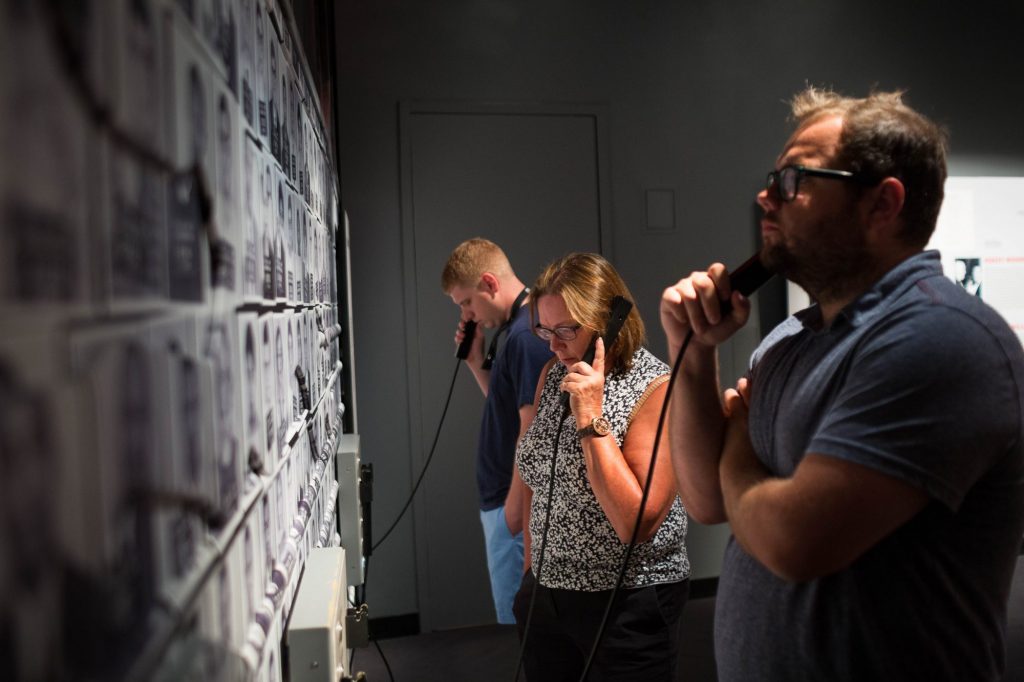
Even though federal courts in 1960 had outlawed segregation on interstate travel, many Southern states simply ignored the rulings. A band of young men and women, many of them trained veterans of the sit-ins and other nonviolent protests, took it upon themselves to act. They began boarding buses in May 1961, pressuring the federal government to enforce existing laws. Uncertain of their fate, many had written their last letters to family and friends in case they were killed. On May 14, near Anniston, Alabama, one of the buses was firebombed. Crowds mobbed another bus in Birmingham, badly beating many Freedom Riders, both black and white. While the initial Freedom Ride protest was called off, veterans of the Nashville sit-ins launched a new set of rides, despite the threat to their safety. They encountered hostile mobs again in Birmingham and Montgomery before ending their trip in Jackson, Mississippi, where they were arrested and transferred to the Parchman Farm Mississippi State Penitentiary. Throughout the summer hundreds of new Freedom Riders descended upon Jackson, only to be arrested and sent to jail. Rather than break the spirit of the Freedom Riders, jail fortified their resolve and defiance. College students and other protestors from around the country continued to put themselves on the line and risk prison-or worse. As a result, the national media began to give the Freedom Riders more extensive and favorable coverage. Meet the Freedom Riders
Dr. Denis Mukwege
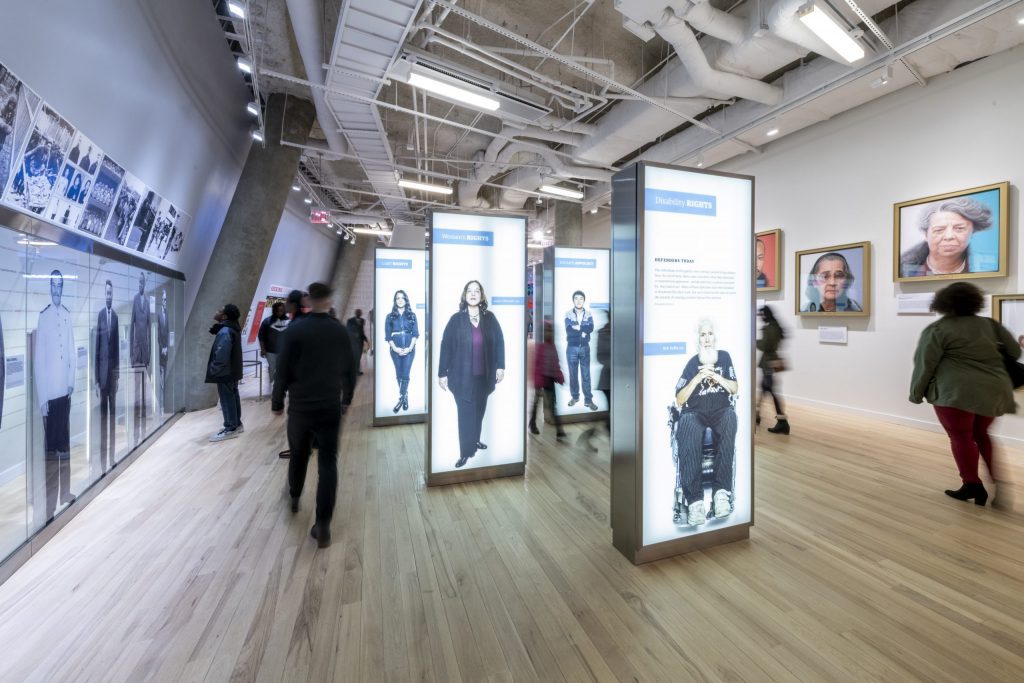
In 2018, Dr. Mukwege won the Nobel Peace Prize with Nadia Murad for “their efforts to end the use of sexual violence as a weapon of war and armed conflict” His consistent work. Dr. Denis Mukwege is a Congolese gynecologist who has devoted years to treating women who have been traumatized by rape and calling for those who commit this crime to be brought to justice. In 2012, Dr. Mukwege gave a speech at the United Nations condemning the lack of accountability for rate in Congo, openly criticizing the international community, armed groups, and the Congolese government. In 2012, Dr. Mukwege survived an assassination attempt during which his bodyguard was killed. He and his family fled Congo, but returned in 2013 to continue his work at Panzi Hospital, where he and his colleagues provide medical and psychological care for thousands of survivors. The work of Dr. Denis Mukwege & other physicians in Congo was recorded by Platon & The People’s Portfolio. You can read the story here. My Body is Not a Weapon – Trailer – Dr. Denis Mukwege from The People’s Portfolio on Vimeo. Learn more about Nobel Prize Winner, Dr. Denis Mukwege from TIME Magazine.
Freddy Mutanguha
Freddy Mutanguha is the executive director for the Ageis Trust, an organization whose mission is the prevention of genocide through education. In this capacity, he runs the Kiagali Genocide Memorial in Rwanda. Mutanguha survived the 1994 genocide as a teenager, losing his parents and four sisters. While taking care of a younger sister, he worked his way through school to become one of the leading advocates for peace and human rights education in Rwanda The issue: The Rwandan Genocide In just one hundred days—between April and July 1994—roughly a million Rwandans, mostly members of the Tutsi minority, were murdered when the extremist Hutu-led government launched a plan to wipe out the country’s entire Tutsi population. Violence spread with lightning speed. Group of Tutsi and moderate Hutu who feared they might be targeted fled to church. To learn more about the Rwandan Genocide, please visit the Genocide Archive of Rwanda. Commemorate the Day of Remembrance of the Victims of the Rwanda Genocide on April 7th.