
Arthur M. Blank’s Proceeds from Forthcoming Memoir, “Good Company,” Going to The National Center for Civil and Human Rights

BLANK TO MAKE INITIAL CONTRIBUTION OF $300,000 AS PART OF BOOK’S DEBUT ATLANTA (June 24, 2020) – Arthur M. Blank’s personal proceeds from his book, GOOD COMPANY, will be donated to The National Center for Civil and Human Rights in Atlanta, Georgia. GOOD COMPANY, which shares a vision and roadmap for values-based business by The Home Depot co-founder, philanthropist, and businessman will be published by William Morrow, an imprint of HarperCollins Publishers, on September 15, 2020, and is available now for pre-order at www.arthurblank.com. Blank’s proceeds will go to The Center in perpetuity with an initial contribution of $300,000 to celebrate the memoir’s publication this fall. The Center, located in the heart of downtown Atlanta, is an engaging cultural museum that connects the American Civil Rights movement to today’s struggle for global human rights and has worked closely with the Arthur M. Blank Family Foundation over the years, beginning with initial funding of The Center. “The Center stands for everything I personally believe in as it relates to educating, building community, and fostering the principles of inclusion and fairness,” Blank said. “It is not only important to Atlanta but for our entire world and our support of the center from the beginning has been a natural extension of our family foundation and family of businesses. At this time, it is abundantly clear The Center’s mission remains important and imperative to the ongoing challenge of achieving equality, justice, and the very ideals of freedom for all. I’m honored to support that mission in any way I can.” “The Center is honored to receive this most generous, lasting gift from Mr. Blank,” said Jill Savitt, the CEO and President of The National Center for Civil and Human Rights. “This support is the latest example of Arthur’s long-standing commitment to The Center – which began when we were just an idea more than a decade ago. Arthur and his family enabled us to build our museum and create its programs— which for six years have been inspiring visitors to tap their own power to promote rights and justice for all.” About Arthur M. Blank – Owner and Chairman, Blank Family of Businesses Perhaps best known as co-founder of The Home Depot, Arthur Blank is now widely recognized for his diverse businesses. He was distinguished by Forbes as one of the World’s 100 Greatest Living Business Minds in 2017, Sports Business Journal’s Executive of the Year in 2018, and Sports Business Journal’s one of the 50 Most Influential People in Sports in 2016, 2017, and 2018. In addition to the Blank Family Foundation, Blank’s Family of Businesses includes the Atlanta Falcons and Atlanta United; the nationwide PGA TOUR Superstore; three ranches in Montana, Mountain Sky Guest Ranch, West Creek Ranch and Paradise Valley Ranch; and Mercedes-Benz Stadium, which hosted the 2019 Super Bowl and is home to the Falcons and Atlanta United. Since 1995, the Arthur M. Blank Family Foundation has granted more than $560 million to support early childhood development, education, the arts, veteran-causes, and parks and greenspace. The foundation also leads to giving programs for each of the for-profit businesses in Blank’s portfolio. Through his Foundation and businesses, Blank has donated nearly $7 million to COVID-19 pandemic relief. A native of Queens, N.Y., Blank resides in Atlanta, Georgia, and is the father of six children and has six grandchildren. About The National Center for Civil and Human Rights The Center is a six-year-old museum and cultural institution in Atlanta, the birthplace of civil rights in America. The dynamic storytelling in the exhibitions connects US civil rights history to global efforts to protect the rights of people of color, women, immigrants, people with disabilities, LGBTQ+ people, and others today. The Center’s education resources, trainings, and engagement programs inspire reflection and understanding and galvanize individuals to take action to protect rights and strengthen our democracy. About HarperCollins HarperCollins Publishers is the second-largest consumer book publisher in the world, with operations in 17 countries. With 200 years of history and more than 120 branded imprints around the world, HarperCollins publishes approximately 10,000 new books every year in 16 languages and has a print and digital catalog of more than 200,000 titles. Writing across dozens of genres, HarperCollins authors include winners of the Nobel Prize, the Pulitzer Prize, the National Book Award, the Newbery and Caldecott Medals, and the Man Booker Prize. HarperCollins, headquartered in New York, is a subsidiary of News Corp (Nasdaq: NWS, NWSA; ASX: NWS, NWSLV) and can be visited online at corporate.HC.com. Media Contacts: Shani Drake Director of Public Engagement & Marketing National Center for Civil and Human Rights [email protected] James Richards National Center for Civil and Human Rights [email protected] 646.789.1375
The National Center for Civil and Human Rights commemorates and celebrates Juneteenth

“The people of Texas are informed that in accordance with a proclamation from the Executive of the United States, all slaves are free,” wrote Major General Gordon Granger 155 years ago in General Order Number Three. This freedom, he continued, “involves an absolute equality of rights and rights of property between former masters and slaves.” Granger’s Order enforced the Emancipation Proclamation signed by President Abraham Lincoln in 1862. Enslaved men and women in the Confederate States became free on January 1, 1863. These two documents, and the passage of the 13th Amendment, helped solidify the end of enslavement in the United States. Despite the passage of a century and a half, the struggle for equality is not near complete, as events all around us so painfully reveal. On this day, The Center honors those who have paved the way and celebrates the achievements of African American history and culture as we call for a renewed commitment to creating a world filled with equity, equality, and justice. Juneteenth celebrations and actions are taking place across Atlanta this weekend, though some customary events have been postponed due to COVID-19. While our museum is still closed, our Center’s staff will end operations early this Friday to give our team the opportunity to take part in Juneteenth traditions and reflect on the continued fight for freedom. Enjoy this reading of Henry’s Freedom Box, by Ellen Levine, from Education Programs Coordinator, Jasmine Waters Page, in partnership with the Atlanta History Center, with permissions from Scholastic. About the National Center for Civil and Human Rights The National Center for Civil and Human Rights is a vibrant museum and cultural institution in Atlanta. Our immersive and powerful exhibitions connect US civil rights history to the global struggle for human rights around the world today. We are one of the only institutions in the world where the papers and artifacts of Dr. Martin Luther King, Jr. are on permanent display. Our engaging events and conversations, education, and advocacy training bring together leading thinkers on advancing rights. For more information, visit civilandhumanrights.org. Join the conversation on civil and human rights on @ctr4chr (Twitter) and @ctr4chr (Facebook) Media Contacts: Shani Drake Director of Public Engagement & Marketing National Center for Civil and Human Rights [email protected] James Richards National Center for Civil and Human Rights [email protected] 646.789.1375
Statement of Jill Savitt, CEO of The National Center for Civil and Human Rights

We start our week against a backdrop of pain and injustice in our country because of the recent murders of black men and women by vigilantes and law enforcement. There is deep suffering all around us. This despair is showing itself in protests that have included violence—because of a lack of justice and accountability for these murders. Like racial discrimination more broadly, this injustice is not new – it has been with us from the founding of our country. The murders of Ahmaud Arbery and George Floyd and Breonna Taylor are just the most recent reminders that we live in an unjust and unequal society. Had some of these deaths not been captured on film, many people would have just gone on with our lives, as we have so many times before. The explosion of outrage we are seeing in cities across the country is the predictable result of unpunished crimes. The Center believes nonviolence is always the best response – morally and strategically. When making this case himself, Dr. King sheds light on the violence we witnessed over the past weekend. “Riots,” he said, “are the language of the unheard.” This outpouring of rage and grief is not only about the death of George Floyd and Ahmaud Arbery and Breonna Taylor, it’s about Eric Garner and Trayvon Martin and Tamir Rice and what has become a tragically long list of victims and a policing community that has resisted calls, over decades, for reform. It is also about what the coronavirus has revealed to us. Covid-19 has made it starkly clear that some people in our country are safer than others. The individual deaths and the disproportionate impact of the coronavirus on African Americans, on immigrants, and poor people make it deadly clear that one’s security in America is largely determined by your race and your income. These deaths are the results of years of discrimination and disinvestment. That’s not how democracy is supposed to work. Democracy is supposed to recognize everyone as equal before the law, that we are all born with rights and dignity that our government and our law enforcement officials are obligated to protect these rights. In our social contract – the agreement between the government and the governed – our leaders’ most fundamental duty is to keep people safe. Our democracy is broken. The question is, what do we do now? Can we change this dangerous path we are on? The simple answer is yes. There’s no other option. We can and we must. And we know how. The exhibitions in our Center tells the story of how committed individuals transformed our country – ending segregation under the law. They tell how advocates around the world are waging campaigns for freedom. Human rights provide the way forward. But only if we act. The change will only come when we – we, the people, all of us – demand it. Today we launch a campaign – the Campaign for Equal Dignity. Our goal is to galvanize people – you, your friends and family, and their friends and family – to demand equality for all. You can go to equaldignity.org to get started. In undertaking this campaign, we offer a special word for my fellow white people. George Floyd was killed because he was black. The same is true for all of the others I listed earlier. All of their killers were white. White people have a special responsibility right now to demand justice – to make clear these killers do not represent us or our values. Our African American friends and neighbors are tired of doing this work alone. We need to stand together, as human beings and people of conscience. As Dr. King said: “In the end, we will remember not the words of our enemies, but the silence of our friends.” The division and inequality in our country won’t be solved overnight. But I guarantee you it won’t be solved at all unless we act — together — to re-animate our core national values of a government by the people, for the people that demands the promise of equality and justice for all is made real for everyone.
The National Center for Civil and Human Rights Presents 2020 Power to Inspire Honorees

Due to COVID-19, The Center’s sixth annual event will happen live online at https://www.thecenterpowertoinspire.org through June Atlanta, Ga. (May 19, 2020) – The National Center for Civil and Human Rights (The Center) will present its sixth annual Power to Inspire awards, recognizing individuals who promote justice and equality by protecting human rights. Due to COVID-19, The Center will honor recipients through a series of live interviews, video profiles, and educational content beginning Thursday, May 21, and running through June. The 2020 Recipients: Mari Copeny (a.k.a. Little Miss Flint) is a 12-year-old activist who focused the nation’s attention on the water crisis in Flint, MI and continues to advocate for safe water. Katie Fahey, Executive Director of The People, led a movement to successfully ban partisan gerrymandering in Michigan and now runs an organization that breaks down the barriers to participation in government. Denis Mukwege is the founder and medical director of Panzi Hospital in the Democratic Republic of the Congo (DRC), and an advocate for victims of sexual violence. Dr. Mukwege, who is featured in The Center, won the 2018 Nobel Peace Prize. The Center’s CEO Jill Savitt will interview each honoree, starting with Mari Copeny Thursday, May 21, at 12 pm ET and Katie Fahey Friday, May 29, 12 pm ET. Details and registration information can be found at https://www.thecenterpowertoinspire.org. “The advocates we honor saw a wrong in the world and assigned themselves to address it – just like the individuals whose stories we tell at The Center,” said Savitt. “As the coronavirus exposes how divided and grossly unequal our society has become, The Center hopes our honorees can inspire all of us to recommit to tapping our own power to fix what’s broken.” Previous recipients of the Power to Inspire award include, former Vice President Joe Biden, Dr. Bernice A. King, filmmaker and literary scholar Dr. Henry Louis Gates Jr., migrant women farmworker rights advocate Alina Diaz, inter-faith activist Sherry Frank and Argentine human rights activist Estela Barnes de Carlotta. 2020 Power to Inspire Recipients For the last six years, Mari Copeny (aka Little Miss Flint) has been an advocate and champion for the city of Flint, Michigan, raising over $500,000 to bring clean water to thousands of children and families. Her campaign to protect the human rights of the residents of Flint is an example of the power that individuals have to inspire positive change in the world. The Center recognizes Mari as a 2020 Power to Inspire Award recipient for her efforts to provide clean water for the community of Flint and beyond. On Thursday, May 21st, Jill Savitt will interview Mari about her new campaign to bring state of the art water filters to communities impacted by poor water quality. Katie Fahey served as founder and Executive Director of Voters Not Politicians, a grassroots, nonpartisan campaign that ran a successful effort to end partisan gerrymandering in Michigan by amending the State Constitution in 2018. Responding to extreme divisiveness in politics following the 2016 election, Katie posted on Facebook, asking if anyone would join her in taking on partisan gerrymandering. Almost by accident, she started a political movement. The campaign mobilized more than 10,000 volunteers to collect 425,000 petition signatures from the state’s 83 counties — without spending a dime. Katie now runs The People, an organization that breaks down the barriers to participation in government to make the government more responsive to the popular opinion of the American electorate. The Center recognizes Katie as a 2020 Power to Inspire Award recipient for her work to unite Americans and uphold democratic ideals. On Friday, May 29th, Jill will interview Katie about her work to unite all citizens to advocate for non-partisan political reform. Dr. Denis Mukwege is a world-renowned gynecological surgeon who is the founder and medical director of Panzi Hospital in Bukavu, Democratic Republic of the Congo (DRC). Dr. Mukwege decided to specialize in gynecology and obstetrics after observing that female patients at Lemera Hospital suffered from insufficient medical care, which caused complications during their deliveries. He founded Panzi Hospital in 1999 as a clinic and expected to be working on issues of maternal health. Since 1999, however, Dr. Mukwege and his staff have helped care for more than 50,000 survivors of sexual violence. When Dr. Mukwege saw that the same women were returning for care after multiple assaults, he launched an effort to hold the rapists accountable. His call for justice put him at great risk. He survived an assassination attempt in 2012, but his bodyguard was killed. Dr. Mukwege was awarded the Nobel Peace Prize in 2018. The Center recognizes Dr. Mukwege as a 2020 Power to Inspire Award recipient for his fearless efforts to heal and protect women and bring individuals responsible for acts of sexual violence to justice. About the National Center for Civil and Human Rights The National Center for Civil and Human Rights is a vibrant museum and cultural institution in Atlanta. Our immersive and powerful exhibitions connect US civil rights history to the global struggle for human rights around the world today. We are one of the only institutions in the world where the papers and artifacts of Dr. Martin Luther King, Jr. are on permanent display. Our engaging events and conversations, education, and advocacy training bring together leading thinkers on advancing rights. For more information, visit civilandhumanrights.org. Join the conversation on civil and human rights on @ctr4chr (Twitter) and @ctr4chr (Facebook) Media Contacts: Shani Drake Director of Public Engagement & Marketing National Center for Civil and Human Rights [email protected] James Richards National Center for Civil and Human Rights [email protected] 646.789.1375 Sponsorship opportunities for the Power to Inspire Awards are available. For sponsorship inquiries or general questions please contact Candice Franklin, Head of Development, at [email protected].
Mari Copeny: More Than A Pageant Queen
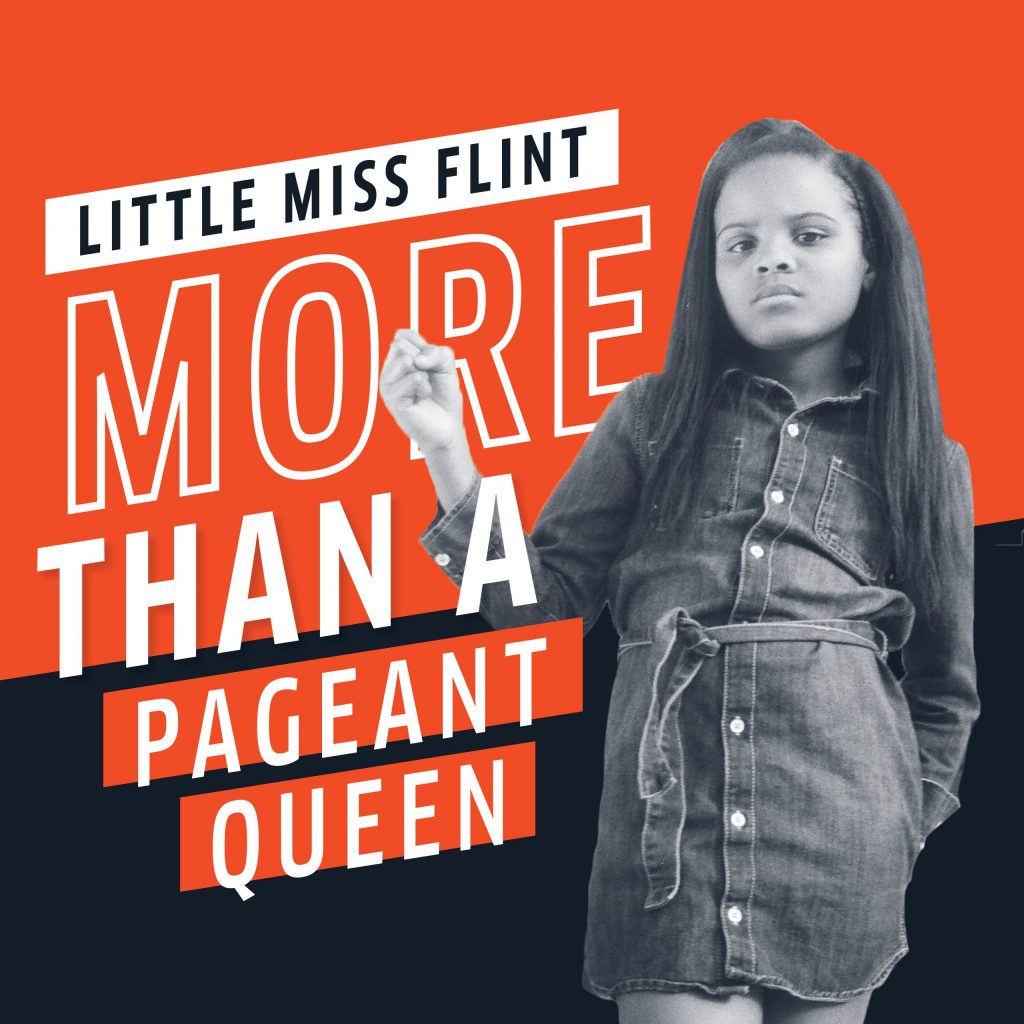
In the small town of Flint, Michigan, in 2016, one child sent a letter to Former President Barack Obama to advocate for environmental change in her community. Unlike many other children growing up in America—she did not have clean water. Her name is Mari Copeny, also known as “Little Miss Flint.” However, she is so much more than a pageant queen. When Mari was young, she participated in pageants, but as she grew and became more aware of her community needs, she became a young activist. Understanding that water & sanitation are human rights, Mari wrote to Obama, who worked with the Michigan state government to eradicate the issue. However, on Friday, April 24, 2020, it will have been six years since Flint had clean water. With this knowledge, Mari has continued fundraising, marching, or lending her voice to say this is not right. Mari could not—and did not—wait for the “adults” to fix the situation. Using her social media networks, she fundraises for water bottles to be donated to her city and participates in Pack Your Back, an organization that donates school supplies to underserved children, and many other community projects for the children of Flint. While she is making amazing strides in her community, we can all do our part to help those in Flint and across the world without access to clean water. Consider following Mari’s #WednesdaysForWater campaign highlighting places around the world that need clean water and donate to the cause. Or even sharing words of encouragement to the #DearFlintKids project. No matter how you help, keep an eye out for Mari as she sets out to change the world. Learn more about Mari Copeny and other Fearless Women at The Center. Experience how we’re more than a museum.
“Our House is on Fire”: Supplementary Materials
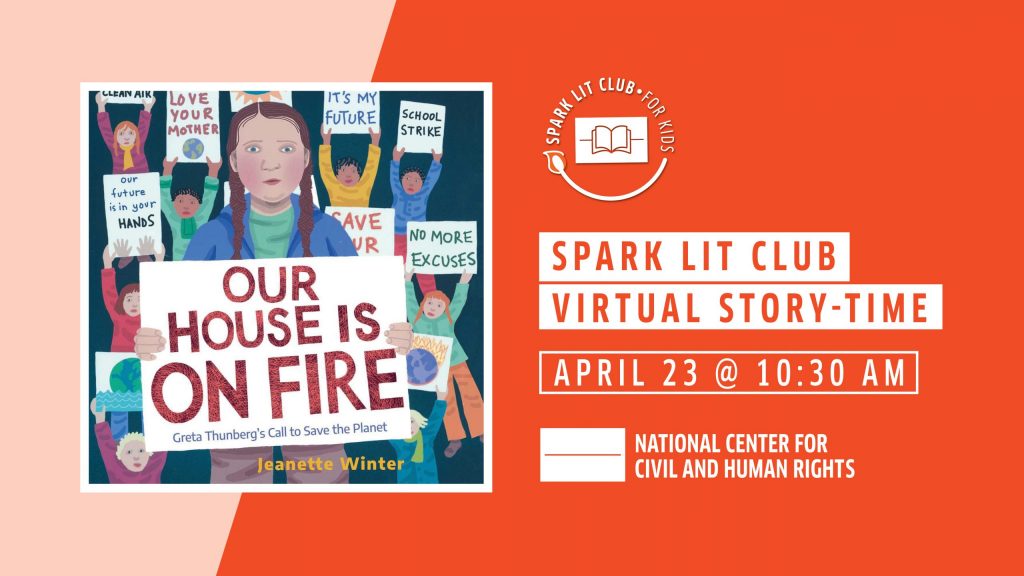
Join us for a reading of Jeanette Winter’s “Our House Is on Fire: Greta Thunberg’s Call to Save the Planet”. Learn the story of Greta Thunberg, the seventeen-year-old climate activist who sparked a worldwide student movement and is demanding action from world leaders who refuse to address climate change. Art engagement and educational activities will be included to continue engaging with the content following the reading! Find the book near you. Download the supplementary materials: Responding to Quotes Make Your Own Protest Sign
The Voice of an Untamed Heart: Victim of Circumstance amid COVID 19

I woke up this morning to rain falling and echoes of my children talking. It is a normalness that I have been accustomed to but soon I remember that it’s Sunday and I will need to flip on the television or log on to my computer for church service. I admit that I do not go to church regularly but having restrictions of not having the option to put on my Sunday’s best, get in my car, and drive to the brick and mortar for communion is unsettling. Unsettling? There are so many things that are unsettling about our times but in my haste to unscramble my thoughts I remember what is familiar—poverty and inequality. I grew up in a 3-bedroom/1-bath home with 8 other family members. I think about what it felt like to always be in close quarters and how there was no escaping to be alone with my thoughts. There was no central heating or air conditioning so, in the summer, flipping my pillow over throughout the night gave me the illusion that I was cooling off. Having two meals was expected and one came from the free lunch program at school. I remember being in the dark due to no electricity but having one meal that day. Having access to a computer was the furthest thing from my mind and getting access to pen and paper was a challenge at best. I not only think about poverty but inequality and how it is not so different. Not having access to food or space is circumstance but it is also the direct effect of inequality that is deeply rooted in the disproportioned world of African-Americans. So many historical facts and events occurred during or before my childhood. My ancestry is hard to define because of constant tragedy from child lynching to fatal collisions and those events were placeholders that championed poverty. I can remember digging my way out of poverty and fighting to become an educated Black woman with a path to success. Because of inequality and poverty, it did not come easy. Now I see an economy that is crumbling and that more than 30% of African-Americans make up the COVID 19 cases in the U.S., according to the Center for Disease Control and Prevention. Let’s be real, this is a direct reflection of working frontline jobs that barely make ends meet that can be tied to lack of education, lack of transportation, and many racial inequalities that affect how we function in society. Ralph Emerson said, “Cause and effect are two sides of one fact”. (Gray 293)The truth is, in this country, poverty is an effect of inequality and inequality is the cause of poverty. I see poor children (just like I was) suffering because their parents have been laid off or they have no transportation to get the one meal that is offered through the school lunch program. I see children that have no access to continuing their education at home (which is a requirement in this state—Georgia) because they have no computer or internet access. I see families living in 3-bedroom/1-bath homes shared by 9 people that, once, had hoped to change their environment and circumstance, now, having to choose between having electricity or eating a meal. I also see these same people not having the ability to gain healthcare that can save their lives. What do their futures look like? How do those children become first-generation college students? How do they recover from the Coronavirus without healthcare? We are at war with a pandemic that has robbed us of social and economic liberties. So, as we shelter in place, COVID 19 is a reminder that social and economic liberties have different definitions—that’s all I am saying. We hold these truths to be self-evident that all men are created equal. Right? References: ABC News, ABC News Network, abcnews.go.com/Health/coronavirus-updates-trump-speak-world-leaders-coronavirus-response/story?id=70178711. Gray, Henry David. Emerson: A Statement of New England Transcendentalism as Expressed in the Philosophy of Its Chief Exponent. Nabu Press, 2010.
“3,585 Miles to be an American Girl”: Supplementary Materials

3,585 Miles to be an American Girl | Supplementary Materials Join us for Nury Crawford’s reading of her book “3,585 Miles to be an American Girl”. An English & Spanish bilingual, children’s book based on one child’s journey to the USA. Have you ever been the new kid in a class, try being the new kid in the country?! The book is a story of family, perseverance and believing in yourself. The program will also include educational activities for students K-3rd grades. Find the book near you. Download the supplementary materials.
Greta Thunberg: More Than A Teenager
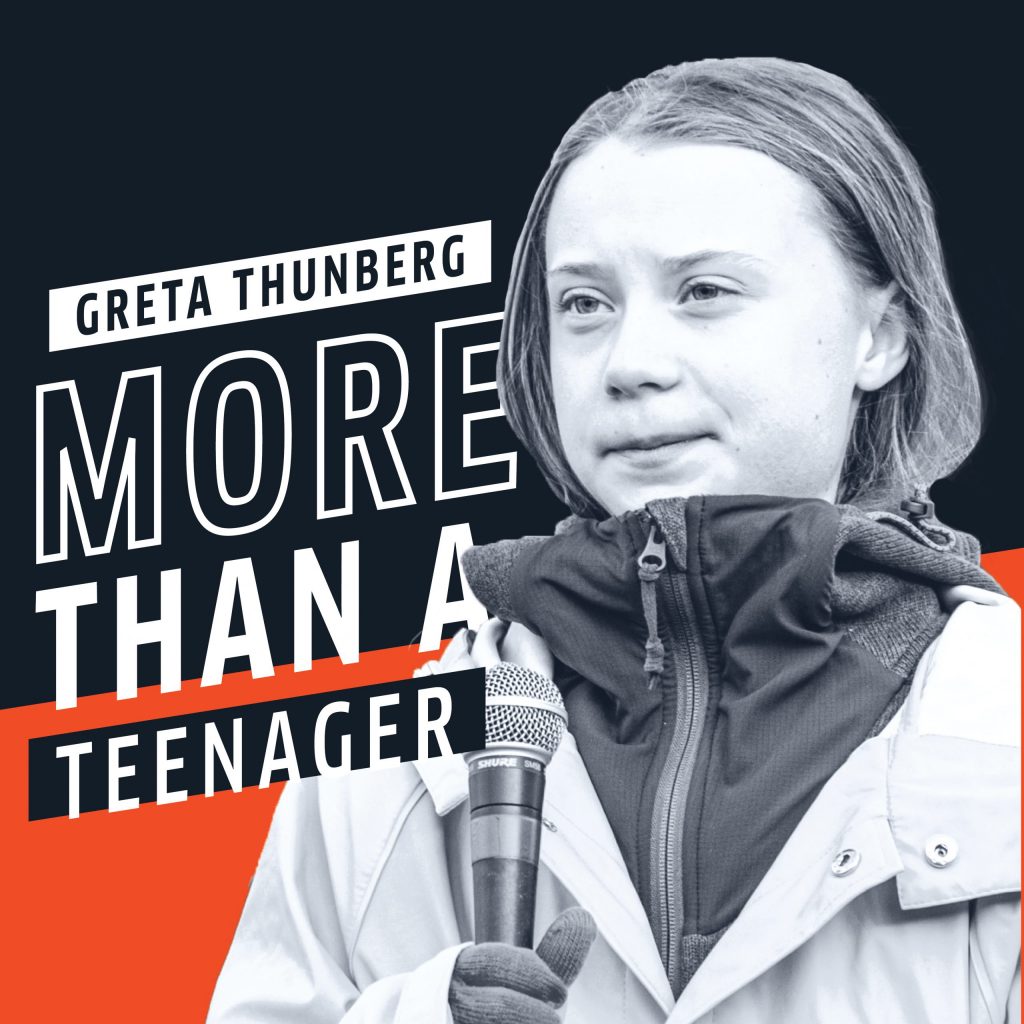
A Swedish teenager ignited a global generational movement to force the world to address climate change. In 2018, Greta Thunberg began her campaign to address the existential threat of climate change by skipping school. Rather than attend class, Thunberg, then 15, spent her school days sitting outside the Swedish Parliament with a sign that said: “School Strike for Climate.” Her goal was to carry out her protest until the Swedish government met the carbon emissions target agreed to by world leaders in 2015 in the Paris Agreement, a landmark global pact setting benchmarks for increasing government action and investment to reducing the use of carbon. From those days, sitting by herself, a movement was born. Media coverage of Thunberg’s protest spread the word — and soon students in other communities and countries launched similar actions. These environmental advocates connected and worked together to organize a worldwide school strike for climate change. Two years after her lonely vigil began, Thunberg had met the Pope, sparred with President Trump on Twitter, and galvanized millions of young people to join and participate in the environmental movement. Last year, Thunberg traveled to the United Nations in New York, by sailboat – to avoid using carbon by flying – to address the 2019 UN Climate Action Summit where she chided world leaders. In an emotional speech, she said: “You have stolen my dreams and my childhood with your empty words. We are at the beginning of mass extinction and all you can talk about is money and fairy tales of eternal economic growth — how dare you!” Thunberg is not only raising awareness, but she also advocates for change. Working with mayors, governors and national decisionmakers, she urges leaders to enact specific policies to slow the pace of climate change. Thunberg has Asperger’s syndrome, a developmental disorder, which causes her to speak with absolute candor. What some people consider a disability, Thunberg calls “a gift” and “her superpower” because it has made her courageous in speaking truth to power about the threats to life on Earth. Learn more about Greta Thunberg and other Fearless Women at The Center. Plan your visit today and experience how we’re more than a museum.
A Note from the Executive Director of IHTI

In critical times, those who are most vulnerable suffer much more than those of us blessed with stable families, support systems, and resources. Some see this as an opportunity to profit off the exploitation of others. During the Corvid-19 pandemic, there are millions of children out of school. Some children are locked indoors with no supervision or, at worst, an abuser. Their parents are facing a mountain of uncertainties. Many are still working, and childcare is not easily accessible. While parents who are at home, are not aware of the increased exposure of their child to predators on online platforms. We can Human Traffick Proof our youth by educating ourselves on how to eliminate the risks online. Please read this article, then act by signing up for free online training at ihtinstitute.org/get-educated schedule to the right. The protection of our children is the International Human Trafficking Institute’s most urgent agenda. View the schedule of events this week.