
Freedom Riders
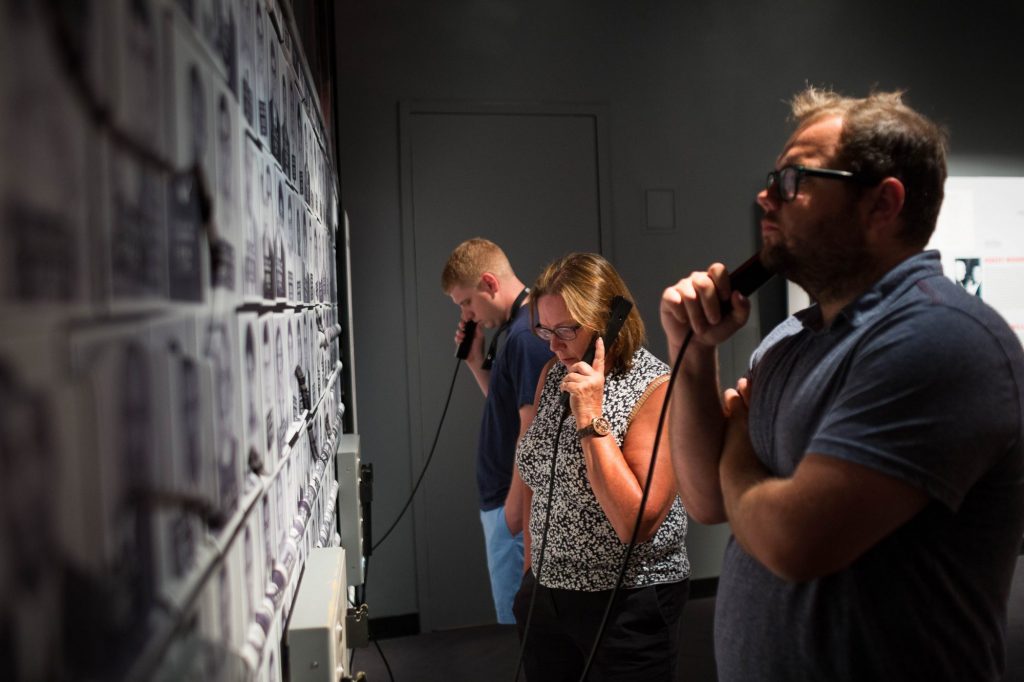
Even though federal courts in 1960 had outlawed segregation on interstate travel, many Southern states simply ignored the rulings. A band of young men and women, many of them trained veterans of the sit-ins and other nonviolent protests, took it upon themselves to act. They began boarding buses in May 1961, pressuring the federal government to enforce existing laws. Uncertain of their fate, many had written their last letters to family and friends in case they were killed. On May 14, near Anniston, Alabama, one of the buses was firebombed. Crowds mobbed another bus in Birmingham, badly beating many Freedom Riders, both black and white. While the initial Freedom Ride protest was called off, veterans of the Nashville sit-ins launched a new set of rides, despite the threat to their safety. They encountered hostile mobs again in Birmingham and Montgomery before ending their trip in Jackson, Mississippi, where they were arrested and transferred to the Parchman Farm Mississippi State Penitentiary. Throughout the summer hundreds of new Freedom Riders descended upon Jackson, only to be arrested and sent to jail. Rather than break the spirit of the Freedom Riders, jail fortified their resolve and defiance. College students and other protestors from around the country continued to put themselves on the line and risk prison-or worse. As a result, the national media began to give the Freedom Riders more extensive and favorable coverage. Meet the Freedom Riders
Dr. Denis Mukwege
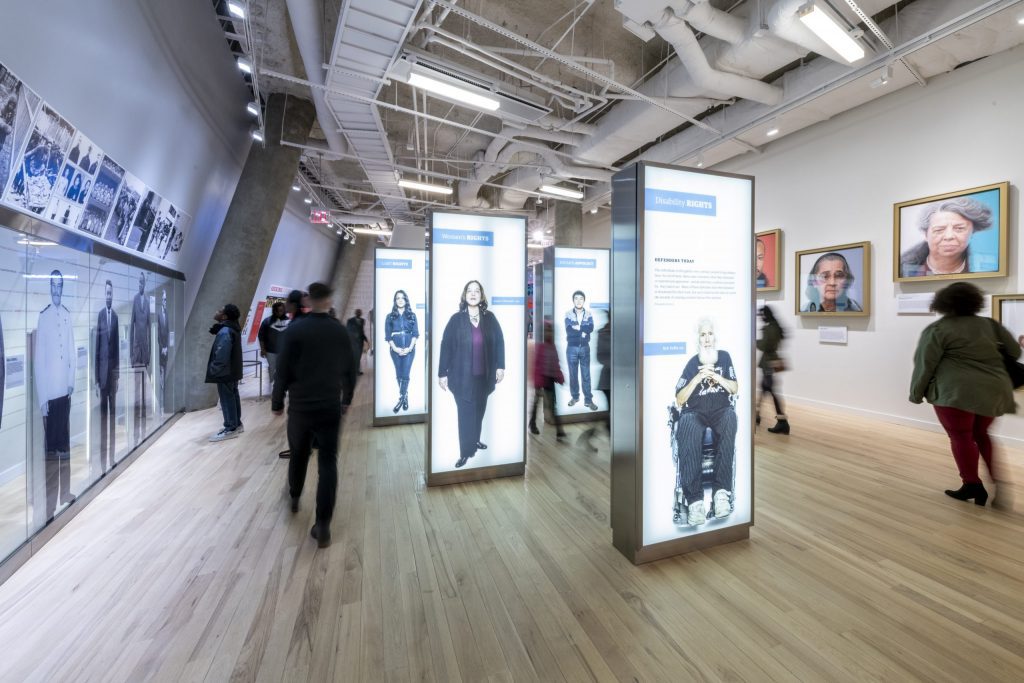
In 2018, Dr. Mukwege won the Nobel Peace Prize with Nadia Murad for “their efforts to end the use of sexual violence as a weapon of war and armed conflict” His consistent work. Dr. Denis Mukwege is a Congolese gynecologist who has devoted years to treating women who have been traumatized by rape and calling for those who commit this crime to be brought to justice. In 2012, Dr. Mukwege gave a speech at the United Nations condemning the lack of accountability for rate in Congo, openly criticizing the international community, armed groups, and the Congolese government. In 2012, Dr. Mukwege survived an assassination attempt during which his bodyguard was killed. He and his family fled Congo, but returned in 2013 to continue his work at Panzi Hospital, where he and his colleagues provide medical and psychological care for thousands of survivors. The work of Dr. Denis Mukwege & other physicians in Congo was recorded by Platon & The People’s Portfolio. You can read the story here. My Body is Not a Weapon – Trailer – Dr. Denis Mukwege from The People’s Portfolio on Vimeo. Learn more about Nobel Prize Winner, Dr. Denis Mukwege from TIME Magazine.
Freddy Mutanguha
Freddy Mutanguha is the executive director for the Ageis Trust, an organization whose mission is the prevention of genocide through education. In this capacity, he runs the Kiagali Genocide Memorial in Rwanda. Mutanguha survived the 1994 genocide as a teenager, losing his parents and four sisters. While taking care of a younger sister, he worked his way through school to become one of the leading advocates for peace and human rights education in Rwanda The issue: The Rwandan Genocide In just one hundred days—between April and July 1994—roughly a million Rwandans, mostly members of the Tutsi minority, were murdered when the extremist Hutu-led government launched a plan to wipe out the country’s entire Tutsi population. Violence spread with lightning speed. Group of Tutsi and moderate Hutu who feared they might be targeted fled to church. To learn more about the Rwandan Genocide, please visit the Genocide Archive of Rwanda. Commemorate the Day of Remembrance of the Victims of the Rwanda Genocide on April 7th.
Sit-In: Supplementary Materials

Sit-In: How Four Friends Stood Up by Sitting Down | Supplementary Materials It was February 1, 1960. They didn’t need menus. Their order was simple. A doughnut and coffee with cream on the side. Courageously defying the WHITES ONLY edict of the era, four young black men took a stand against the injustice of segregation in America by sitting down at the lunch counter of a Woolworth’s department store. Countless others of all races soon joined the cause following Martin Luther King Jr.’s powerful words of peaceful protest. By sitting down together, they stood up for civil rights and created the perfect recipe for integration not only at the Woolworth’s counter, but on buses and in communities throughout the South. Find the book near you. Download the teaching guide provided by Scholastic.
Freedom Summer—Missing Workers

Frustrated by the continued intimidation and violence leveled against African Americans attempting to vote in Mississippi, and by the lack of federal intervention, civil rights organizers developed a new strategy in the summer of 1964. They enlisted large numbers of white college students from around the country to join workers from the Student Nonviolent Coordinating Committee (SNCC), in the hopes of drawing media and federal attention to the situation. SNCC recruited volunteers across college campuses and provided intensive training to make sure the new recruits could endure anti-integrationist Mississippi. On June 16, 1964, the Ku Klux Klan attacked the Mt. Zion Church in Neshoba County, Mississippi, assaulting the congregation and burning the church to the ground. On June 21st, civil rights workers James Chaney, Andrew Goodman, and Michael Schwerner disappeared after meeting with members of the destroyed church. They were murdered by Klan supporters in collusion with local law enforcement personnel and were buried under an earthen dam. Their bodies were not discovered until August 4th, forty-four days later. The long search for the missing activists attracted national attention and “Goodman, Schwerner, Chaney” became a rallying cry. Although reprisals against civil rights workers continued, the case generated national attention and provided added momentum to the pending Civil Rights Act of 1964, which was signed by President Johnson during the 44-day search. Freedom Summer—Missing Workers: Clip on the disappearance of Cheyney, Goodman and Schwerner, featuring Gwendolyn Zoharah Simmons.
Mamie Till: More Than A Mother
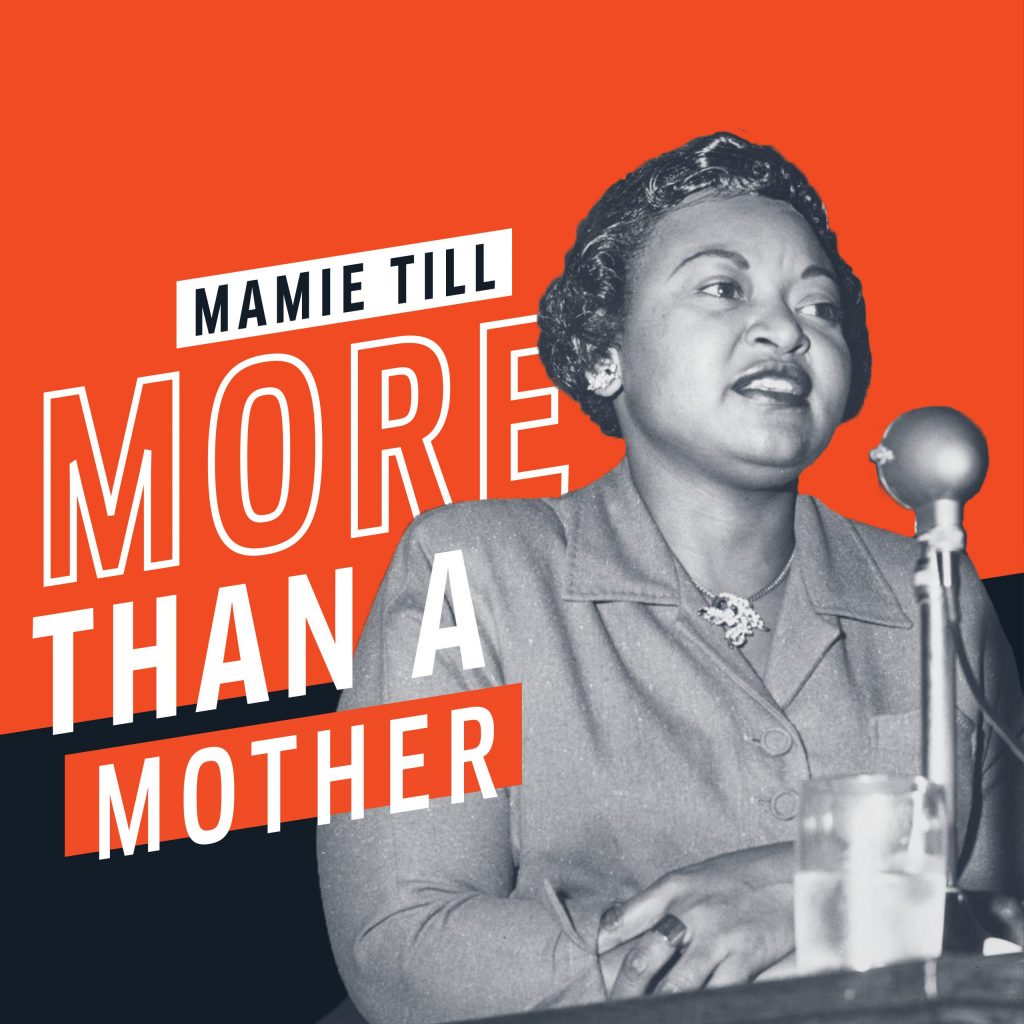
In August 1955, Mamie Till-Mobley tragically became an agent of change when her 13-year old son, Emmett, was murdered while visiting family in Mississippi. Till-Mobley’s decision to show her son’s brutalized body in an open casket served for many as a catalyst to act against the injustices perpetuated against African Americans. Seeing graphic images of his corpse in Jet Magazine and the Chicago Defender made it hard for people to ignore the violence being perpetrated against Black bodies. In fact, her own tragedy served as her own wakeup call as she mentioned in one of her speeches: Two months ago I had a nice apartment in Chicago. I had a good job. I had a son. When something happened to the Negroes in the South I said, ‘That’s their business, not mine.’ Now I know how wrong I was. The murder of my son has shown me that what happens to any of us, anywhere in the world, had better be the business of all of us. After her son’s death, Mamie Till-Mobley became an outspoken advocate in the fight for civil rights, speaking to groups around the country with the NAACP, and serving as an advocate for education. As a teacher in the Chicago Public School system for twenty-three years, Till-Mobley worked with young people both inside and outside of the classroom. She also continued to seek justice for her son in the years following his death, lending her voice to various documentaries and writing an autobiography Death of Innocence: The Story of the Hate Crime that Changed America, that was published posthumously. Learn more about Mamie Till and other Fearless Women at The Center. Plan your visit today and experience how we’re more than a museum. STAY CONNECTED WITH THE CENTER & GET THE MOST UP-TO-DATE INFORMATION ON SOCIAL BY FOLLOWING US @CTR4CHR #FEELTHEPOWER
JoAnn Robinson: More Than A Teacher
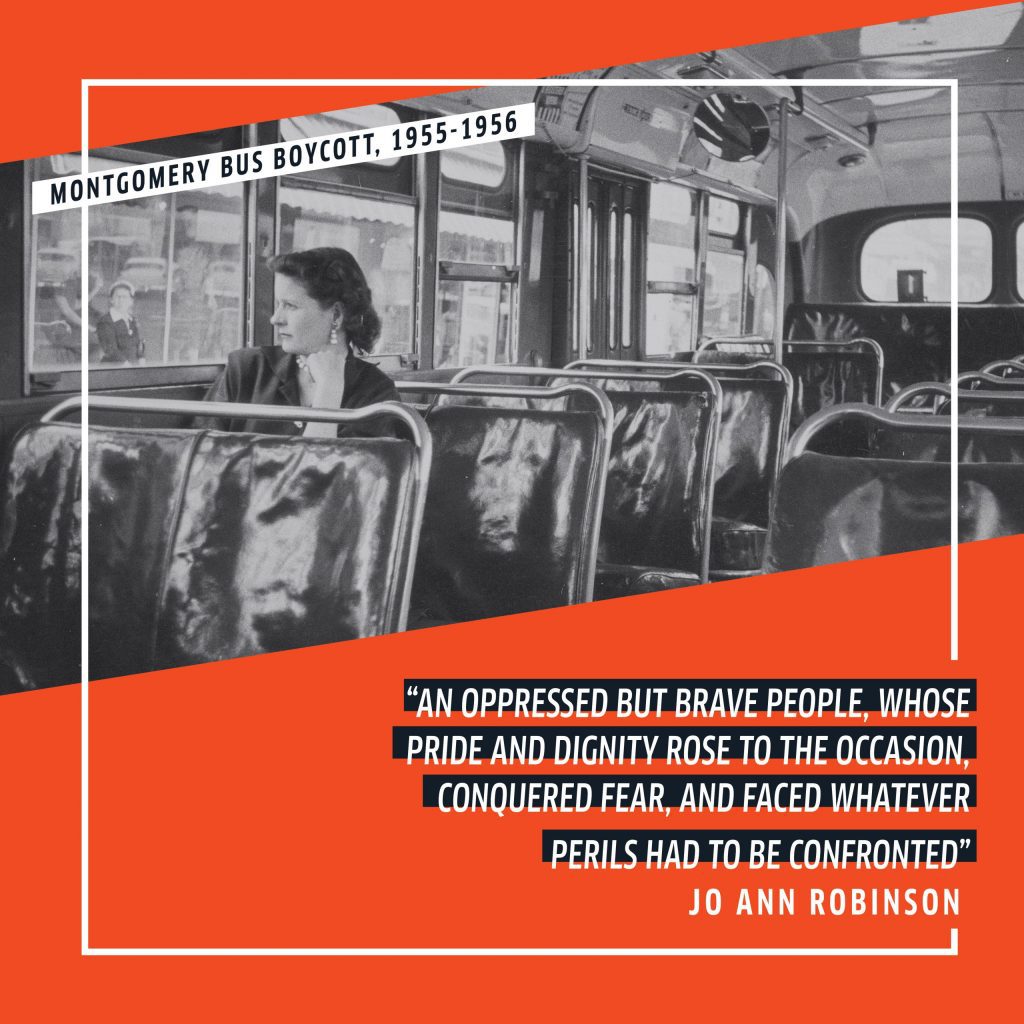
JoAnn Robinson began her career in public service as an educator in Macon, Georgia, working in public schools as an educator. She would go on to earn her master’s degree from Atlanta University and attend Columbia University. A job at Alabama State College for Negroes (now Alabama State University) brought Robinson to Montgomery, where she would join the Women’s Political Council. The WPC was an organization of African American women activists who were faculty of Alabama State College, teachers in the public schools and wives of other African American professionals in Montgomery. These women came together to fight the discrimination and racism African Americans faced on a daily basis. Prior to Rosa Parks’ 1955 arrest, the Women’s Political Council had begun discussing the possibility of a bus boycott. JoAnn Robinson was the WPC president at the time, and met with city officials during 1953 and 1954, pressing them to adopt reforms that would keep segregation in place but no longer require that black passengers surrender their seats to whites. When they received word that Rosa Parks had been arrested the WPC sprang into action. Robinson who was still an English professor at nearby Alabama State College, copied thousands of flyers urging African Americans to boycott buses on the day of Parks’ trial. WPC members canvassed Montgomery’s African American community to spread the word. The one-day boycott proved so successful that the Montgomery Improvement Association (MIA) was formed to direct the movement to change the bus laws. A simple demand that blacks be able to keep their seats evolved into a battle to end segregated buses altogether. The boycott lasted nearly a year, with a U.S. Supreme Court decision finally ruling the Alabama laws unconstitutional. The victory made Martin Luther King, the young president of the MIA, a household name, thanks in large part to the actions and activism of JoAnn Robinson and the Women’s Political Council. Learn more about JoAnn Robinson and other Fearless Women at The Center. Plan your visit today and experience how we’re more than a museum.
Ruby Bridges: More Than A First Grader

November 14th will mark the 60th Anniversary of the integration of William Frantz Elementary School in New Orleans by six-year-old Ruby Bridges. Norman Rockwell’s painting, “The Problem We All Live With,” published four years after Ruby Bridges’ brave actions, remains an important piece of Americana. With incredible courage, Ms. Bridges walked amongst white protestors as they hurled slurs while throwing objects at her—because of the color of her skin. Ruby Bridges described the scene like Mardi Gras. However, the lasting effects of her actions that lead to the desegregation of the New Orleans public school system hit her and her family in many detrimental ways. Her father lost his job, and her grandparents were even thrown off of the land they had sharecropped for years. The family’s courage in the midst of racism and bigotry is like many other icons during the American Civil Rights Movement. History now sees Ruby Bridges as more than a first grader, but at the time she was one of many everyday people making incredible strides to push the needle towards progress in America. Learn more about Ruby Bridges and other civil rights icons at The Center. Plan your visit today and experience how we’re more than a museum.
The Legacy of Dorothy Height
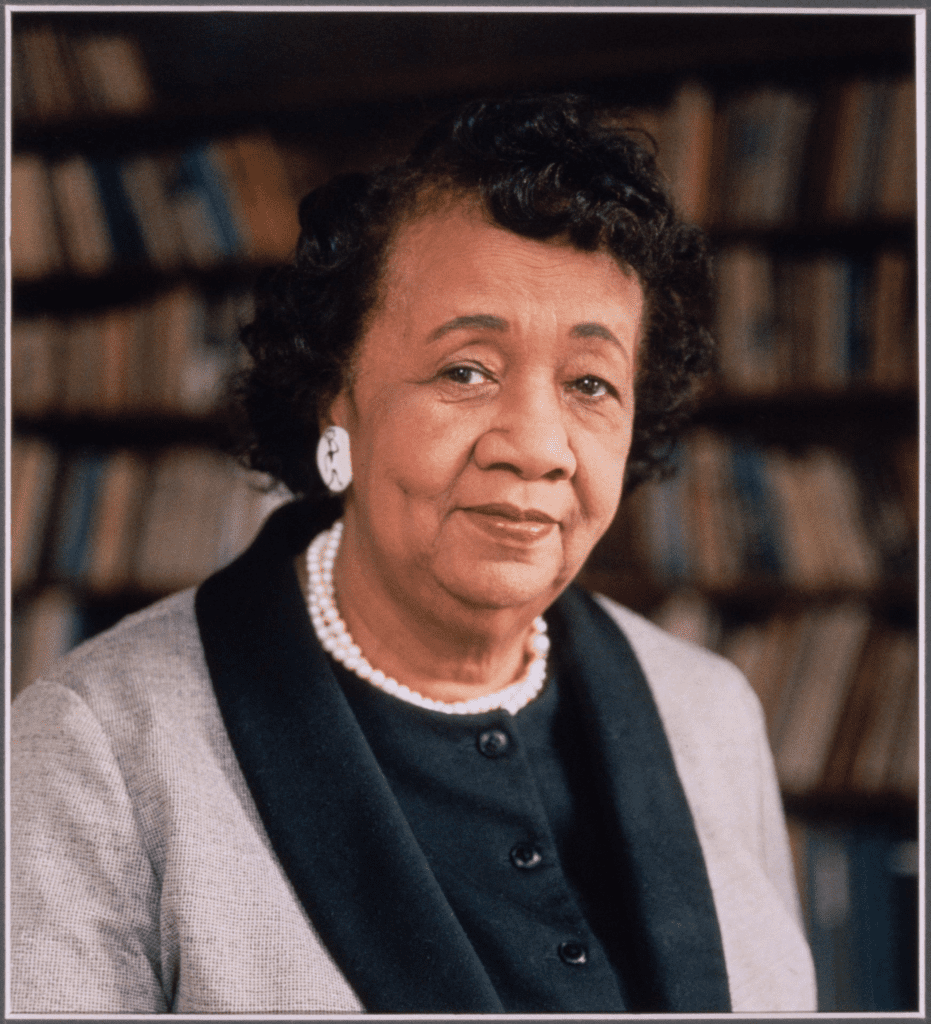
Born in Richmond, Virginia March 24, 1912, Dorothy Irene Height became for many, an example of a life of service. In high school, she began her activism, participating in anti-lynching campaigns of the 1920s. After attending New York University and Columbia University, Height became a social workers and transformed that career into one as an activist for civil and women’s rights. While working for the Harlem YWCA, she met Mary McLeod Bethune and Eleanor Roosevelt. After moving to the National YWCA office, Dorothy led the integration efforts, seeing desegregation at all YWCA’s in 1946. The following year, she began her tenure as the National President of Delta Sigma Theta Sorority, Inc—a position she would hold until 1957. Early in her career, Height became a member of the National Council of Negro Women, and after she completed her time as the president of Delta Sigma Theta, she became the president of NCNW, holding that position for forty years. While most are familiar with the men involved with the Civil Rights Movement, the roles of women were instrumental in the movement’s successes. Dorothy Height was extremely active, organizing Wednesdays in Mississippi as well as assisting with the organization and execution of the March on Washington for Jobs and Freedom. Height worked closely with Bayard Rustin on the complex logistics surrounding the March, used her vast network of contacts to raise funds, and offered the NCNW headquarters in Washington as a meeting place. She also helped mediate and resolve differences among the other organizers of the March as ideas and egos clashed throughout the planning process. While not allowed to give one of the keynote speeches that day, Height was seated as the only woman on the platform behind the speakers, after she had convinced the organizers to let Martin Luther King, Jr. to speak toward the end of the program. After the Civil Rights Movement, Height continued to serve her community through service on national committees. Her lifetime of work was acknowledged in popular culture, TV’s A Different World included “Dorothy Height Hall,” a residence hall named in her honor, and she was celebrated with various awards including the Presidential Medal of Freedom while her image was immortalized on a United States Postage Stamp in 2017. The world lost this trailblazing icon on April 20, 2010, but her legacy of leadership and activism still thrives in all the communities she touched.
Game Changer, Dr. Grace Lee Boggs

Dr. Grace Lee Boggs, activist and game changer, was the daughter of Chinese immigrants born in Providence, Rhode Island. Earning her Ph.D. in 1940 from Byrn Mawr College, Boggs, spent her adult life fighting for the rights of others by speaking out against poor living conditions that many faced, and focusing on struggles prevalent in the African American community. After marrying James Boggs, a black auto worker and fellow activist in 1953, Grace moved to Detroit where she would become a noted figure of the Detroit Black Power Movement and advocate of civil rights. Dr. Boggs wrote five books in her lifetime, her last The Next American Revolution: Sustainable Activism for the Twenty-First Century coming four years before her death in 2015. Dr. Boggs continued to lift up her community in 1992 when she started Detroit Summer, a multicultural, intergenerational youth program that “develops youth leadership for today’s movement by involving university youth from all over the country with local youth.” In 2013 she helped open the James and Grace Lee Boggs School in Detroit, whose mission is to “nurture creative, critical thinkers who contribute to the well-being of their communities.” Serving as an activist for 70 years, Grace Lee Boggs died in 2015 at the age of 100. She continues to serve as an inspiration for community activists and we are thankful for her contributions to many of the social movements that occurred in her lifetime.