
Why Celebrate Juneteenth? An Exploration of the Historical Journey to Freedom for African Americans
By Nicole Moore, NCCHR Director of Education Juneteenth commemorates the day, June 19, 1865, when Union Maj. Gen. Gordon Granger arrived in Galveston, Texas and read General Order Number Three. His order stated that “the people of Texas are informed that in accordance with a proclamation from the Executive of the United States, all slaves are free. This involves an absolute equality of personal rights and rights of property, between former masters and slaves, and the connection heretofore existing between them, become that between employer and hired labor.” Emancipation provided nothing for those formerly enslaved except their freedom. They were not guaranteed work, homes, clothing, or food. But for many, that freedom would be feast enough; the chance to reunite with loved ones, long separated by the cruel institution of slavery, to move freely and begin life again. For those enslaved in Texas, freedom arrived two years after the Emancipation Proclamation was enacted. The emotions that ran through those men and women, as the words of the Order were read to them, must have been vast. The hopes and dreams of generations finally became a reality—along with the awareness that things would never be the same again. Freedom in its purest form would still be just out of reach. A society that would not recognize these individuals as citizens of the country they helped build for another three years greeted them, and a new phase in the struggle for equality was just beginning. But in those initial moments, there was hope. Dreams would be crafted, and generations would now be born free. There was the opportunity to live in a new world. That world would prove to be a challenge as well and continues to be—for many of their descendants. But the hope, the emotion, the feeling of freedom—that would endure. Now a federal holiday, Juneteenth is more than questionable ice cream flavors and merchandise. It is a celebration, and a moment to remember those who finally learned they were free. It is a moment to reconnect with those you consider family. Juneteenth is a time to reflect on the idea of freedom and consider its meaning. It is my sincerest hope that as the day approaches, and you indulge in the traditions that include BBQ and strawberry soda, you take a moment to also learn about the history as the country entered the era of Reconstruction. Decades of terror would follow, but there were triumphs. Those same formerly enslaved men would be given a fleeting opportunity to be elected to office. Schools for newly minted African Americans would spring up, providing education for those who would go on to continue the fight for justice, equality, and yes, continued freedom. Let us feel the joy and jubilation of the day, and then continue to fight for the freedoms these men and women longed for, and make freedom, true freedom, a reality.
Injustice in Intersectionality: Women’s Suffrage Movement
It’s March, which means it is time to celebrate women and all the work that has been done to uplift women—from the past until today. When we look back at our history, however, we see those struggles were not immediately won. The road to equality and equity is long, and is paved with stories that have gone unacknowledged and untold. Ida B. Wells-Barnett, the journalist and activist who fought discrimination and injustice said, “The way to right wrongs is to turn the light of truth upon them.” This Women’s History Month I’d like to “turn the light of truth” upon a major landmark in Women’s History, the Women’s Suffrage Movement. This movement was the fight for women to have equal access to the ballot and the right to vote, which resulted in the passage of the 19th amendment, which states, “The right of citizens of the United States to vote shall not be denied or abridged by the United States or by any State on account of sex.” This amendment legally gave voting rights to all Americans regardless of gender, but that doesn’t tell the full story. When we think about the Women’s Suffrage Movement, we typically hear accolades for Susan B. Anthony and Elizabeth Cady Stanton. We all too often do not learn about all the women who fought for the right to vote, or the women of color who were refused that right, after the 19th amendment was passed. Within all movements there are realities regarding intersectionality. Intersectionality, a concept developed by Kimberlé Crenshaw in 1989, is “a lens, a prism, for seeing the way in which forms of inequality often operate together and exacerbate one another.” People are members of multiple communities based in class, race, gender, geography, and so much more—each giving us a piece of who we are. During the Women’s Suffrage Movement, the needs, and requests of women of color were often put aside as the movement focused on securing the right to vote for white women. For African American women, the realities of the Jim Crow South denied women the ability to exercise their civic duty and incurred violence for those who tried. Poll taxes and literacy tests were used to deter African Americans from casting their votes, and in some cases, African Americans were brutalized by law enforcement and arrested. Despite these terrors, African American women and other women of color persisted in fighting for the most fundamental of rights. Let’s “turn the light of truth upon them”: Frances Ellen Watkins Harper was a famous poet, essayist, and abolitionist during times of enslavement until her passing in 1911. Harper spoke often about the need for black and white women to work together to achieve the goals of The Women’s Suffrage Movement. She famously confronted the white women of the movement during her speech at the 1866 National Women’s Rights Convention saying, “You white women speak here of rights, I speak of wrongs,” when considering the realities of the racial divides. Dr. Mabel Ping-Hua Lee was a scholar and suffragist who fought for women’s voting rights and spoke of what it meant to be a true feminist. While Dr. Ping-Hua Lee fought for women’s right to vote in New York State (passed in 1917) and the federal legislation of the 19th amendment (passed in 1920), due to the Chinese Exclusion Act she was not allowed to right to vote until 1943. Similarly, Marie Louise Bottineau Baldwin was the main women’s suffrage advocate and spokesperson for Native women in 1911, and one of the key leaders to meet with President Woodrow Wilson in 1914 about supporting women’s right to vote. However, it was not until 1924 that Indigenous people were granted U.S. Citizenship, due to passage of the Indian Citizenship Act, and Baldwin was able to cast her ballot. Zitkála-Šá, also known as Gertrude Simmons Bonnin, who served as the secretary of the Society of American Indians, was influential in securing this legislation. “The history of women’s suffrage in America is not nice or neat, because the impact of white supremacy is broad and human nature is messy,” wrote Tammy L. Brown, Associate Professor at Miami University, for the ACLU in 2018. “Furthermore, a nation built on stolen land from Native Americans and stolen labor from African slaves is flawed from the start. We must constantly acknowledge this truth and engage in an intersectional celebration of women’s rights activists and landmark events.” As we mark Women’s History Month 2022, let us acknowledge the stories that have gone untold, share the realities and continued struggles of rights continuously fought for, and praise the work of all the strong fearless women who have come before us. And when we say all, we mean all!
Mari Copeny: More Than A Pageant Queen
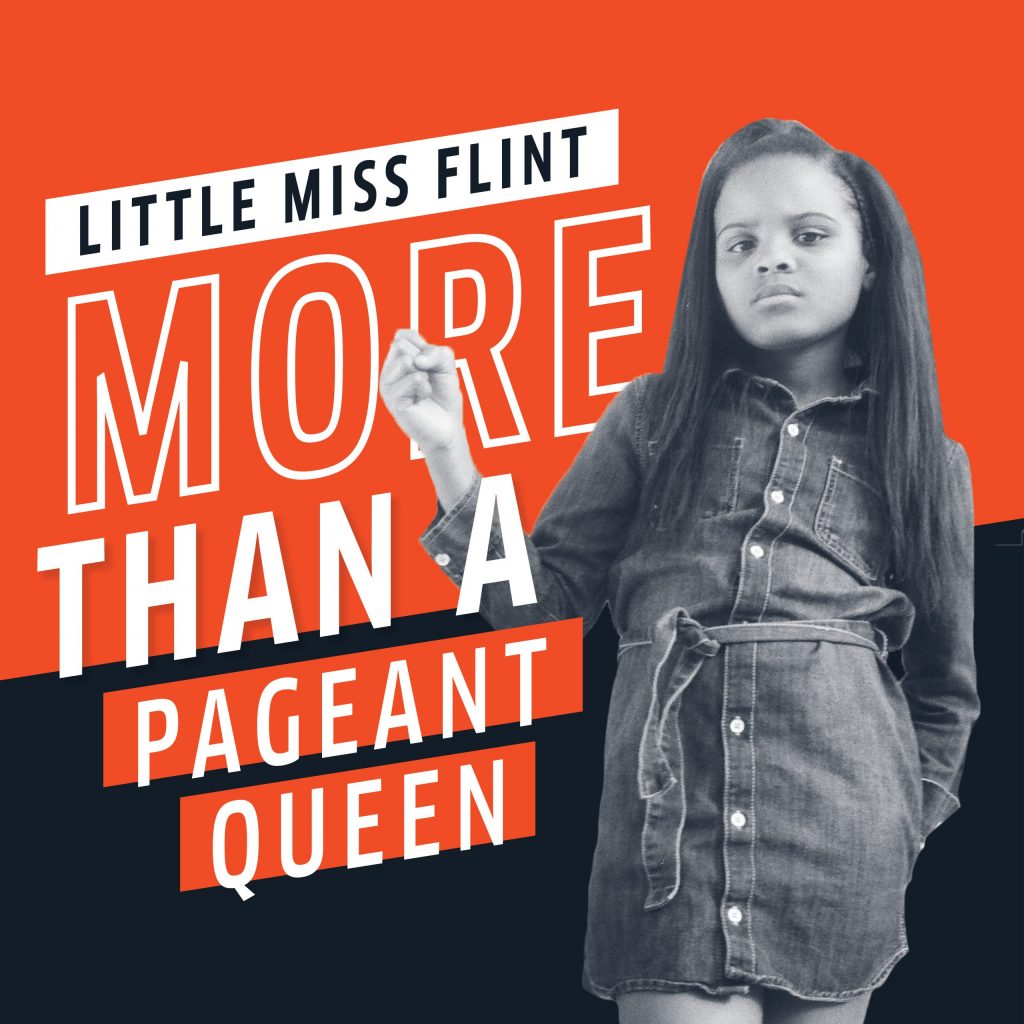
In the small town of Flint, Michigan, in 2016, one child sent a letter to Former President Barack Obama to advocate for environmental change in her community. Unlike many other children growing up in America—she did not have clean water. Her name is Mari Copeny, also known as “Little Miss Flint.” However, she is so much more than a pageant queen. When Mari was young, she participated in pageants, but as she grew and became more aware of her community needs, she became a young activist. Understanding that water & sanitation are human rights, Mari wrote to Obama, who worked with the Michigan state government to eradicate the issue. However, on Friday, April 24, 2020, it will have been six years since Flint had clean water. With this knowledge, Mari has continued fundraising, marching, or lending her voice to say this is not right. Mari could not—and did not—wait for the “adults” to fix the situation. Using her social media networks, she fundraises for water bottles to be donated to her city and participates in Pack Your Back, an organization that donates school supplies to underserved children, and many other community projects for the children of Flint. While she is making amazing strides in her community, we can all do our part to help those in Flint and across the world without access to clean water. Consider following Mari’s #WednesdaysForWater campaign highlighting places around the world that need clean water and donate to the cause. Or even sharing words of encouragement to the #DearFlintKids project. No matter how you help, keep an eye out for Mari as she sets out to change the world. Learn more about Mari Copeny and other Fearless Women at The Center. Experience how we’re more than a museum.
“Our House is on Fire”: Supplementary Materials
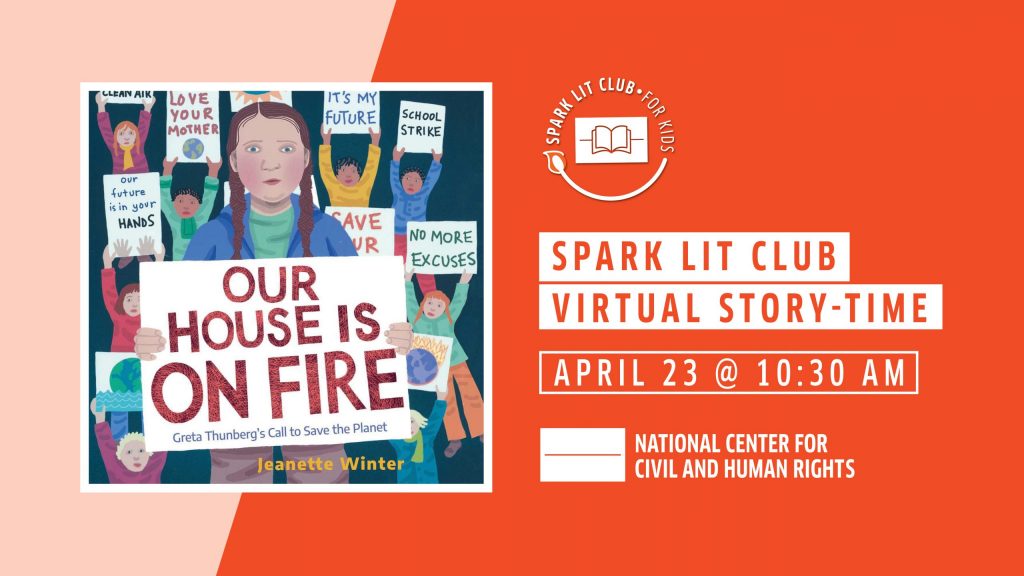
Join us for a reading of Jeanette Winter’s “Our House Is on Fire: Greta Thunberg’s Call to Save the Planet”. Learn the story of Greta Thunberg, the seventeen-year-old climate activist who sparked a worldwide student movement and is demanding action from world leaders who refuse to address climate change. Art engagement and educational activities will be included to continue engaging with the content following the reading! Find the book near you. Download the supplementary materials: Responding to Quotes Make Your Own Protest Sign
“3,585 Miles to be an American Girl”: Supplementary Materials

3,585 Miles to be an American Girl | Supplementary Materials Join us for Nury Crawford’s reading of her book “3,585 Miles to be an American Girl”. An English & Spanish bilingual, children’s book based on one child’s journey to the USA. Have you ever been the new kid in a class, try being the new kid in the country?! The book is a story of family, perseverance and believing in yourself. The program will also include educational activities for students K-3rd grades. Find the book near you. Download the supplementary materials.
Greta Thunberg: More Than A Teenager
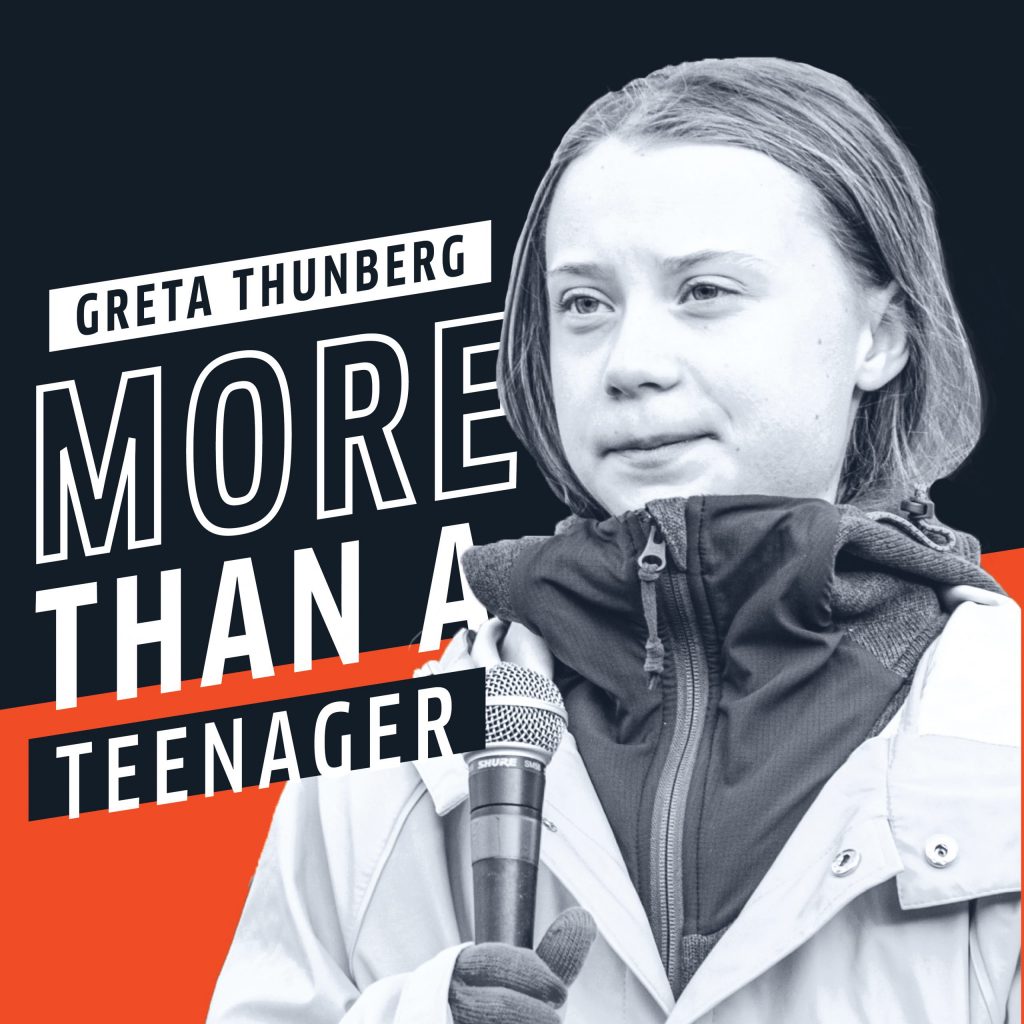
A Swedish teenager ignited a global generational movement to force the world to address climate change. In 2018, Greta Thunberg began her campaign to address the existential threat of climate change by skipping school. Rather than attend class, Thunberg, then 15, spent her school days sitting outside the Swedish Parliament with a sign that said: “School Strike for Climate.” Her goal was to carry out her protest until the Swedish government met the carbon emissions target agreed to by world leaders in 2015 in the Paris Agreement, a landmark global pact setting benchmarks for increasing government action and investment to reducing the use of carbon. From those days, sitting by herself, a movement was born. Media coverage of Thunberg’s protest spread the word — and soon students in other communities and countries launched similar actions. These environmental advocates connected and worked together to organize a worldwide school strike for climate change. Two years after her lonely vigil began, Thunberg had met the Pope, sparred with President Trump on Twitter, and galvanized millions of young people to join and participate in the environmental movement. Last year, Thunberg traveled to the United Nations in New York, by sailboat – to avoid using carbon by flying – to address the 2019 UN Climate Action Summit where she chided world leaders. In an emotional speech, she said: “You have stolen my dreams and my childhood with your empty words. We are at the beginning of mass extinction and all you can talk about is money and fairy tales of eternal economic growth — how dare you!” Thunberg is not only raising awareness, but she also advocates for change. Working with mayors, governors and national decisionmakers, she urges leaders to enact specific policies to slow the pace of climate change. Thunberg has Asperger’s syndrome, a developmental disorder, which causes her to speak with absolute candor. What some people consider a disability, Thunberg calls “a gift” and “her superpower” because it has made her courageous in speaking truth to power about the threats to life on Earth. Learn more about Greta Thunberg and other Fearless Women at The Center. Plan your visit today and experience how we’re more than a museum.
Alina Diaz

In 2019, Alina Diaz was a Power To Inspire Honoree at the National Center for Civil and Human Rights 2019 Power To Inspire Annual Gala. I believe in social justice and the need to fight for a better world for all. Across the United States, hundreds of thousands of immigrant women and girls work under difficult conditions to produce the food Americans eat. Because of language barriers, geographic isolation, or their legal status, employers or supervisors prey on many of these women and girls, exploiting their vulnerability by demanding sex. Some victims are too ashamed to come forward. Others have trouble navigating the legal system or fear they will be fired, and many cases are never reported because the women are in the United States illegally and they believe they will be deported if they report they have been sexually assaulted. Alina Diaz was vice-president and a founding member of Alianza Nacional de Campesinas and continues as a member of this organization to promote the rights of women farmworkers in the United States, the first of its kind. Drawing on her own experience of abuse and poverty as an unauthorized immigrant from Colombia, Alina became a community educator. Today, she travels to immigrant communities, raising awareness among women about their right to report domestic violence, sexual abuse, and other mistreatment. She helps to make sure the voices of women farmworkers are heard at the national level, where she works to educate policy makers and the public about the dangers women farmworkers face. Learn more about Alina Diaz’s story from The Marshall Project
Joan Trumpauer Mulholland: More Than An Ally
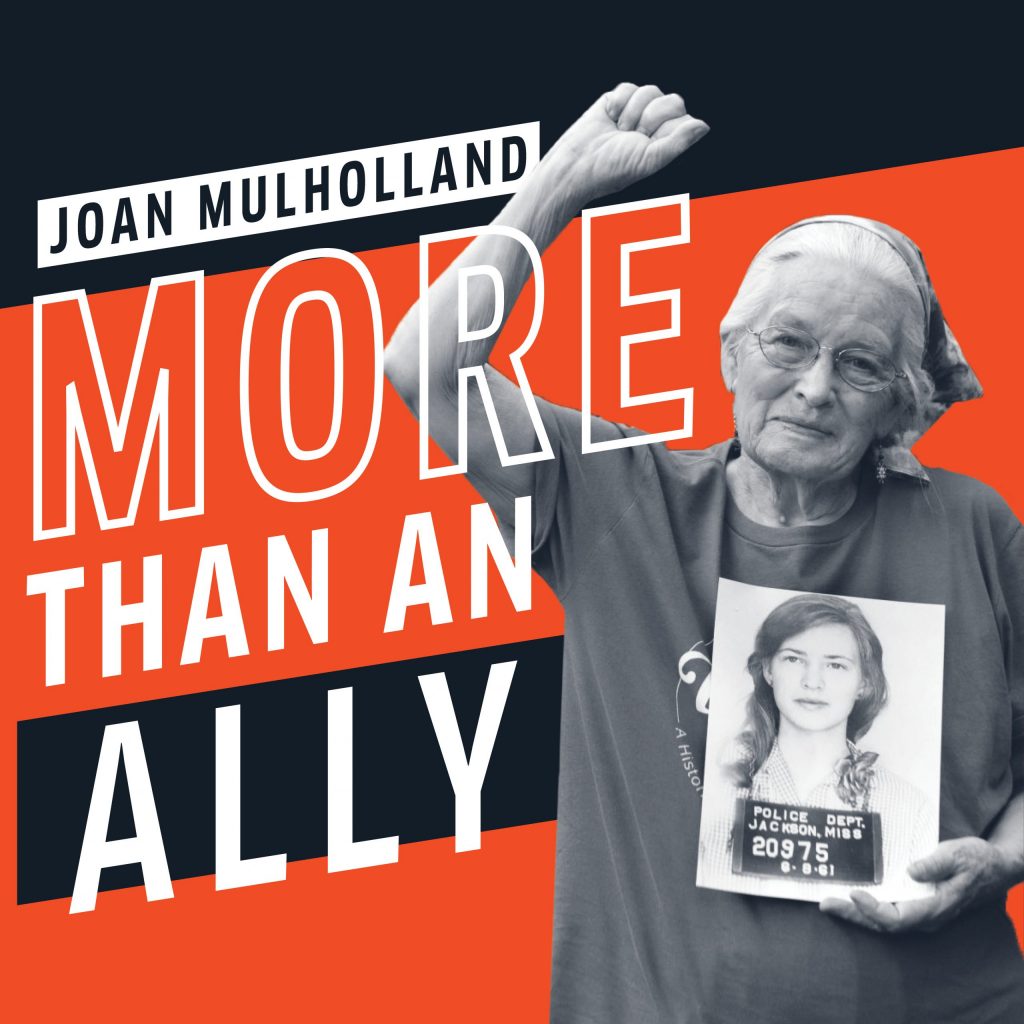
At an early age, Joan Trumpauer Mulholland realized that she needed to be an agent for change and fight for racial equality. As a student at Duke University in 1960, Joan began her life as a civil rights activist, participating in sit-ins and supporting organizations like the Nonviolent Action Group, to the disapproval of her family and the schools administration. After dropping out of Duke, Mulholland joined the Freedom Rides in 1961, and found herself sentenced to Parchman Prison in Mississippi for two months for her participation. She refused bail, and had her sentence extended until she could pay the $200 fine leveled against her as well. Once freed from Parchman, Mulholland continued her activism, integrating Tugaloo College in Mississippi as the first white student and becoming the first white member of Delta Sigma Theta Sorority, Inc. From sit-ins to Freedom Summer training, if there was an opportunity to help the Civil Rights Movement and fight for justice and racial equality, Joan was there. She was alongside Anne Moody in Jackson when counter protesters doused them with food and beverage at Woolworth’s, assisted with the organization of the March on Washington and participated in the march from Selma to Montgomery. Joan Tumpauer Mulholland was and continues to be an example of what ally ship truly embodies, and is able to share those lessons with young people today through the Joan Trumpauer Mulholland Foundation, which “seeks to eradicate racism through education” Learn more about Joan Trumpauer Mulholland and other Fearless Women at The Center. Plan your visit today and experience how we’re more than a museum. STAY CONNECTED WITH THE CENTER & GET THE MOST UP-TO-DATE INFORMATION ON SOCIAL BY FOLLOWING US @CTR4CHR #FEELTHEPOWER
Eleanor Roosevelt: More Than A First Lady

Eleanor Roosevelt, born into New York’s aristocracy, became an advocate for justice after working in tenements as a young woman, and guiding America through the Great Depression and World War II as First Lady. She led in the creation of the Universal Declaration of Human Rights, “UDHR”—the “bill of rights” for humankind that launched the modern human rights movement. Despite being born into a life of privilege, Eleanor Roosevelt always felt like an outsider. After a boarding school education in London, Roosevelt had hoped to go to college and become a teacher, however, her family forbade her. Instead, she served needy families on New York City’s Lower East Side, mentored by women in the settlement house movement who taught her how to confront issues like poverty, protecting workers, and equity in education. Roosevelt married her distant cousin Franklin Delano Roosevelt, “FDR,” in 1905. As FDR ascended in his political career—through elected and appointed offices of increasing influence—Eleanor Roosevelt honed her skills as an organizer, especially for women’s rights, labor and racial justice. When the Roosevelt’s entered the White House during the Great Depression, Eleanor Roosevelt helped shape the New Deal to ensure a social safety net for a destitute nation, fought for refugees escaping Nazism to receive protection in America, and forcefully lobbied her husband on racial justice issues. After her husband’s death, Eleanor Roosevelt launched an entirely new career, leading the effort at the United Nations to create the Universal Declaration of Human Rights, which outlined a standard of basic human dignity that all governments are obligated to protect. In a masterstroke of diplomacy at the start of the Cold War, Eleanor Roosevelt ensured that the UDHR included civil and political rights as well as social and economic rights. Throughout her life, Eleanor Roosevelt worked tirelessly for racial justice for African Americans. She served on the board of directors of the NAACP and was the first donor to the Student Nonviolent Coordinating Committee. When she died, Dr. Martin Luther King, Jr., wrote to Eleanor Roosevelt’s family that “her life was one of the bright interludes in the troubled history of mankind.” Learn more about Eleanor Roosevelt and other Fearless Women at The Center. Plan your visit today and experience how we’re more than a museum. STAY CONNECTED WITH THE CENTER & GET THE MOST UP-TO-DATE INFORMATION ON SOCIAL BY FOLLOWING US @CTR4CHR #FEELTHEPOWER
Freedom Summer—Mississippi Voting
Simmons – Mississipi Voting-HDV 1080i60 from NCCHR on Vimeo. Of course, in the state of Mississippi for the most part, African American people could not register to vote. There were all kinds of ways to prevent that from happening; from just sheer terror to you know counting the number of marbles in a jar, and just all kinds of ridiculous things, so one of the plans that we had for Mississippi’s Freedom Summer was that we were going to show to the world, particularly to the United States, that if black people could register to vote, they would. They would register, and they would vote. And the way we opted to do that was to have mock voter registration, so that people could come and register in a safe place. We would have all the forms, and there would be no repercussions. And then we were going to have elections where they would vote for delegates to the Mississippi Freedom Democratic Party. People understood that we were planning to challenge the regular Democratic Party for those seats, in Atlantic City, where the Democratic National Committee — Convention was being held. So people knew what we were doing. They knew that this was a plan for us to take over the Democratic Party in the state of Mississippi, if we could, and they were all for it. So to me, this was, I mean you know one of the things we taught in the freedom schools was about citizenship you know, and the Constitution and what it meant, and how the government operated at the national level, at the state level. So we had to do a lot of teaching people what it all meant, why voting was so important. And believe you me, those folk who were already a part of the NAACP and activists, they knew. They were very aware. And some of these men who became involved were veterans, so we had that kind of grouping of people there. So it was just an incredible exercise and on the days of the elections, just to see people coming and the box sitting there and people putting their ballots in there, and you know we had refreshments; it was like a very festive kind of occasion and the fact that we had, as a part of our freedom school, literacy classes. So we had people who didn’t read or write coming in the evenings to learn how to do that. But the hunger for knowledge that people had for how our government operates, for how it should operate, that was so inspiring to me just to see that. And so people were not only from Laurel but out in the county — farmers, and others who came in to participate. So it was just so inspiring, just wonderful to be a part of that, and what it taught me about the power of people if you give them information, if you give them just a little bit of help.