
Indigenous Peoples Activist, LaDonna Harris

Comanche activist LaDonna Harris is the founder and president of Americans for Indian Opportunity, an organization whose mission “advances, from an Indigenous worldview, the cultural, political and economic rights of Indigenous peoples in the United States and around the world.” Before that, she acquired an incredible resume of Indigenous activism. From founding Americans for Indian Opportunity to being appointed by President Lyndon B. Johnson to the National Council on Indian Opportunity, Harris has been a key figure in fighting for Indigenous Peoples’ Rights. Her influence has touched many organizations including the National Indian Housing Council, the Council of Energy Resource Tribes, the National Tribal Environmental Council, and the National Indian Business Association. Ms. Harris’ Indigenous heritage has always been a part of her life; as a child, she was raised on a farm in a self-governing Indigenous community near Walters, Oklahoma. When she was married to U.S. Senator Fred Harris, she pursued a life of public service but was denied membership into the Junior League of Oklahoma because of her Comanche ethnicity. Ms. Harris didn’t let that stop her, and instead, she began what would be her long history of Indigenous Peoples’ activism by founding the non-profit organization, Americans for Indian Opportunity. While being married to Senator Harris, and living in Washington D.C., she created the course “Indian 101” and began teaching it to members of Congress at the request of President Johnson. Harris taught “Indian 101” for thirty years, and during that time she advised many institutions on Indigenous Peoples’ rights as well as helping return native lands to many Alaskan and New Mexico tribes. Still an activist and leader as the president of Americans for Indian Opportunity, Harris has helped establish an ambassador program that pulls young professionals to represent their nation. You can learn more about LaDonna Harris by watching the PBS program, “LaDonna Harris: Indian 101” and learn more about the Americans for Indian Opportunity here.
“Who the hell is Diane Nash?”`
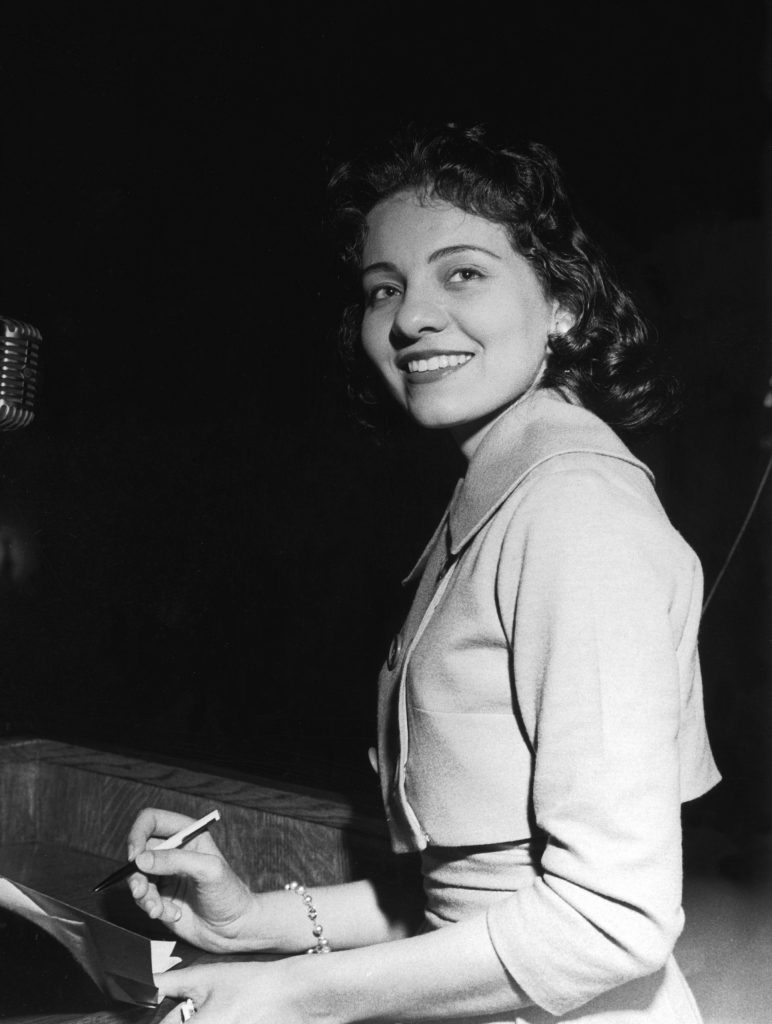
“Who the hell is Diane Nash?” Those words delivered to John Seigenthaler by Attorney General Robert Kennedy in 1961 was not just a question of query and frustration, as Freedom Riders were headed from Nashville to Birmingham, but an introduction to Diane Judith Nash, American civil rights activist, strategist, and all around force to be reckoned with. As a student at Fisk University in Nashville, TN, Ms. Nash took part in nonviolent training sessions, then became a leader in the Nashville student sit-in movement and was a founding member of SNCC. Her leadership, commitment, and courage also showed during the Freedom Rides when she insisted that the rides continue despite the violence and intimidation. In 1962, after receiving a two-year sentence for encouraging young people in nonviolent direct action, she chose to go to jail rather than accept a plea despite being four months pregnant. As she stated, “This will be a black baby born in Mississippi, and thus wherever he is born he will be in prison…If I go to jail now it may help hasten that day when my child and all children will be free.” She ended up spending ten days in prison before the judge reduced her sentence. Nash was also a key strategist for the Birmingham Campaign, the March on Washington, and the voter registration campaigns around Selma, Alabama. Continuing her fight for justice, Diane Nash built upon her civil rights movement work by actively opposing the Vietnam War, and has continued to be involved in peace movements. A long-time educator in the Chicago public schools, she has also been a strong supporter of women’s rights, and has organized around tenant and welfare rights issues.
Women and Anti-Recidivism with Tera Bell and Carla Taylor of Women on the Rise
Season 2 Episode 5 of Rights Not Reserved Women on the Rise gives us insight on life after incarceration and what Atlanta can do to create a more restorative and just community If you would like to get involved with Women on the Rise: http://www.rjactioncenter.org/wor And be sure to follow them on Twitter and Facebook: @womenontherise1 @womenontherisega Other institutions to get involved with that deal with Incarcerated Women: National Council for Incarcerated and Formerly Incarcerated Women & Girls Harriet’s Daughters Racial Justice Action Center Click here to subscribe to Rights Not Reserved. Listen to the episode below:
Living the Legacy
To honor the commemoration year and how the Center for Civil and Human Rights is living the legacy, Turner donated this impactful video.
Celebrating the Powerful Women of the Center for Civil and Human Rights
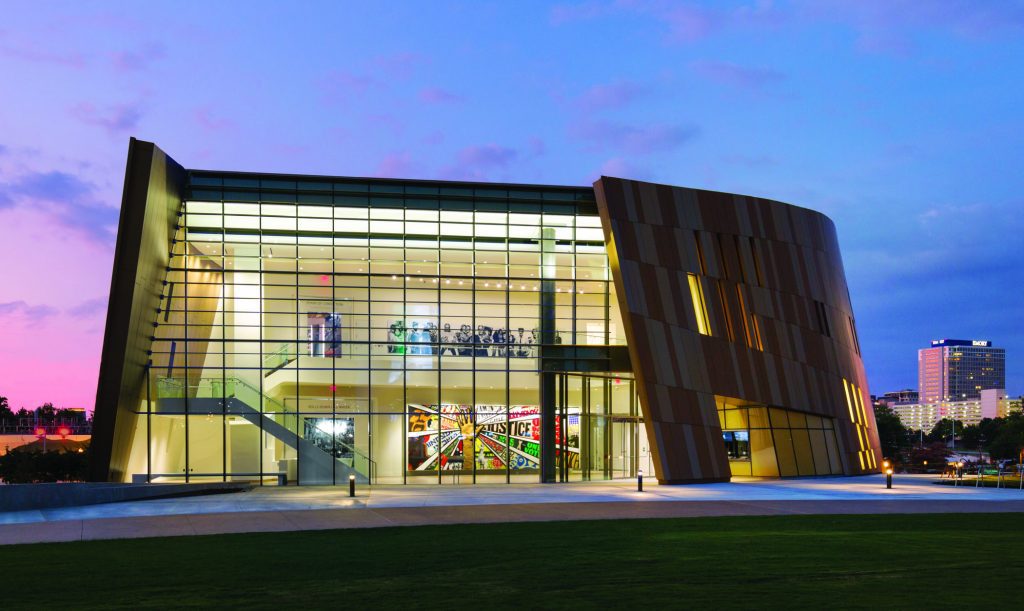
On this last day of Women’s HERstory Month, I wanted to honor some very important women to the City of Atlanta. The city is home to many attractions and the Center for Civil and Human Rights is the moral center of our culture. For almost three years now, The Center helped inspire and empower a spirit of self-determination and resilience in the global community, as informed by the Civil and Human Rights Movement of which Atlanta is world renown. Each and every day we witness more people come to see the history of civil and human rights both nationally and internationally. The CENTER has found its place in the noble history of Atlanta and now finds itself poised to become one of the top attractions not only in Atlanta, but throughout the United States. The question then becomes what is behind this incredible success? The simple yet principled answer is the Women Power of The Center’s staff. These women are integral in running an attraction, museum and Center of intellectual discourse all in one. The reason why this is especially unique is that most of the work that makes The Center highly ranked is typically held by males. Roles like Chief Financial Officer, Facilities Manager, Director of Visitor Services, Manager of Education and Exhibits and so many more essential positions to The Center are held by the strongest of females. As the CEO of the organization, I can tell our visitors and friends that I have found this women power to represent more than a gender diversity and inclusion principle. Rather, I see the performance of my female counterparts as representing the best people for the job. Without the extensive professional expertise, empathy and sympathy of my fellow colleagues, I don’t think The Center would have enjoyed such early success given the incredible pressure we face everyday to keep its doors open. I am proud of these women for their abilities because they are real and they are changing the world as we know it. I want to take this opportunity to celebrate and the Powerful Women behind the scenes at the Center for Civil and Human Rights during this month of March and throughout the year. Thank you to the Women of The Center; keep setting the bar high!
Brown vs. Board of Education: Rewind and Fast Forward by Keisha Lewis
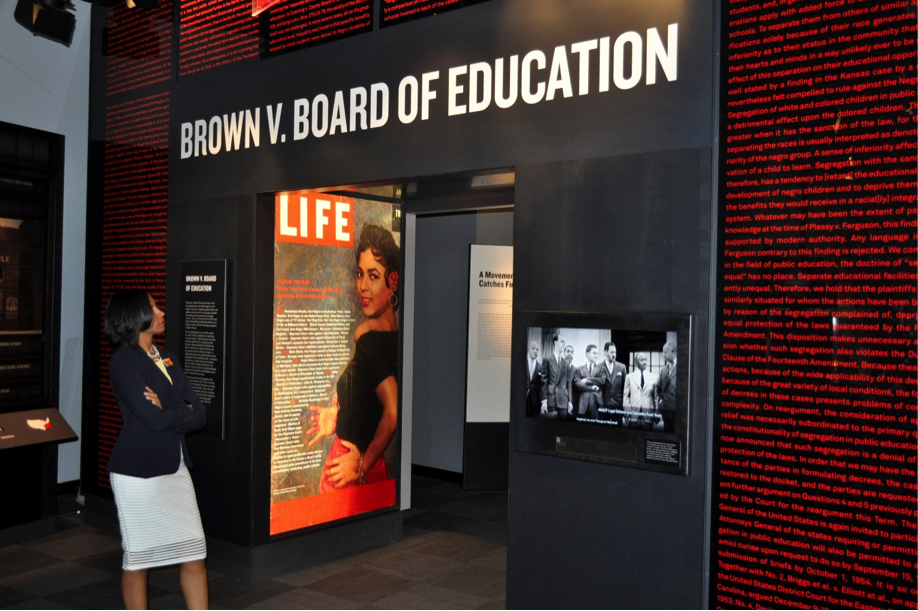
Author of this blog post, Keisha Lewis, is the Director of Visitor Services at the Center for Civil and Human Rights. As I arrived at work, busses unloaded anxious middle school students eager to begin their field trip. As each student stepped off the bus I reflected on my time in middle school and the friends I made along the way. I thought about my social media connections/friends and the diversity in race and gender among these groups. I contemplate being in the high school marching band, making so many friends and not feeling alienated by my race or gender. My mind drifted to how I was able to obtain these relationships (meanwhile the kids at The Center are freely talking to one another as they enter the building). After a morning Operations meeting, I began a morning walkthrough of The Center. I stopped at The Brown vs. Board of Education exhibit and thought of my mother’s and courage in the 1960’s as the “Movement Catches Fire”. I reminisced back to when I was 13 years old, sitting on my mother’s bed after school and asked a question that would spark my curiosity for years. “What was it like for you in school, mom?” She told my sister and I that school was fun and that she learned a lot up until 1967 – her Junior Year in High School. During that year, she was pulled into a room with about 13-14 other students at Lemon Street High, the only school Black youth could attend up until then. Adults briefed the students on integrating with white students at a new High School in Cobb County (which is ironically my Alma Mater). Brown vs. Board of Education changed her life forever, as well as mine. The day the students were integrated, she was taunted as she stepped out of the van delivering them to this unfamiliar school filled with unfamiliar faces. She was called a “Nigger”, spat on and a sign was taped to her back without her knowledge that read, “Since when do Niggers have red hair?” I could go on and on but for sake of time I will leave it at that. Although she was horrified by these experiences, she continued to hustle up her pride and return to school every day for months. For years, it unsettled me that I did not understand the full story of why people were so hateful to her so when I made it to College my journey began. My obsession with knowing more about the American Civil Rights Movement led me to earn a B.A. in History with a concentration in Civil Rights and a focus in Brown vs. Board of Education/integration. None of this could happen before literally taking a walk down memory lane with my mother as she walked me through what remained of Lemon Street High School. My mother recounted how black businesses in Marietta thrived before desegregation and how she didn’t finish high school because it became too hard to take. Did I mention that the bus she rode to school would not return them home some days so that black students on her street were forced to walk many miles home? Many people ask me “Why history? It’s so boring.” My answer is now: this “boring” history was my mother’s reality. Our mother’s story transformed me and my sister’s perspective on history. My sister Mia, determined to teach and obtain the highest level within the Education field, earned her Doctoral degree in Education. I am currently the Director of Visitor Services at the Center for Civil and Human Rights. You never know how someone else’s story can impact your life! I believe in celebrating the unsung pioneers of a movement and inspiring others to see how they can make a difference. Forward! Keisha Lewis Director of Visitor Services