
What’s Next for #MeToo

This blog post was written by Amy Gregg, YWCA of Greater Atlanta Advocacy Intern and MPH Candidate Not a single woman I have talked to about #MeToo has seemed surprised that so many women are affected by sexual harassment and sexual violence. Statistics show that one in three women experiences some form of gender-based violence at some point in their lives. If it doesn’t happen to us, we know that it is happening to our sisters, friends, and colleagues. #MeToo is providing a public platform to discuss and shine much-needed light on a widespread problem. But many of us are asking the question – “what can we do about it?” For #MeToo to be more than a trending hashtag, we need to funnel our energy into concrete actions. I think we can look to history for inspiration. The first rape crisis centers were established in the 1970s. They served as spaces for survivors to share their stories, as well as for women to organize and advocate for new policies, from laws against spousal rape to HR policies preventing harassment in the workplace. Let’s use the #MeToo conversation as a launching pad to engage in renewed advocacy work on the personal, organizational, local, state, and national level. We need to believe women who come forward with stories of assault and harassment. We need men to organize with us and call out their peers for dangerous behaviors and attitudes towards women. We need to block harmful legislation that would make it more difficult for victims to come forward and seek support. Now add your next steps to this list…
Rights Not Reserved Episode 13: Nic Stone
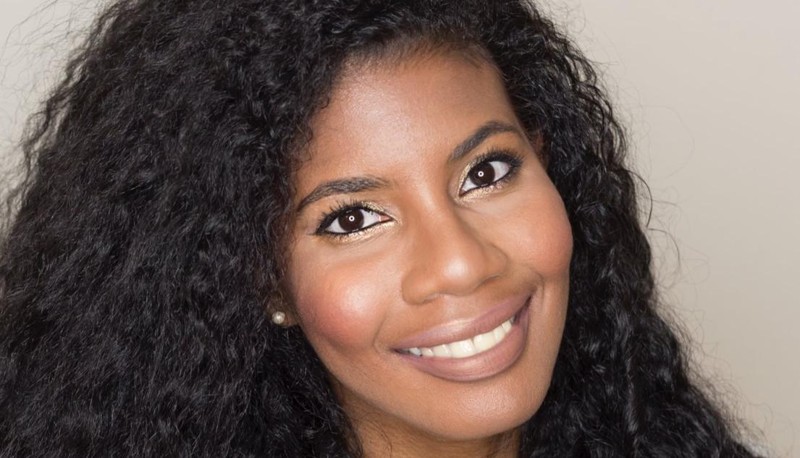
Nic Stone joined us on Rights Not Reserved this month to discuss her new novel Dear Martin. Topics discussed: The debut of Dear Martin at the Center for Civil and Human Rights on October 17 Being one of the only people of color in her high school Microaggressions Nic’s travels to Israel Representation in YA novels The amazing Jason Reynolds Click here to subscribe to Rights Not Reserved. Listen to the episode below: About Nic Stone and Dear Martin: Raw, captivating, and undeniably real, Nic Stone joins industry giants Jason Reynolds and Walter Dean Myers as she boldly tackles American race relations in this stunning debut. Justyce McAllister is top of his class and set for the Ivy League—but none of that matters to the police officer who just put him in handcuffs. And despite leaving his rough neighborhood behind, he can’t escape the scorn of his former peers or the ridicule of his new classmates. Justyce looks to the teachings of Dr. Martin Luther King Jr. for answers. But do they hold up anymore? He starts a journal to Dr. King to find out. Then comes the day Justyce goes driving with his best friend, Manny, windows rolled down, music turned up—way up, sparking the fury of a white off-duty cop beside them. Words fly. Shots are fired. Justyce and Manny are caught in the crosshairs. In the media fallout, it’s Justyce who is under attack.
A New Generation of Activist Athlete

BY PELLOM MCDANIELS III, Curator of African American collections in the Stuart A. Rose Manuscripts, Archives and Rare Books Library where he specializes in sports history, African American athletes and Civil Rights, and black masculinity and visual culture, and former NFL Athlete. It should come as no surprise that someone like Colin Kaepernick has emerged from the age of President Barack H. Obama, inspired, empowered and ready to use his influence to challenge the status quo. Choosing to stand up (or rather take a knee) in protest of the killing of African Americans by law enforcement, the 28 year old former starting quarterback for the San Francisco 49ers has become the firebrand for a new generation of activist athlete. A student of history, Kaepernick has taken it upon himself to become a change agent using what he has at his disposal as a public figure to influence the thinking and actions of the masses. He has set himself apart as a model of selflessness and heroism. While sports have occupied the American imagination as a source of entertainment, enlightenment, and, above all, opportunity, historically we have seen the importance of African American athletes using their celebrity to bring attention to the ills which haunt black life in America. In fact, from the beginning of the twentieth-century to today, there have been numerous individuals, who have challenged both directly and indirectly the “isms” responsible for shaping American culture. Their/these actions have led us to our current climate of dissent and activism. While most of these moments involve African Americans competing against whites in an attempt to claim victory in the arena, and the financial rewards and social mobility that coincided; the greater goal of these African American athletes was in claiming their humanity, citizenship, and their race through their performances on the playing field. I can’t help but recall the 1968 Olympic Games in Mexico City, where Tommie Smith and John Carlos shocked the world, using their victories in the 200-meter dash to protest against the United States and its policies on human rights issues related to African Americans in particular and oppressed people in general. Clad in their USA warm-up suits, wearing black socks without shoes to symbolize poverty and black leather gloves (Smith wearing the right and Carlos wearing the left of the same pair) to symbolize black power and unity, on the award stand they lifted their clinched fists in protest as the American anthem played. And while they were chastised for their actions, they accepted their fate and have endured the consequences of that choice because it was necessary. But isn’t that the point of Kaepernick’s argument? Isn’t he trying to bring attention to the institutionally endorsed mistreatment and abuse of black people that most white Americans don’t seem to care about? Isn’t he trying to bring attention to the system of oppression deeply embedded in American culture that inextricably links blackness to criminality? Isn’t he attempting to show us the way to unify from within, while dismissing the doubters from without? Isn’t he taking a leadership role by doing what needs to be done, to right a wrong of history that continues to feed the prison industrial complex, which depends heavily on black bodies and the fear of a black planet? The fact that he recognized the most expedient and effective way to get the attention of the majority was to stage his protest where they would actually see him is reminiscent of Smith and Carlos’ Olympic protest. In both instances, Carlos, Smith and Kaepernick recognized that black people’s lives mattered most when they were entertaining. In the liminal spaces of the stadium, field house, and arena, blackness is on view as a consumable commodity: one that fulfills certain stereotypical fantasies which hinge on the believed subdued and controlled threat of blackness within those spaces. I’m convinced that Colin Kaepernick understands not only the historical significance of his actions, but recognizes that there are real consequences related to his commitment to social justice that he is willing to pay. Through his symbolic protest and his humanitarian agenda, he clearly knows what he is doing. And doing it very well. His influence has trickled over into the NBA, Major League Baseball, WNBA, and to college and high school sports teams. Clearly, we are at a critical moment in American and world history. A moment that will define the future of our country and the global struggle for the humanity of the marginalized. For those paying attention, we are seeing the rise of the modern black athlete. And while fans and misguided, uninformed politicians continue their assault on the character of the young men and women speaking truth to power, the question I ponder is how far will we support these aspiring leaders? Can they depend upon us? And how can WE contribute to this movement?
Sunday Funday
I want to take a step back and appreciate all my blessings thus far. I am a paid intern at one of the best places I have worked, so far. My family is alive and well, being an amazing support system even from two states away. After a year in Atlanta, I think I have found my groove, made new friends and am doing my best to be happy and healthy in this great city. In terms of working towards my dream of being a producer, I am a production assistant at a start-up production company called Blossom. Being amongst wonderful, hard-working Black women in the film industry is what I want to do in the future, so to be a part of this project means the world to me. As a start-up, I’m still an unpaid production assistant, which is okay since I’m gaining incredible experience and have a lot of freedom to explore beyond my role. All of this has made me think about what it means to be a volunteer. Technically, anyone who gives up their time and energy to a project with no commission in return is a volunteer, right? Taking that idea, I want to reach out and say (probably more for myself than for you all) that it is okay to be a volunteer for any project you believe in, when it is positive and does not hurt anyone, including yourself. Being a production assistant with Blossom is not just about reaching out and helping myself network; it is about creating a company that speaks as the voice for Black women and other women of color. Just as volunteering my time at the National Center for Civil and Human Rights was so that I could help them achieve their mission for everyone to take human rights personally, I believe film production helps more than people realize.
The National Center for Civil and Human Rights stands in the protection of all peoples

The National Center for Civil and Human Rights stands in the protection of all peoples. The recent legislation on DACA is an affront to humanity. Our Dreamers through no fault of their own were brought to the United States for a better life, we need to respect and protect them. We honor the statement of the Universal Declaration of Human Rights that all human beings are born free and equal in dignity and rights. There is an innocent voice in these Dreamers that isn’t being heard and it is time to listen. “The future belongs to the people that believe in the beauty of their dreams” – Eleanor Roosevelt
The National Center for Civil and Human Rights demands civil and human rights for all humanity.
The National Center for Civil and Human Rights demands civil and human rights for all humanity. The methods and tactics used by the white supremacist organizations in Charlottesville are abhorrent and run counter to the struggle for human rights both domestically and globally. While we respect the right to peaceful assembly and protest, we condemn the verbal and physical violence of any group that seeks to infringe upon the basic human rights of others. We must all reflect on the past, be inspired by civil and human rights leaders to transform our nation by acting courageously.
What is Race?

During one of my shifts at the Center for Civil and Human Rights, I met a guest from Uruguay. After experiencing the lunch counter sit-in simulator, she was shocked. She couldn’t believe that White and Black people couldn’t eat together in recent American history or that people of different races eating together resulted in violence and/or imprisonment. She told me that in her home country, they never had this legacy of segregation. One statement stuck with me during this conversation: “You know, I didn’t know I was White until I came to the United States.” Americans would tell her that she was White because of her light skin and blonde hair. For her, she was Uruguayan and her nationality was her identity. “Most importantly, why should it matter?” she asked. According to the CIA World Factbook, about 88% of the population of Uruguay is of European descent, 5% of African descent and 3% of Indigenous or Amerindian descent. The remaining 4% consists of various ethnicities from around the world but Uruguayans do not equate their nationality with ethnicity, but with citizenship. This is what makes our countries different. We all identify as Americans but the legacy of chattel slavery, Jim Crow laws, racial segregation and “separate but equal” institutions have made many Americans feel that some citizens are more American than others. Historically, racial categories have been used to keep certain ethnic groups dispossessed while upholding white supremacy. Once you travel the world, you learn that racial dynamics are interpreted differently within various cultures. In my travels to the Middle East, it was somewhat hard explaining my identity as African-American woman. In their eyes, I didn’t look African because I don’t have deep brown skin or typical African facial features. These conversations make it easier to see how race is a social construct. The malleability of race proves that it doesn’t have its own objective reality. So many prejudicial laws and institutions were created all in the service of a concept based on pseudoscience. Scientists of the past created fields dedicated to the supposed inferiority of non-European peoples. This pseudoscience led to the ghastly horrors of eugenics and genocide in the United States. Now Modern-day scientists say, “Racial categories are weak proxies for genetic diversity and need to be phased out.” Or differences – from our hair textures to our facial features to skin colors – are literally skin deep. There are no Black genes or White genes. At our biological core, we are the same. The United States, like Uruguay, has a blending of cultures and races. Despite the social unrest, there are many Americans who take pride in that. It will take a lot of work towards social justice and education to create a future where everyone celebrates racial and ethnic diversity. At least, we can dream of a future where race really doesn’t matter.
Master of My Fate

I knew exactly what I wanted to talk about for the 3rd installment of Standing Room Only: hunger and homelessness. The topic made me hesitate because of my lack of volunteerism in the area. Moving to Atlanta a year ago, I noticed the large number of people living in homelessness. According to the Atlanta Mission, a nonprofit formed to help and rehabilitate homeless men and women, there are about 7,000 homeless people in Atlanta. 1,300 of these people without homes are families. These men, women, and children can be found sitting or sleeping on the streets at any time of day. I find it maddening that there is constant construction of luxury apartments in Atlanta while people line the sidewalks just hoping they can find some sort of shelter. I began accepting their presence as a background to my daily walk to The Center, that’s not right. I recently saw a man dig through the trash to find food as I was passing by. I offered him my pack of crackers and when he asked for a quarter, I gave him a dollar. The reality of having to go through a trash can to find a meal is so far removed from my own. The experience had me contemplating the rest of my walk to my car: what am I going to do? I signed up to volunteer at Habitat for Humanity and Meals on Wheels Atlanta. I know this won’t change that man’s reality or the 7,000 other homeless people’s but hopefully it can give me a more comprehensible look at the problem. I am excited to learn and to be a helping hand. I decided to sign up for orientation on my birthday as I can’t imagine a better gift to myself than to help my community.
Otherness

“Do you know who this is?” Kelli Edwards, the Center for Civil and Human Rights’s Program Manager, asked a group of young children circled around three tables. Kelli held up a coloring page of Malala Yousafzai. The kids squinted, trying to get a closer look to see if they recognized the face printed on the page. A few eager “no”s were shouted in reply as the children waited to hear more. “This is Malala Yousafzai, and she’s a very brave girl,” Kelli said. “She’s also a Muslim.” As I sat among the children attending Interfaith Youth Day at The Center, I watched the ease with which their receptive minds accepted the story of a girl who was different than them. That’s the thing about kids, they often don’t notice a difference until one is pointed out to them. And if they do notice a dissimilarity, they rarely perceive it in a negative light. More each day, I find myself noticing the ways I have been taught to fear “otherness.” I’ve started realizing my tendency to view people based on who they are in relation to me, instead of regarding them simply for who they are. In the midst of beginning the work of undoing these ingrained behaviors within myself, I’ve learned that the most difficult part is not the effort required, it’s the unnerving feeling of being unable to trace the origin of my learned biases. Just because the fear of “otherness” isn’t always taught intentionally, doesn’t make its impact less potent. Imagine if we kept having simple, affirmative conversations with kids about people like Malala Yousafzai. Imagine if we taught them the intrinsic value of every human being independent of another. Imagine the effect those conversations could have on our own deep-set discrimination. Imagine the healing to come.
Powerful People in Progress: Doug Shipman and Derreck Kayongo

Rights Not Reserved is a podcast from the National Center for Civil and Human Rights. We discuss activism, history and today’s pressing human rights concerns with local, national and international leaders in civil and human rights. Episode 11 of Rights Not Reserved features founding CEO of the National Center for Civil and Human Rights, Doug Shipman and current CEO, Derreck Kayongo. They have an inspirational conversation about the history of the Center for Civil and Human Rights and how it resonates with the public in 2017. Doug and Derreck also demonstrate how to take every human’s rights personally with a roleplaying game. Topics covered in this episode Taking Civil and Human Rights personally Museums Education Creating a legacy