
The King Center and the National Center for Civil and Human Rights Launch Letter From Birmingham Jail Program to Mark International Human Rights Day
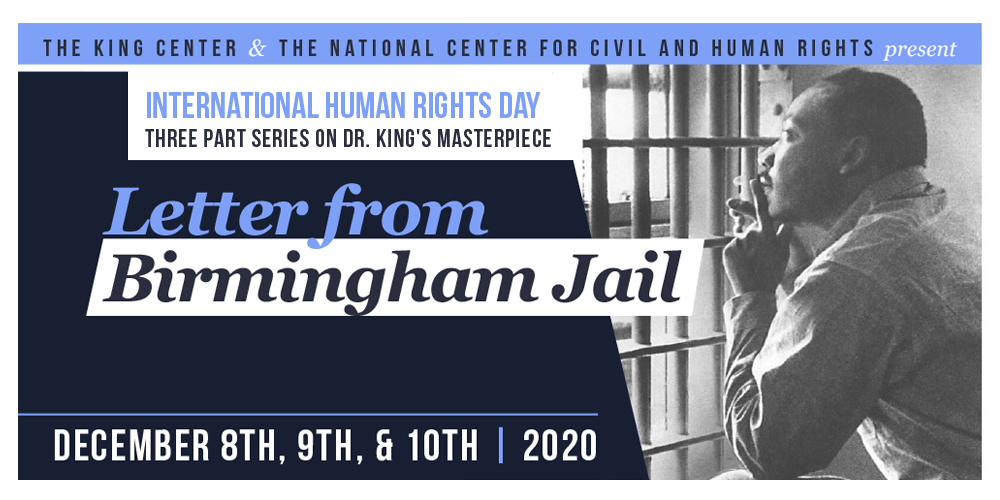
Celebration offers a two-day nonviolence training and a panel discussion Dec. 8 to 10 ATLANTA, GA (Dec. 3, 2020) – The Martin Luther King, Jr. Center for Nonviolent Social Change (The King Center) and the National Center for Civil and Human Rights (NCCHR) are partnering to mark International Human Rights Day with a three-part series on the King masterpiece, Letter from Birmingham Jail. The series will be December 8 to 10, 2020. The series will provide insight on how people of conscience can incorporate Dr. Martin Luther King, Jr.’s nonviolent philosophy to address systemic racism. To do this, the three-day series will provide a deep exploration of Dr. King’s celebrated “Letter From Birmingham Jail,” — its origins, and its guidance for addressing racism and all forms of discrimination in America today. Dr. King wrote “Letter From Birmingham Jail” in 1963, while in jail for violating an anti-protest injunction in Birmingham during the campaign to end segregation at lunch counters and in hiring practices in the city. Dr. King was responding to a letter by eight Alabama clergyman who criticized nonviolent civil rights demonstrations. As a foundational document of national ideals, Dr. King’s “Letter from Birmingham Jail,” provides critical guidance for addressing the challenges America faces today. “I am excited for the opportunity to partner with the National Center for Civil and Human Rights to bring attention to the work of my father, Dr. Martin Luther King, Jr. during such a time as this,” states Dr. Bernice A. King. “Our country is in the midst of momentous transformation, just as it was during the 1960s, and we are fortunate that he left us with the nonviolent blueprint to successfully navigate through these turbulent times. We should follow his example of love-based, courageous leadership, even during his unjust confinement. We must all truly believe and put action behind his words, ‘Injustice anywhere is a threat to justice everywhere,’ to create the Beloved Community he envisioned.” The three-part series includes two, 90-minute nonviolence trainings (December 8 and 9), which will provide historical context for the letter and interactive conversations about issues Dr. King raises in the piece, as well as an hour-long panel discussion among King experts (December 10). All events will be offered online. Training registration is $30, with free admission for students. The panel discussion is free. Letter from Birmingham Jail: Examining History for Social Change Today Tuesday, Dec. 8, noon – 1:30pm The training will address: Why That Jail: The Birmingham Campaign Why That Letter: The Statement from Alabama Clergy That Prompted the Letter How Then Connects to Now: The Letter’s Expose on 1963 and 2020 Letter from Birmingham Jail: Extracting Strategy for Social Change Today Wednesday, Dec 9, noon – 1:30pm The training will address: Foundational Thinking: Injustice Anywhere and Interconnectedness Major Themes that Matter Today: Creative Use of Time, Christians & Justice, and Civil Disobedience Questions of Strategy: Why Direct Action and How is Direct Action Integrated in Nonviolence Letter from Birmingham Jail: Experiencing A Single Garment of Destiny Thursday, Dec. 10, 6pm – 7pm The panel features: Susannah Heschel, Dartmouth University Jewish and Biblical Studies Clayborne Carson, Stanford University King Institute Bernice King, The King Center Moderator: Fatima Chaudhary, Martin Luther King Jr. Freedom Center in Oakland, California Moderator: Taos Wynn, Social Advocate, Author & Speaker Former United Nations Ambassador Andrew Young “Dr. King’s letter outlines why nonviolent resistance is a strategy against racism,” said Jill Savitt, CEO and President of the National Center for Civil and Human Rights. “It outlines the moral responsibility we all share to take action against racism and could not be more timely for what our country faces today and how individuals should respond.” Register for training sessions and panel here https://www.eventbrite.com/e/letter-from-birmingham-jail-program-tickets-129922661177. ### About the National Center for Civil and Human Rights The National Center for Civil and Human Rights in downtown Atlanta is a cultural institution that connects the American Civil Rights Movement to the struggle for human rights around the world today. The Center features a continuously rotating exhibit from The Morehouse College Martin Luther King, Jr. Collection, which includes many of Dr. King’s documents and personal items. Visitors will be immersed in experiential exhibits through powerful and authentic stories, historic documents, compelling artifacts, and interactive activities. The Center is a source for ongoing dialogue — hosting educational forums and attracting world-renowned speakers and artists who work on a variety of human rights topics. For more information, visit www.civilandhumanrights.org. Join the conversation on civil and human rights: facebook.com/ctr4chr/ | instagram.com/ctr4chr/ | twitter.com/Ctr4CHR About The King Center The Martin Luther King, Jr. Center for Nonviolent Social Change (The King Center) is a 501(c) (3) organization established in 1968 by Mrs. Coretta Scott King. The King Center is the official living memorial and programmatic nonprofit organization committed to educating the world on the life, legacy, and nonviolent teachings of Dr. Martin Luther King, Jr. The King Center is committed to preparing global citizens to utilize the principles and strategies of Nonviolence (Nonviolence365) to create a more just, humane and peaceful world. Learn more at www.thekingcenter.org. Follow the King Center on Facebook, Instagram, Twitter and YouTube Contact: Shani Drake, Director of Marketing and Public Engagement [email protected] Aimedra Kelley, Communications Manager, The King Center [email protected] Keyaira McCauley, Digital Media and Public Relations Manager [email protected] James Richards, Media consultant [email protected] Mina Bryant, Communications Associate [email protected]
Joan Trumpauer Mulholland: More Than An Ally
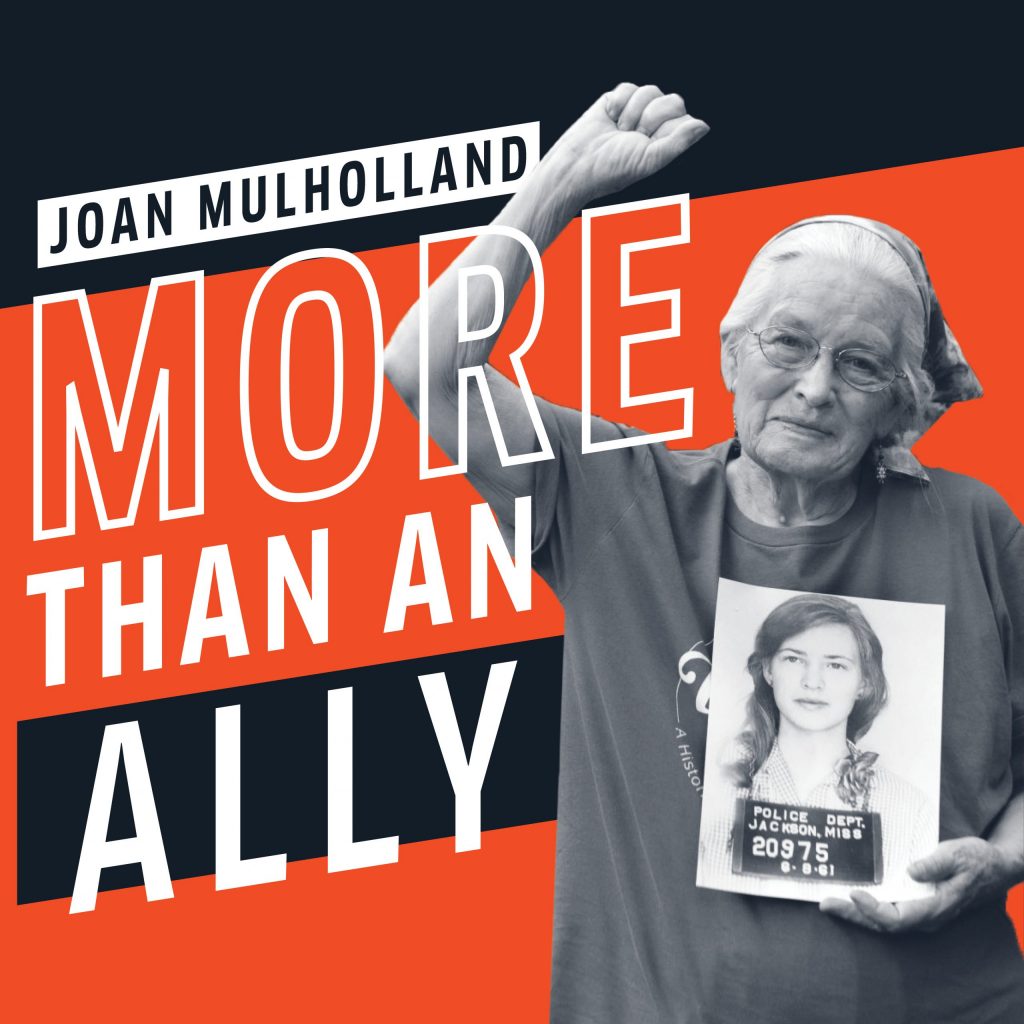
At an early age, Joan Trumpauer Mulholland realized that she needed to be an agent for change and fight for racial equality. As a student at Duke University in 1960, Joan began her life as a civil rights activist, participating in sit-ins and supporting organizations like the Nonviolent Action Group, to the disapproval of her family and the schools administration. After dropping out of Duke, Mulholland joined the Freedom Rides in 1961, and found herself sentenced to Parchman Prison in Mississippi for two months for her participation. She refused bail, and had her sentence extended until she could pay the $200 fine leveled against her as well. Once freed from Parchman, Mulholland continued her activism, integrating Tugaloo College in Mississippi as the first white student and becoming the first white member of Delta Sigma Theta Sorority, Inc. From sit-ins to Freedom Summer training, if there was an opportunity to help the Civil Rights Movement and fight for justice and racial equality, Joan was there. She was alongside Anne Moody in Jackson when counter protesters doused them with food and beverage at Woolworth’s, assisted with the organization of the March on Washington and participated in the march from Selma to Montgomery. Joan Tumpauer Mulholland was and continues to be an example of what ally ship truly embodies, and is able to share those lessons with young people today through the Joan Trumpauer Mulholland Foundation, which “seeks to eradicate racism through education” Learn more about Joan Trumpauer Mulholland and other Fearless Women at The Center. Plan your visit today and experience how we’re more than a museum. STAY CONNECTED WITH THE CENTER & GET THE MOST UP-TO-DATE INFORMATION ON SOCIAL BY FOLLOWING US @CTR4CHR #FEELTHEPOWER
Eleanor Roosevelt: More Than A First Lady

Eleanor Roosevelt, born into New York’s aristocracy, became an advocate for justice after working in tenements as a young woman, and guiding America through the Great Depression and World War II as First Lady. She led in the creation of the Universal Declaration of Human Rights, “UDHR”—the “bill of rights” for humankind that launched the modern human rights movement. Despite being born into a life of privilege, Eleanor Roosevelt always felt like an outsider. After a boarding school education in London, Roosevelt had hoped to go to college and become a teacher, however, her family forbade her. Instead, she served needy families on New York City’s Lower East Side, mentored by women in the settlement house movement who taught her how to confront issues like poverty, protecting workers, and equity in education. Roosevelt married her distant cousin Franklin Delano Roosevelt, “FDR,” in 1905. As FDR ascended in his political career—through elected and appointed offices of increasing influence—Eleanor Roosevelt honed her skills as an organizer, especially for women’s rights, labor and racial justice. When the Roosevelt’s entered the White House during the Great Depression, Eleanor Roosevelt helped shape the New Deal to ensure a social safety net for a destitute nation, fought for refugees escaping Nazism to receive protection in America, and forcefully lobbied her husband on racial justice issues. After her husband’s death, Eleanor Roosevelt launched an entirely new career, leading the effort at the United Nations to create the Universal Declaration of Human Rights, which outlined a standard of basic human dignity that all governments are obligated to protect. In a masterstroke of diplomacy at the start of the Cold War, Eleanor Roosevelt ensured that the UDHR included civil and political rights as well as social and economic rights. Throughout her life, Eleanor Roosevelt worked tirelessly for racial justice for African Americans. She served on the board of directors of the NAACP and was the first donor to the Student Nonviolent Coordinating Committee. When she died, Dr. Martin Luther King, Jr., wrote to Eleanor Roosevelt’s family that “her life was one of the bright interludes in the troubled history of mankind.” Learn more about Eleanor Roosevelt and other Fearless Women at The Center. Plan your visit today and experience how we’re more than a museum. STAY CONNECTED WITH THE CENTER & GET THE MOST UP-TO-DATE INFORMATION ON SOCIAL BY FOLLOWING US @CTR4CHR #FEELTHEPOWER
Letter From Birmingham Jail
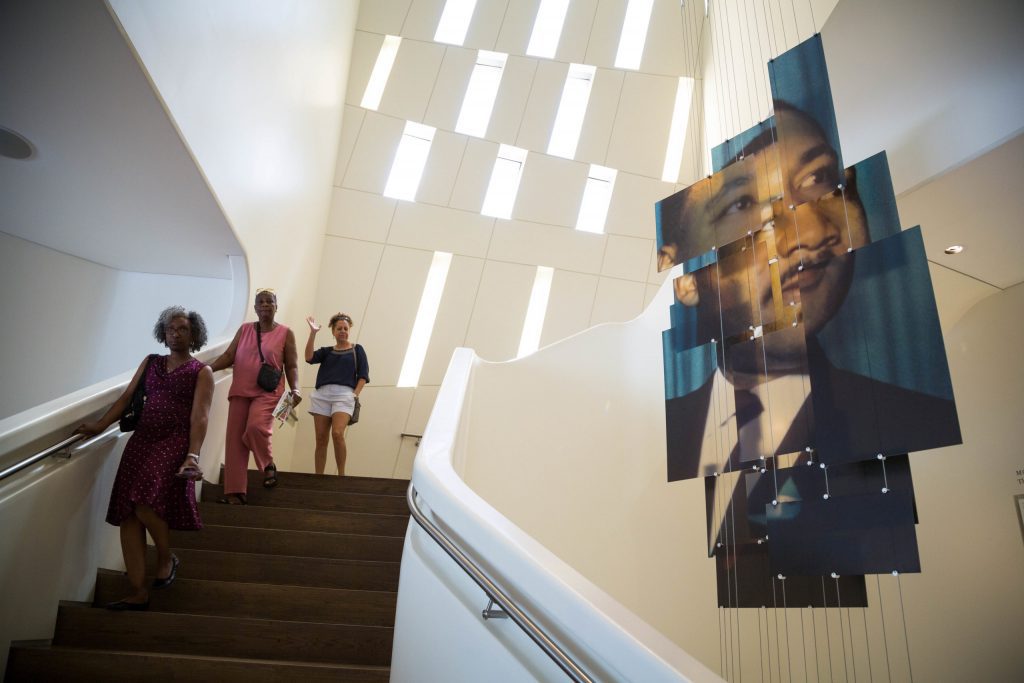
Letter from A Birmingham Jail: The Martin Luther King, Jr. Research and Education Institute, Stanford University. On April 12, 1963, Martin Luther King, Jr., Ralph David Abernathy, Fred Shuttlesworth and many others were arrested and jailed during the massive civil rights protests in Birmingham. While King was imprisoned, eight white clergymen published a letter entitled “A Call for Unity”, accusing King and others of being “outsiders” who should avoid street demonstrations and rely on legal strategies in the courts to achieve desegregation. King responded writing his famous “Letter from the Birmingham Jail.” Declaring that he was tired of waiting for change, King insisted that nonviolent direct action was consistent with his Christian faith since “one had a moral responsibility to disobey unjust laws.”
Freedom Riders
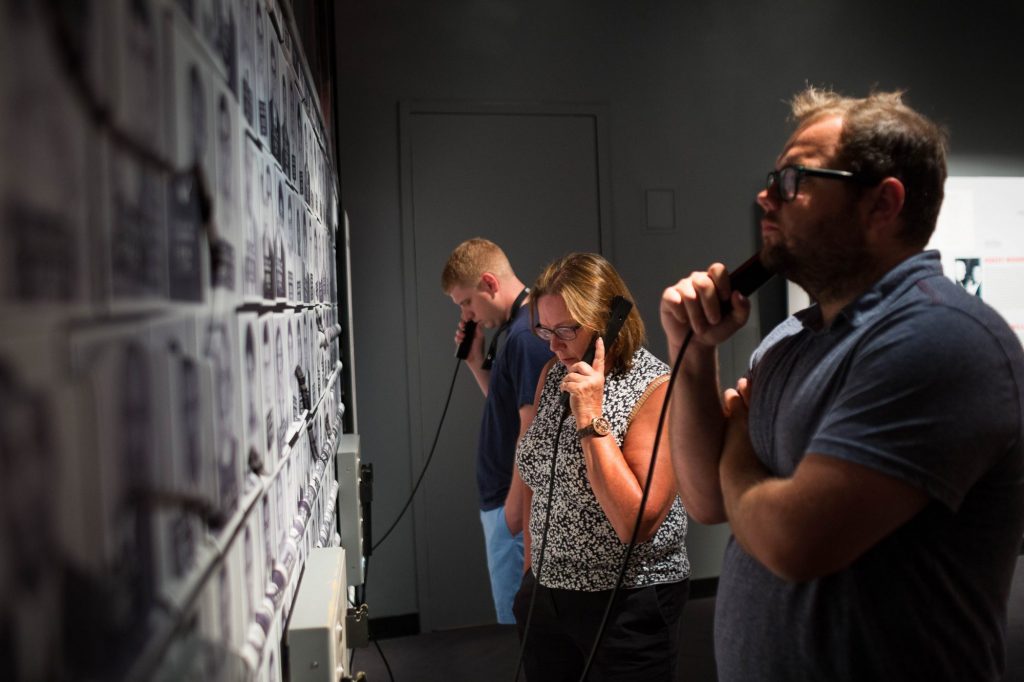
Even though federal courts in 1960 had outlawed segregation on interstate travel, many Southern states simply ignored the rulings. A band of young men and women, many of them trained veterans of the sit-ins and other nonviolent protests, took it upon themselves to act. They began boarding buses in May 1961, pressuring the federal government to enforce existing laws. Uncertain of their fate, many had written their last letters to family and friends in case they were killed. On May 14, near Anniston, Alabama, one of the buses was firebombed. Crowds mobbed another bus in Birmingham, badly beating many Freedom Riders, both black and white. While the initial Freedom Ride protest was called off, veterans of the Nashville sit-ins launched a new set of rides, despite the threat to their safety. They encountered hostile mobs again in Birmingham and Montgomery before ending their trip in Jackson, Mississippi, where they were arrested and transferred to the Parchman Farm Mississippi State Penitentiary. Throughout the summer hundreds of new Freedom Riders descended upon Jackson, only to be arrested and sent to jail. Rather than break the spirit of the Freedom Riders, jail fortified their resolve and defiance. College students and other protestors from around the country continued to put themselves on the line and risk prison-or worse. As a result, the national media began to give the Freedom Riders more extensive and favorable coverage. Meet the Freedom Riders
Mamie Till: More Than A Mother
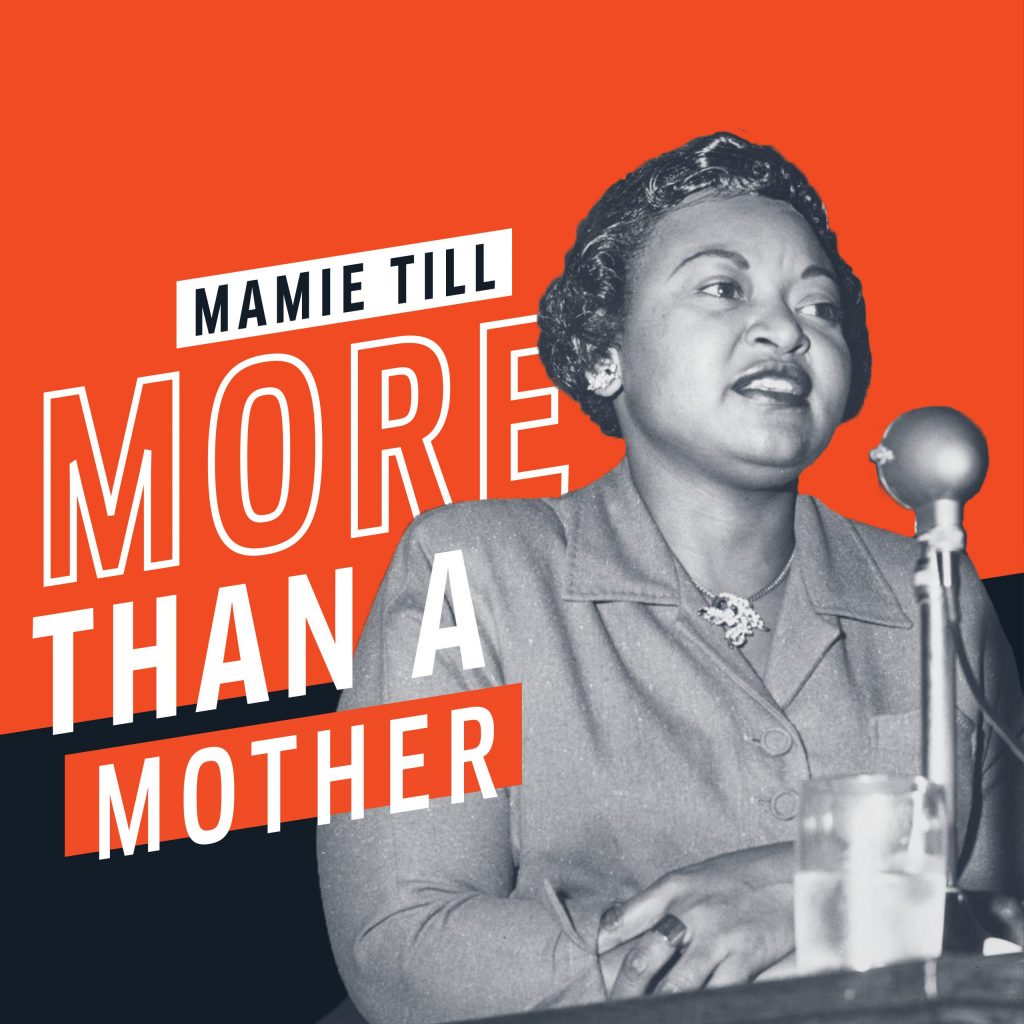
In August 1955, Mamie Till-Mobley tragically became an agent of change when her 13-year old son, Emmett, was murdered while visiting family in Mississippi. Till-Mobley’s decision to show her son’s brutalized body in an open casket served for many as a catalyst to act against the injustices perpetuated against African Americans. Seeing graphic images of his corpse in Jet Magazine and the Chicago Defender made it hard for people to ignore the violence being perpetrated against Black bodies. In fact, her own tragedy served as her own wakeup call as she mentioned in one of her speeches: Two months ago I had a nice apartment in Chicago. I had a good job. I had a son. When something happened to the Negroes in the South I said, ‘That’s their business, not mine.’ Now I know how wrong I was. The murder of my son has shown me that what happens to any of us, anywhere in the world, had better be the business of all of us. After her son’s death, Mamie Till-Mobley became an outspoken advocate in the fight for civil rights, speaking to groups around the country with the NAACP, and serving as an advocate for education. As a teacher in the Chicago Public School system for twenty-three years, Till-Mobley worked with young people both inside and outside of the classroom. She also continued to seek justice for her son in the years following his death, lending her voice to various documentaries and writing an autobiography Death of Innocence: The Story of the Hate Crime that Changed America, that was published posthumously. Learn more about Mamie Till and other Fearless Women at The Center. Plan your visit today and experience how we’re more than a museum. STAY CONNECTED WITH THE CENTER & GET THE MOST UP-TO-DATE INFORMATION ON SOCIAL BY FOLLOWING US @CTR4CHR #FEELTHEPOWER
JoAnn Robinson: More Than A Teacher
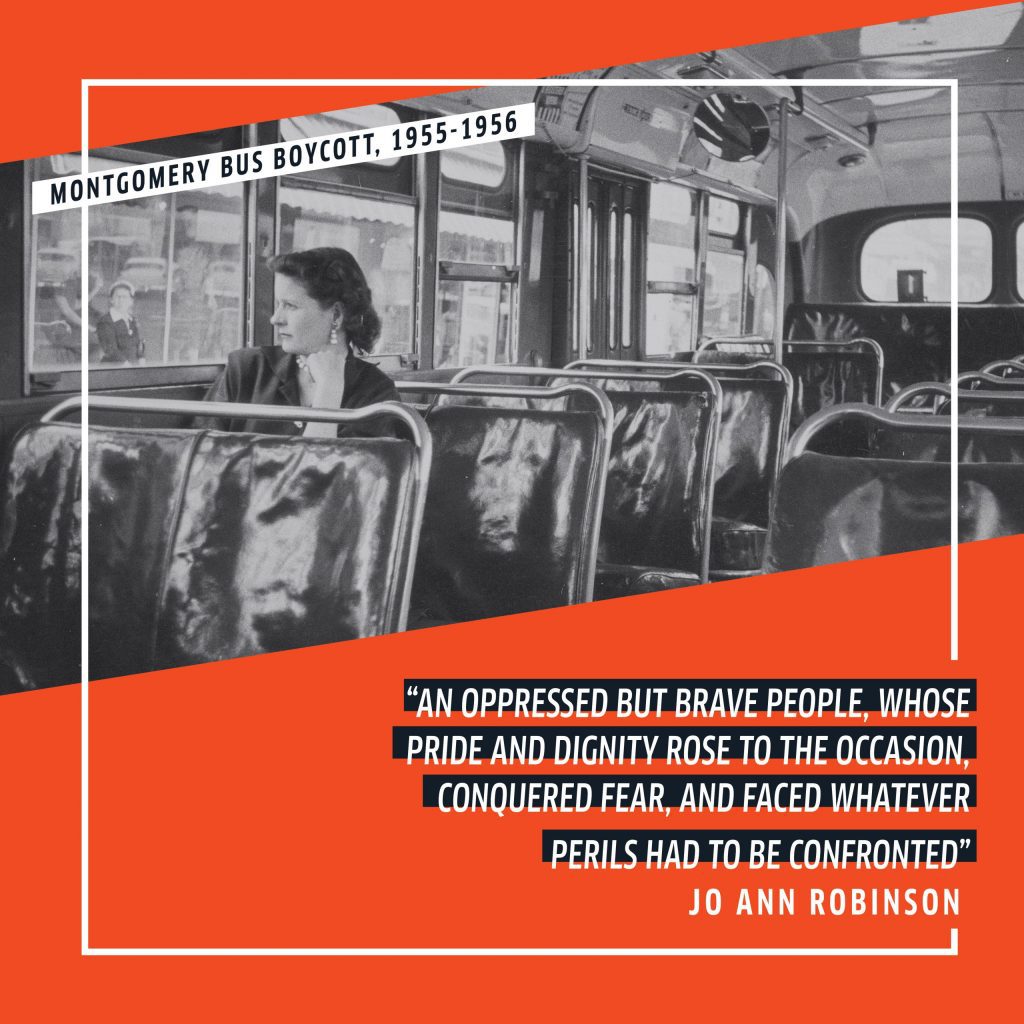
JoAnn Robinson began her career in public service as an educator in Macon, Georgia, working in public schools as an educator. She would go on to earn her master’s degree from Atlanta University and attend Columbia University. A job at Alabama State College for Negroes (now Alabama State University) brought Robinson to Montgomery, where she would join the Women’s Political Council. The WPC was an organization of African American women activists who were faculty of Alabama State College, teachers in the public schools and wives of other African American professionals in Montgomery. These women came together to fight the discrimination and racism African Americans faced on a daily basis. Prior to Rosa Parks’ 1955 arrest, the Women’s Political Council had begun discussing the possibility of a bus boycott. JoAnn Robinson was the WPC president at the time, and met with city officials during 1953 and 1954, pressing them to adopt reforms that would keep segregation in place but no longer require that black passengers surrender their seats to whites. When they received word that Rosa Parks had been arrested the WPC sprang into action. Robinson who was still an English professor at nearby Alabama State College, copied thousands of flyers urging African Americans to boycott buses on the day of Parks’ trial. WPC members canvassed Montgomery’s African American community to spread the word. The one-day boycott proved so successful that the Montgomery Improvement Association (MIA) was formed to direct the movement to change the bus laws. A simple demand that blacks be able to keep their seats evolved into a battle to end segregated buses altogether. The boycott lasted nearly a year, with a U.S. Supreme Court decision finally ruling the Alabama laws unconstitutional. The victory made Martin Luther King, the young president of the MIA, a household name, thanks in large part to the actions and activism of JoAnn Robinson and the Women’s Political Council. Learn more about JoAnn Robinson and other Fearless Women at The Center. Plan your visit today and experience how we’re more than a museum.
Jimmie Lee Jackson: More Than A Protestor
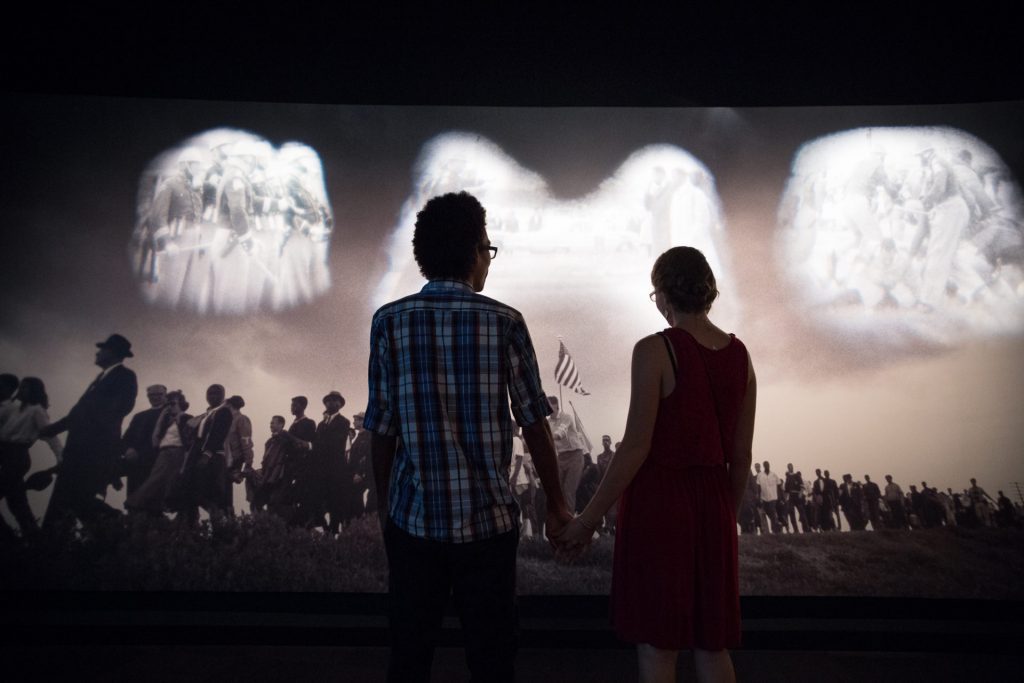
Jimmie Lee Jackson, was a Vietnam veteran, Baptist deacon, activist and martyr of the Civil Rights Movement. Jackson, active in the fight for equal rights, had tried multiple times to register to vote in Alabama and was denied each time. On February 18, 1965, he attended a meeting at Zion Chapel Methodist Church, followed by a vigil in support of recently arrested civil rights activist and reverend, James Orange when state and local police converged upon the vigil and attacked both the participants and members of the national media covering the event. After seeking shelter in a nearby building, and being assaulted by officers, Jackson was shot twice in the abdomen by Alabama State Trooper James Bonard Fowler. He would die eight days later in a Selma hospital. Inspired by Jackson, SNCC leaders organized the first Selma-Montgomery march for voting rights on March 7th. That march resulted in what became known as “Bloody Sunday,” filled with similar violence Jackson and his family faced that evening weeks earlier. The march provoked a public outcry and after three attempts, protesters were able to complete the 50-mile trek. The march, inspired by Jackson, would paved the way for the passage of the 1965 Voting Rights Act. Learn more about Jimmie Lee Jackson and other civil rights icons at The Center. For further reading, check out the Southern Poverty Law Center‘s site for more information. Plan your visit today and experience how we’re more than a museum.
John Lewis: More Than A Congressman
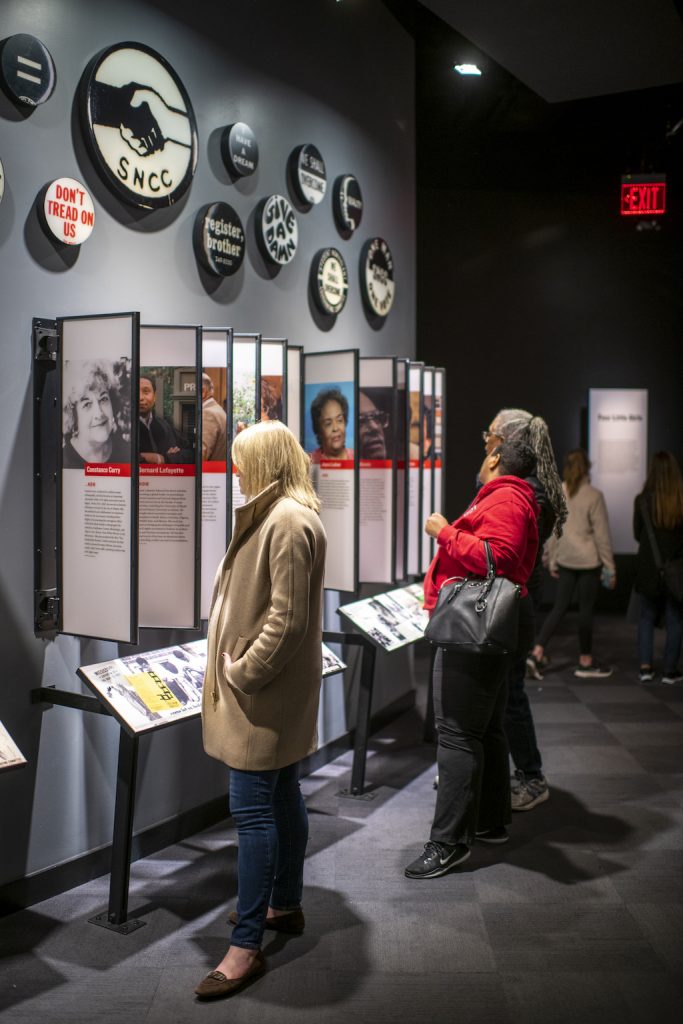
John Lewis has served the public by defending civil and human rights for everyone, from his days as a student organizer with Student Nonviolence Coordinating Committee to the present as the Representative for Georgia’s 5th District. Congressman Lewis was a part of the Freedom Rides, the March on Washington, and Freedom Summer. His support for voting rights in the March from Selma to Montgomery March 7, 1965, led to an attack by state troopers fracturing his skull. The attacks meant to stop Lewis in his tracks could not hold him down, creating a legacy of service to others in the name of equal rights. As the hometown hero of Georgia’s 5th District, Congressman Lewis has been called the “moral conscience of the House of Representatives.” His legacy includes experience as SNCC’s chairman from 1963—1966 as well as serving on Atlanta’s City Council from 1981—1986. Through the American Civil Rights Movement, the philosophy of nonviolence, & contemporary issues, Congressman Lewis is a living testament to how one may “live the legacy.” Learn more about Congressman John Lewis and other civil rights icons at The Center. Plan your visit today and experience how we’re more than a museum.
Ruby Bridges: More Than A First Grader

November 14th will mark the 60th Anniversary of the integration of William Frantz Elementary School in New Orleans by six-year-old Ruby Bridges. Norman Rockwell’s painting, “The Problem We All Live With,” published four years after Ruby Bridges’ brave actions, remains an important piece of Americana. With incredible courage, Ms. Bridges walked amongst white protestors as they hurled slurs while throwing objects at her—because of the color of her skin. Ruby Bridges described the scene like Mardi Gras. However, the lasting effects of her actions that lead to the desegregation of the New Orleans public school system hit her and her family in many detrimental ways. Her father lost his job, and her grandparents were even thrown off of the land they had sharecropped for years. The family’s courage in the midst of racism and bigotry is like many other icons during the American Civil Rights Movement. History now sees Ruby Bridges as more than a first grader, but at the time she was one of many everyday people making incredible strides to push the needle towards progress in America. Learn more about Ruby Bridges and other civil rights icons at The Center. Plan your visit today and experience how we’re more than a museum.