
Juneteenth celebration invites Americans to tell the truth about U.S. history
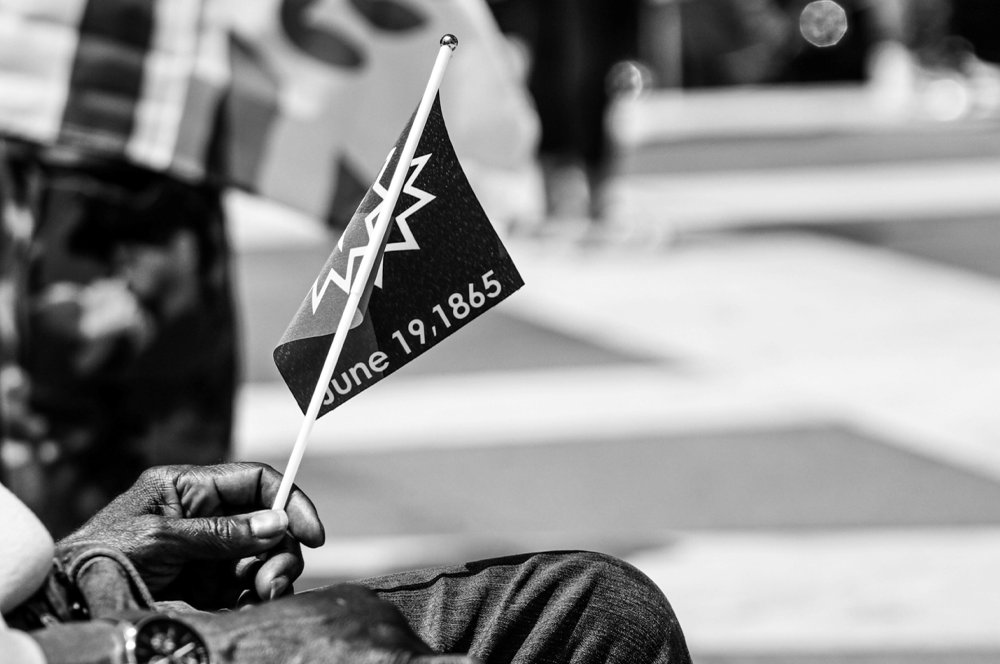
Authored by Jill Savitt, Chief Executive Officer of the National Center for Civil and Human Rights. Originally published in The Atlanta Journal-Constitution. On June 19, 1865, freedom finally reached Galveston, Texas, as Union troops arrived to inform the last enslaved African Americans that they were free. President Lincoln had issued the Emancipation Proclamation more than two years earlier—but in Confederate-held Texas, where federal authority had yet to reach, enslavers simply chose to ignore the law. Freedom was just a promise on paper until Union forces arrived to enforce it. Today, we commemorate June 19th as Juneteenth, a celebration of freedom long honored in Black communities and now recognized nationwide. In 2021, it became a federal holiday with overwhelming bipartisan support. The U.S. Senate passed the legislation unanimously; the House followed with a 415 to 14 vote. President Biden signed it into law, affirming Juneteenth as a national day of remembrance, reflection, and resolve. Until Juneteenth became a federal holiday, many Americans had never heard of it—despite its profound historical significance. The end of slavery was not just a milestone for Black Americans; it was a moral and constitutional turning point for the entire nation—a cause for collective pride. Juneteenth also matters not only because of what it marked the end of, but because of what it opened the door to: the long, unfinished struggle to turn freedom into reality for all. In the wake of Juneteenth, the United States embarked on its most ambitious experiment in democracy: the Reconstruction Era (1865–1877). Under the protection of Union troops and empowered by three new constitutional amendments, newly freed Black Americans built schools, launched businesses, held elected office, and began to exercise the full rights and responsibilities of citizenship. For the first time, Black men could vote—and many did, reshaping the political landscape of the postwar South and redefining what democracy could mean in America. Unfortunately, this progress was short lived. Black economic and political success enraged segregationists. When federal troops – and the protection they gave — withdrew from the South in 1877 as part of a political compromise, white supremacists launched a brutal wave of racial terror — lynchings, massacres, and the codification of Jim Crow segregation laws. The goal was to deny Black Americans the rights they had briefly exercised—voting, owning property, holding office—and to reassert white dominance in all sectors of society. This violence was fueled and abetted by a campaign of propaganda and historical distortion. With support from white-owned newspapers and sympathetic historians, segregationists began reframing the narrative about Reconstruction. They portrayed it as a failure—saying Black people were incompetent, dangerous and incapable of participating in democracy. They glorified the Confederacy and minimized the horrors of slavery. This “Lost Cause” mythology hardened into public memory, justifying voter suppression and economic exclusion. It also incited violence on a mass scale, fueling massacres of Black communities in Wilmington (1898), Atlanta (1906), Tulsa (1921), and elsewhere around the country. During the “Red Summer” of 1919, white mobs attacked Black communities in dozens of cities. For decades, our national history was buried or distorted. While courageous individuals attempted to expose the truth at the time and in the decades that followed Reconstruction, lasting change would not take hold until the Civil Rights Movement of the 1950s and 60s. This fall, when the National Center for Civil and Human Rights reopens after its expansion, we will unveil a new gallery dedicated to the Reconstruction Era. It will tell a more complete story of America—one that reveals a persistent cycle in our history: progress on civil rights, followed by backlash. We present this history not as a closed chapter for one era, but as a persistent pattern — one that continues. It is happening now. In the wake of George Floyd’s murder, a renewed call for racial justice and historical truth swept the country. In familiar fashion, it was met with resistance—this time focused on suppressing history itself. Across the nation, “divisive concepts” laws have sought to restrict how educators discuss slavery, racism, and civil rights. Diversity, Equity, and Inclusion programs have been dismantled in government, schools, and businesses. Government websites have been scrubbed of references to the contributions of minorities and women. Museums and schools are being pressed to tell history only in ways that inspire pride—not reflection. But that is a false choice. A nation can be both honest about its past and proud of its progress. Real patriotism does not ignore history’s painful chapters; it learns from them. National greatness is not built on myths of perfection, but on the courage of those who have pushed this country closer to the ideals outlined in our founding documents. This Juneteenth, don’t just take a day off. Use this holiday as an opportunity to understand our history — with all its pain and promise. Seek books, documentaries, and visits to sites that hold historical significance. Talk openly with family and friends about where we’ve been and where we still need to go. Take time at your gatherings to read aloud the Gettysburg Address, the Emancipation Proclamation, and the Letter from Birmingham Jail. Let the day be both a celebration and a time of reflection. Because grappling with America’s past doesn’t diminish its greatness—it demonstrates it.
The Women’s Political Council: The Hidden Force Behind the Montgomery Bus Boycott
On December 1, 1955, Rosa Parks refused to give up her bus seat to a white man in Montgomery, Alabama. Her arrest for violating segregation laws heightened public awareness of the Civil Rights Movement and elevated Dr. Martin Luther King, Jr. from his role as pastor of Dexter Avenue Baptist Church to prominent spokesman for the movement. While Parks and King are widely recognized, the contributions of the over 200 Black women of the Women’s Political Council (WPC) and activists like Claudette Colvin traditionally received little to no attention in the storytelling until recently. Led by Alabama State University professor Jo Ann Robinson, the WPC played a crucial role in the Montgomery Bus Boycott. The group printed and distributed 35,000 leaflets, organized carpools, and facilitated mass meetings. In 1949, Robinson had been subjected to a verbal attack by a public bus driver for sitting in the “whites only” section of a nearly empty bus. She presented the idea of a boycott to WPC founder and president Mary Fair Burks in 1950 but was advised to forget her plans as segregated buses were seen as a fact of life in Montgomery. Upon assuming the presidency of the WPC later that year, Robinson prioritized the desegregation of the city’s buses and met with Montgomery Mayor William A. Gayle and Montgomery City Hall leaders to discuss her concerns, but neither the mayor nor the leaders were interested in her ideas. Robinson also met with the Montgomery City Commission and was promised better treatment of Black citizens on Montgomery buses but was told that segregation would continue. Robinson continued planning the boycott and, after the 1954 Brown v. The Board of Education, Topeka, Kansas decision, informed the mayor that the boycott was inevitable. On March 2, 1955, months before Rosa Parks’ arrest, 15-year-old Claudette Colvin also refused to give up her seat. She was arrested, but civil rights leaders did not publicize her case, citing her young age, pregnancy, and darker complexion as factors. Instead, leaders of the National Association for the Advancement of Colored People (NAACP) arranged for Parks to be the face of the Montgomery Bus Boycott by preparing her to refuse to give up her seat. Following Parks’ arrest, the WPC organized a one-day bus boycott on December 5, 1955. Its success led to an extended boycott, and several members of the Black community came together to form the Montgomery Improvement Association (MIA), electing Martin Luther King, Jr. as president. The MIA demanded an end to all public transportation segregation, the hiring of Black bus drivers, and the respectful treatment of Black riders. Robinson was offered but did not accept a position with the MIA. She did, however, quietly support the organization’s efforts. Robinson was also arrested, along with other Black boycotters, several times, and her car was destroyed with acid by Montgomery police officers. Two months after the boycott began, civil rights attorneys filed Browder v. Gayle, challenging Montgomery’s segregation laws as violations of the Equal Protection Clause of the 14th Amendment. The District Court decided 2-1 that Montgomery’s bus segregation laws were unconstitutional. Both the City of Montgomery and the State of Alabama appealed, but the Supreme Court upheld the decision on November 13, 1956, officially ending the boycott and marking a major victory for the Civil Rights Movement. Further Reading The Montgomery Bus Boycott and the Women Who Started It: The Memoir of Jo Ann Gibson Robinson by Jo Ann Robinson Claudette Colvin: Twice Toward Justice by Phillip Hoose Women in the Civil Rights Movement: Trailblazers and Torchbearers, 1941-1965; Edited by Vicki L. Crawford, Jacqueline Anne Rouse, Barbara Woods
The History of Black History Month
Black History Month was first observed as Negro History Week in February 1926, but the inspiration for the commemoration began over a decade earlier through a steady stream of electrifying events, discoveries, and other celebrations of Black excellence. In 1915, American historian Dr. Carter G. Woodson attended the national celebration of the fiftieth anniversary of emancipation in Washington D.C. This event was widely attended and proved to be profoundly inspiring for Dr. Woodson who, later that year, joined forces with A. L. Jackson, William B. Hartgrove, George Cleveland Hall, and James E. Stamps to establish the Association for the Study of Negro Life and History, known today as the Association for the Study of African American Life and History (ASALH 2024). ASALH had the ambitious goal of educating the public about the achievements, inventions, and progress made by Black Americans, and though the Association’s intellectual efforts were remarkable – they began to publish The Journal of Negro History in 1916 and founded Negro History and Literature Week in 1924 – Dr. Woodson had a wider vision of his mission. Wishing to continue to discover and celebrate the history of the Black past, Dr. Woodson announced the celebration of Negro History Week through a press release. Accounts of the contributions of Black Americans were notably absent from history books, credited to white men, or omitted altogether. Progressive communities and schools were ripe for the rich history that Negro History Week offered. Matching the popularity of the week, Woodson and the Association established an annual theme for the celebration to guide and inspire educators. Weary of those simply wishing to capitalize on a popular event, “Woodson warned teachers not to invite speakers who had less knowledge than the students themselves” (ASALH 2024). Additionally, ASALH expanded their offerings to provide study materials: pictures, lessons for teachers, plays for historical performances, and posters of important dates and people. This cemented the celebration of Black history in schools and communities, and Negro History Week grew in popularity throughout the following decades, with mayors across the United States endorsing it as a holiday. Negro History Week grew into Black History Month in 1970 under the leadership of Black educators and students at Kent State University and would become a federally recognized event six years later. President Gerald Ford recognized Black History Month in 1976 during the celebration of the United States Bicentennial. He urged Americans to “seize the opportunity to honor the too-often neglected accomplishments of Black Americans in every area of endeavor throughout our history” (Franklin 2022). Today, nearly one hundred years after that initial celebration, it is prudent to reflect on the designed purpose of Black History Month and discover that after all this time, these lessons are still relevant, inspiring, and necessary. As Dr. Woodson said, “Real education means to inspire people to live more abundantly, to learn to begin with life as they find it and make it better” (Woodson 1933). Pictured: Dr. Carter G. Woodson, The “father of Black history” Photo Credit: Addison Norton Scurlock, Public domain, via Wikimedia Commons Bibliography ASALH. 2024. The Founders of Black History Month: The Origins of Black History Month. December 18. Accessed January 16, 2025. asalh.org/about-us/origins-of-black-history-month/. ASALH. 2024. Carter G. Woodson Timeline: ASALH – the Founders of Black History Month. December 19. Accessed January 16, 2025. asalh.org/carter-g-woodson-timeline/. Franklin, Jonathan. 2022. Here’s the Story behind Black History Month – and Why It’s Celebrated in February. February 1. Accessed January 16, 2025. www.npr.org/2022/02/01/1075623826/why-is-february-black-history-month. Woodson, Carter G. 1933. The Mis-Education of the Negro. Trenton: Africa World Press.
70 Years after Brown v. Board
This year, for Power to Inspire, The Center will present a multimedia performance dedicated to the historic Brown v. Board of Education of Topeka, Kansas Supreme Court ruling and its impact on the equity of education 70 years later. What was Brown v. Board of Education about? Brown v. Board of Education challenged state-sanctioned segregation in public schools, stating separate schools for Black and white students was unconstitutional as it violated the 14th Amendment’s equal protection. The Plaintiffs The “Brown” in Brown v. Board of Education is named after plaintiff Oliver Brown, who filed a class-action suit against the Board of Education of Topeka, Kansas, when his daughter Linda was denied entrance to Topeka’s all-white Sumner Elementary School in 1951. Mr. Brown was one of 13 parents from Topeka fighting for an equal education for his child. In 1952, the NAACP Legal Defense Fund’s chief attorney, Thurgood Marshall argued Brown v. Board of Education before the Supreme Court, a case that combined 4 cases: Briggs v. Elliott (1950) from South Carolina; Bolling v. Sharpe (1952) from Washington, D.C.; Davis v. County School Board of Prince Edward County (1952) from Virginia; and Belton (Bulah) v. Gebhart (1952) from Delaware. The case was argued before the Court twice, in 1952 and 1953, before a decision would come down in 1954. The Doll Test To prove that segregated schools were not equal, Marshall enlisted testimonies and research from social scientists, including psychologists, Drs. Kenneth and Mamie Clark. Fourteen years before the case, The Clarks designed and conducted a series of experiments to study the psychological effects of segregation on African American children. “The doll tests,” as they are commonly called, used four dolls, identical except for skin color, to test children’s racial perceptions. Most of the children chose the white doll when asked which doll they preferred. The Clarks concluded that “prejudice, discrimination, and segregation” created a feeling of inferiority among Black children and damaged their self-esteem. The Verdict In May of 1954, the Supreme Court issued a unanimous 9–0 decision written by Chief Justice Earl Warren, in favor of the plaintiffs. The Court agreed that public school segregation had a “detrimental effect upon the colored children” and contributed to “a sense of inferiority.” The Courts ruled that “separate educational facilities are inherently unequal” and, therefore, violate the Equal Protection Clause of the Fourteenth Amendment. The verdict overturned 50 years of “separate-but-equal” doctrine – set forth in 1896’s Plessy v. Ferguson – that gave rise to Jim Crow laws that shaped US public education (and American life) after the post-Civil War Reconstruction period. The case did not lay out any method for ending racial segregation in schools. The Reaction School integration did not happen immediately. Many states delayed or outright defied the court order to desegregate. In 1955, the Supreme Court rendered the Brown II Decision, which ordered desegregation of public schools to occur with “all deliberate speed.” White parents across the nation resisted the Brown v. Board mandate. School boards, politicians, and parents alike found ways to delay, restrict, or avoid integration. Numerous private schools popped up in predominantly white suburbs. These schools, known as “Segregation Academies,” were founded solely to avoid integrating public schools. In other areas, public schools shifted white students to “gifted programs” at schools with more funding and better opportunities. Highly skilled Black teachers were moved from their neighborhood schools to predominantly white schools. Indeed, some predominantly Black schools were closed altogether in favor of busing Black students to predominantly white schools, which were often far from Black students’ homes. Power to Inspire 2024 The year’s Power to Inspire show is written and directed by acclaimed playwright and director Nikki Toombs. Through video, music, dance, and immersive storytelling, Toombs explores the impact of Brown v. Board of Education’s transformative verdict that spurred a movement for equality, drawing parallels between students from the Jim Crow era to today and humanizing those affected by the inequality of our education system. Guests will gain insight into our society’s challenges and be inspired to advocate for fair and equal education for all. Visit civilandhumanrights.org/courage to purchase your tickets today! Want to Learn More about Brown v. Board and school integration? Check out these resources: Timeline of Events Leading to the Brown v. Board of Education Decision of 1954, National Archives A History of Private Schools and Race in the American South, Southern Education Foundation The Racist Origins of Private School Vouchers, Center for American Progress Nice White Parents, New York Times The Persistence of NYC School Segregation Part 1, Part 2, P.S. Weekly, The Bell
Exhibit Reflection: We Who Believe in Freedom: 1964–A Transformative Year in Civil Rights
By Lance Wheeler Each year, the National Center for Civil and Human Rights partners with the Morehouse College Martin Luther King Jr. Collection, to showcase Dr. King’s personal papers in our museum’s Voice to the Voiceless Gallery. 2023’s exhibit focused on the 1963 March on Washington for Jobs and Freedom during its 60th anniversary. This year’s rotation chronicles major events in 1964 that transformed the civil rights movement. The Center’s Exhibitions Director, Lance Wheeler, shares his thoughts on the events of 1964, and how they shaped the formation of the exhibit. As I look back at 1964, I am drawn to the collective efforts of individuals who strongly advocated for equality. This critical time, set against the backdrop of the intense climate of segregation, saw established leaders, grassroots activists, community organizers, and influential figures join in solidarity against racial discrimination. The atmosphere was charged with the urgent need for change, prompting a united front to address systemic injustice. Amid the enthusiasm for progress, the journey was marked by setbacks and wins. Setbacks, in the form of resistance to change, entrenched prejudice, and systemic obstacles, challenged the resolve of those seeking equality. Despite this, advocates remained resilient. This resilience produced notable wins – legislative victories, community mobilization, and increased awareness to spur positive change – that demonstrated the power of collective action in overcoming barriers to equality. This pivotal year underscored the complexity of the struggle for civil rights, illustrating the resilience required to navigate the turbulent path toward a more just and inclusive society. In 1964, civil rights leaders and volunteers orchestrated crucial events such as organizing Freedom Summer and persistently pushing for the passage of the Civil Rights Act of 1964. Organizers sought to eliminate discrimination, especially in voting rights and integrating public spaces. On December 11, 1964, Dr. King travelled to Oslo, Norway, to accept the Nobel Peace Prize in recognition of his unwavering leadership, advocating nonviolent resistance against racial injustice. The prestigious award underscored the profound impact of the civil rights movement. The title of this year’s King Collection exhibition We Who Believe in Freedom – 1964, A Transformative Year in Civil Rights acknowledges the collective mission of the movement, honoring the multitude of voices that demanded and fought for freedom. The leading portion, We Who Believe in Freedom, draws inspiration from the encouraging lyrics of the Black female a cappella ensemble, Sweet Honey in the Rock, in their masterpiece, “Ella’s Songs.” The song serves as a heartfelt tribute to civil rights leader Ella Baker, emphasizing that grassroots organization and collective power can dismantle systemic racism. Crucially, the transformative power of the civil rights movement came not just from notable leaders, but also countless individuals declaring, “We Who Believe in Freedom Shall Not Rest Until it’s Done.” I invite visitors to explore this year’s rotation and consider Dr. King’s profound understanding that societal transformation happens when people collectively declare, “enough is enough.” The rotation displays compelling narratives and diverse materials through a rich array of historical artifacts, letters, flyers, magazines, and photographs that vividly encapsulate the spirit of Freedom Summer. Visitors can immerse themselves in Dr. King’s handwritten notes, providing valuable insights into his reflections on the momentous passage of the Civil Rights Act. Delving into Dr. King’s thoughts and eloquence, our exhibit presents a unique opportunity to explore early drafts of both his Nobel Acceptance Speech and Lecture. We offer a fascinating glimpse into the evolving nature of these seminal addresses, allowing attendees to connect more intimately with the historical context and the dynamic process behind these influential pieces. During his remarks to the Nobel Committee, Dr. King announced a call to action which still resonates today. “Make a career of humanity. Commit yourself to the noble struggle for equal rights. You will make a better person of yourself, a greater nation of your country, and a finer world to live in.” Dr. King’s legacy of exemplary leadership continues to inspire individuals to embrace the noble struggle for a more inclusive and equitable society. We Who Believe in Freedom- 1964, A Transformative Year in Civil Rights is featured in the National Center for Civil and Human Rights’ Voice to the Voiceless Gallery through 2024. Visit civilandhumanrights.org/buy-tickets to purchase your tickets today!
The Center Honors Women of the March on Washington with immersive performance
Last month, The Center’s Marketing Director Autumn Duncan, in collaboration with History Made By Us’s Cameron Katz, wrote an article for Teen Vogue highlighting the role of women in the March on Washington for Jobs and Freedom. The write-up featured many women of the March , yet focused on the efforts of Dorothy Height, the only female member of the “Big Six” March organizers, and Anna Arnold Hedgeman, the only woman on the event’s administrative committee. The March aimed to establish a civil rights bill that would equally impact African American men and women. The bill’s goals included desegregating public facilities, integrating public schools, establishing voting rights for African Americans, and a federal ban on discrimination in employment. The March was effective and ultimately led to President Kennedy announcing plans for a comprehensive civil rights bill. Despite this critical accomplishment, civil rights leaders like Dorothy Height, Anna Arnold Hedgeman, Myrlie Evers, Daisy Bates, Diane Nash, and Gloria Richardson, who contributed significantly to the planning and execution of the March, are rarely mentioned in history books. On May 17, 6pm at the Rialto Center for the Performing Arts in Downtown Atlanta, the National Center for Civil and Human Rights will present a theatrical re-imagining of the March on Washington to commemorate its 60th anniversary and give the women of the March some well-overdue recognition. The one-night-only performance called “Let Us March On…” recreates moments from the March and honors the women who made the event possible. Part of The Center’s annual Power to Inspire event, we will celebrate civil rights legend Mrs. Myrlie Evers-Williams who, because of traffic, didn’t make it to the original March. She will be front and center for our immersive performance. “Let Us March On…” was written by acclaimed playwright and director Nikki Toombs and features an all-star cast that includes award-winning Broadway actress Maiesha McQueen as Mahalia Jackson, Brad Raymond as March organizer A. Phillip Randolph, and choreography by Victor Jackson. To be transported back to the event that gave birth to the iconic “I Have a Dream” speech, join us for this joyous event by purchasing your tickets today! Presented by the National Center for Civil and Human Rights as part of its annual Power to Inspire.
Center celebrates Dr. King’s legacy with a weekend of arts events, unveils Spring 2023 exhibition of Morehouse College Martin Luther King Jr. Collection
Exhibition examines March on Washington’s 60th anniversary; activities include a panel discussion with Alvin Ailey American Dance Theater leaders, a Palefsky Collision Project youth theater performance, live Radio One broadcasts, interactive games and storytelling; galleries open January 12 – 16 ATLANTA, Ga. (Jan. 4, 2023) – The National Center for Civil and Human Rights (The Center) presents a full holiday weekend of engaging and inspiring events to immerse visitors and families in Dr. Martin Luther King Jr.’s life and legacy. January 12 through January 16 (MLK Day) events include performances, a panel discussion, interactive storytelling, visual artist talkbacks, and activities throughout The Center’s galleries. “Dr. King’s belief in a beloved community is as relevant today as it was during the Civil Rights Movement,” said Jill Savitt, president and CEO of The Center. “This holiday is an opportunity for all of us to recommit ourselves to heed his call to build that beloved community—in our neighborhoods, city, state, and country. The Center’s 2023 King celebrations focus on arts and storytelling to inspire visitors of all ages to reflect on Dr. King’s vision of justice and equality, so that they may tap their power to change the world around them.” Hours and tickets are available at: https://www.civilandhumanrights.org/visit/. Events include: Thursday, January 12 12 p.m. – 5:30 p.m. Jill Savitt serves as a panelist at The King Center Beloved Community Global Summit for discussions around “Cultivating a Beloved Community Mindset to Transform Unjust Systems.” 6:30 p.m. – 9 p.m. Alvin Ailey American Dance Theater Artistic Director Robert Battle joins Jill Savitt; scholar, activist and historian Dr. Clarissa Myrick-Harris; and National Director of Ailey Camp Nasha Thomas for a discussion about art as a vehicle for social change. Panel moderator NBC News Correspondent Blayne Alexander will spotlight projects that reveal truth, awaken transformation, and recognize triumphs on the march to freedom such as The Center’s “Now is the Time…” exhibition about the March on Washington and Alvin Ailey’s new production of Survivors (1986) debuting at the Fox Theater February 16-19. Doors open at 6 p.m. A cocktail reception follows. Friday, January 13 12 p.m. – 5 p.m. The Center unveils its Spring 2023 thematic exhibition of selections from the Morehouse College Martin Luther King Jr. Collection. Now Is the Time: Remembering the Legacy of the March on Washington for Jobs and Freedom presented during the 60th anniversary year of the March, explores its organization and impact when 250,000 Americans gathered on the National Mall on August 28, 1963 to demand civil and economic rights. Collection artifacts include the original draft of Dr. King’s “Normalcy, Never Again” speech for the March in which the tremendous orator improvisationally transformed into his iconic “I Have a Dream” speech. “’Now is the Time’ transports visitors to a movement and a moment that has inspired generations to fight for economic justice, voting rights, and equitable access to education and health care,” said Lance Wheeler, Director of Exhibitions. “As visitors view the artifacts, we hope they will reflect on Dr. King’s dream, how we have progressed since the March but also consider how oppressive systems have evolved to impede greater progress.” The full collection is owned by Morehouse College and housed at the Atlanta University Center Robert W. Woodruff Library. Saturday, January 14 – Monday, January 16 12 p.m. – 4 p.m. Family Day activities in the galleries include interactive storytelling, featuring Who Was Martin Luther King, Jr.? by Lisbeth Kaiser and Stanley Chow; a King action card to inspire visitors’ to create acts of service in their communities and offers an animated version of King’s “Dream” speech in partnership with Stanford University; plus games & puzzles, coloring stations, and giveaways. 12 p.m. – 4 p.m. Savannah College of Art and Design students will lead visual talks among the galleries Rolls Down Like Water that immerses visitors in sights, sounds and interactive displays depicting the courage of groups and individuals working for equality for all during the American Civil Rights Movement; and Spark of Conviction, which enables visitors to make connections to the world of human rights. Sunday, January 15 (Dr. King’s birthday) 6 p.m. – 8 p.m. Corporate and community leaders from across Atlanta will convene for an intimate, vulnerable, and thought-provoking experience, with guided conversations about Equitable and Affordable Housing in Atlanta for Hands on Atlanta’s 9th annual MLK Sunday Supper. Housing was a crucial part of Dr. King’s vision for economic justice. Participants will learn how to host their own conversations to generate action and build more equitable communities. Monday, January 16 (MLK Day) 11 a.m. – 11:45 a.m. Youth artists from The Alliance Theater’s Palefsky Collision Project return to The Center’s Glenn Room to perform theater inspired by their letters to Dr. King that display the inspirational power of collaboration. 11 a.m. – 4 p.m. Radio One will broadcast live onsite providing a soundtrack of soul stirring Hip Hop, R&B, and Gospel plus contests and trivia. 11 a.m. – 4 p.m. Family activities continue with the inclusion of Center-wide scavenger hunt to learn about Dr. King’s life and work through the Center’s permanent galleries. About the National Center for Civil and Human Rights The Center, founded in 2014, is a museum and human rights educational institution located in Atlanta, GA, the cradle of civil rights. We create dynamic and empathy- building experiences, teach history’s connection to the present, generate brave and difficult conversations about necessary issues, and inspire the change-maker in each of us to promote civil and human rights in our communities and the world. The Center connects the U.S. civil rights movement of the 1950’s and 1960’s to global human rights movements for the rights of people of color, women, immigrants, people with disabilities, LGBTQIA+ people, and other marginalized groups. Through our Diversity, Equity and Inclusion initiative, the Campaign for Equal Dignity, the LGBTQ Institute, expansive educational offerings, and immersive and engaging storytelling we inspire each of us to reflect and think critically, exercise empathy in action, and create positive change locally and globally. For
Why Celebrate Juneteenth? An Exploration of the Historical Journey to Freedom for African Americans
By Nicole Moore, NCCHR Director of Education Juneteenth commemorates the day, June 19, 1865, when Union Maj. Gen. Gordon Granger arrived in Galveston, Texas and read General Order Number Three. His order stated that “the people of Texas are informed that in accordance with a proclamation from the Executive of the United States, all slaves are free. This involves an absolute equality of personal rights and rights of property, between former masters and slaves, and the connection heretofore existing between them, become that between employer and hired labor.” Emancipation provided nothing for those formerly enslaved except their freedom. They were not guaranteed work, homes, clothing, or food. But for many, that freedom would be feast enough; the chance to reunite with loved ones, long separated by the cruel institution of slavery, to move freely and begin life again. For those enslaved in Texas, freedom arrived two years after the Emancipation Proclamation was enacted. The emotions that ran through those men and women, as the words of the Order were read to them, must have been vast. The hopes and dreams of generations finally became a reality—along with the awareness that things would never be the same again. Freedom in its purest form would still be just out of reach. A society that would not recognize these individuals as citizens of the country they helped build for another three years greeted them, and a new phase in the struggle for equality was just beginning. But in those initial moments, there was hope. Dreams would be crafted, and generations would now be born free. There was the opportunity to live in a new world. That world would prove to be a challenge as well and continues to be—for many of their descendants. But the hope, the emotion, the feeling of freedom—that would endure. Now a federal holiday, Juneteenth is more than questionable ice cream flavors and merchandise. It is a celebration, and a moment to remember those who finally learned they were free. It is a moment to reconnect with those you consider family. Juneteenth is a time to reflect on the idea of freedom and consider its meaning. It is my sincerest hope that as the day approaches, and you indulge in the traditions that include BBQ and strawberry soda, you take a moment to also learn about the history as the country entered the era of Reconstruction. Decades of terror would follow, but there were triumphs. Those same formerly enslaved men would be given a fleeting opportunity to be elected to office. Schools for newly minted African Americans would spring up, providing education for those who would go on to continue the fight for justice, equality, and yes, continued freedom. Let us feel the joy and jubilation of the day, and then continue to fight for the freedoms these men and women longed for, and make freedom, true freedom, a reality.
A Note From The CEO—Black History Month 2022
Dear Friends: Atlanta has a shining history of civil rights. We tell that story in The Center and it is showcased all across our city with markers, murals, and memorials. As we mark Black History Month, we celebrate that history of bravery and resilience. This Black History Month we also want to highlight episodes of civil rights history that remain largely untold – painful chapters that are not taught in schools or recognized in our landscape. Confronting and sharing this suppressed history is essential to creating a future that is more equitable. If we do not understand how we arrive at this moment of national discussion about race, equity, and justice, we will not have the information we need to move forward in a different way. This month we will host programs on historical events in Atlanta—events that happened in prominent places—but are largely unknown. The downtown Five Points neighborhood is one example. In 1906, a mob of 5,000 white people began a massacre in Five Points. The mob murdered 25 Black people in a killing spree that lasted four days. That event is called the 1906 Atlanta Race Massacre—and it wasn’t added to Georgia’s history curriculum until 2007, more than 100 years later. There is no memorial to the victims of this race massacre—and no explanation or recognition that this crime happened, even though the event shaped the future of Atlanta. Our February 15th program on the 1906 Atlanta Race Massacre will share the history of that event, as well as ways individuals and groups can engage to share and discuss it. Another piece of hidden history happened at Bellwood Quarry—the centerpiece of the new Westside Reservoir Park. Press coverage about the new park touts the quarry’s amazing views and the fact that it will hold the city’s emergency drinking water. Less well known is that about 130 years ago, Bellwood Quarry was a convict labor camp where many newly freed Black men, women, and children were horribly mistreated and even worked to death. After the end of slavery, and in search of free or cheap labor, Southern business and government leaders colluded to arrest African Americans for bogus or petty crimes, and lease them to railways, mines, and plantations. This “slavery by another name” lasted for decades, affecting generations of Atlantans. On February 23rd, we will host a program about convict labor on the westside of Atlanta as well as our work with partners to create a memorial at the quarry to honor what happened there. All of this work is part of a project we call Truth and Transformation, an initiative to help our community engage critically and honestly with the truth of history. We hope you will join us for our Black History Month programs and become a part of this work. Best, Jill
The National Center for Civil and Human Rights Celebrates Black History Month with Robust New Programming & Activities for the Entire Family

Mostly virtual programming brings history to life in performances, new film screenings, discussions and more throughout February, with support from PNC ATLANTA, Ga. (February 1, 2021) – With storytimes, screenings, performances, giveaways, and more, The National Center for Civil and Human Rights (The Center) is celebrating Black History Month with a full slate of new programs and events throughout February. The Center will showcase a broad tapestry of experiences through virtual storytelling to bring the sights and sounds of this rich history to adults and children. Events include a children’s story screening of Pearl Cleage’s new animated short “Sit-In” in partnership with the Alliance Theatre; a virtual Q&A with George C. Wolfe director of the Netflix film “Ma Rainey’s Black Bottom” and curator of The Center’s “Rolls Down Like Water” gallery; and a screening of the visual poem The Baptism, an homage to civil rights leaders Congressman John Lewis and Reverend C.T. Vivian, in partnership with Lincoln Center. Black History Month programming at The Center is sponsored by PNC. For a full list of programming and events visit www.civilandhumanrights.org/explore/bhm-2021. The Center will also create exclusive content for its social media channels, including a collaboration with historian and activist Blair Imani on her “Smarter in Seconds” series. Follow @BlairImani on Instagram. Follow The Center facebook.com/ctr4chr/ | instagram.com/ctr4chr/ | twitter.com/Ctr4CHR The Center celebrates the achievements of African Americans and their central role in the formation of the United States all year long. During the annual commemoration of Black History Month, we design special programs for all age groups. “Our programming this Black History Month recognizes the courage, creativity and determination of Black leaders from young demonstrators to Ma Rainey to John Lewis,” said Jill Savitt, the CEO of The Center. ”By hosting storytelling, performances and conversations, we hope to inspire our visitors to tap their own power to secure racial justice.” With the ongoing COVID-19 pandemic, Black History Month celebrations at The Center will focus heavily on virtual programming with a few special, socially distanced onsite events. The Center re-opened its doors in September 2020 by implementing extensive protocols, supported with new air filtration and thermal technology from Siemens, to help keep visitors and staff as safe as possible. Virtual programming highlights this month include: Children’s Storytime: Featuring “Sit-In” From the Alliance Theatre | Monday, Feb. 1 1:30 p.m. and Thursday, Feb. 25, 1:30 p.m. Written by Atlanta bestselling author, playwright, and Civil Rights activist, Pearl Cleage, (“Blues for An Alabama Sky,” “In My Granny’s Garden” and “Tell Me My Dream”) this original animated short celebrates the power of youth to change history. The Center will be hosting a second storytime Thursday, Feb. 25 with a whole new story to engage listeners. Additional details to come. “The Baptism” Screening & Panel | Tuesday, February 9, 3 p.m. This powerful visual poem pays homage to civil rights leaders Congressman John Lewis and Reverend C.T. Vivian. Written and performed by award-winning poet, playwright, novelist, and essayist Carl Hancock Rux. In partnership with Lincoln Center. Virtual panel: Defending Civil and Human Rights in the U.S. and Abroad | Friday, Feb. 19, noon In partnership with Freedom House, this discussion about reinvigorating civil and human rights protections will feature grassroots activists on the frontlines of social change in the U.S. and abroad and leaders of national democracy and rights organizations. Virtual Q&A with George C. Wolfe | Date TBA Wolfe, director of the Netflix film “Ma Rainey’s Black Bottom” and curator of The Center’s “Rolls Down Like Water” gallery, will discuss the film, the issues it raises, and his contributions to the museum. In-person events include: African-American Famous First | Feb. 6, 13, 20 and 27, 10 a.m. – 4 p.m. Children visiting The Center will receive a trivia card with the silhouette and achievements of famous African-American “firsts” of the 20th and the 21st century. The achievements will lead young folks through all three museum floors to complete the story and receive a special sticker for each African American luminary. Family Activities – Photo Backdrop, “Share Your Voice!” Create Your Own Protest Poster, & Surprise Giveaways | Feb. 6, 13, 20 and 27, 10 a.m. – 4 p.m. Each Saturday, visitors to our third-floor balcony space can create protest posters for issues they care about, take pictures against a special backdrop; and participate in a giveaway while supplies last (books, coloring sheets and materials, school supplies, and more). Creative Performances (Tentative) | Feb. 20 and 27 at TBD The Center will host a featured artist in our event space or third-floor balcony space. Additional details to come. ### About the National Center for Civil and Human Rights The National Center for Civil and Human Rights in downtown Atlanta is a cultural institution that connects the American Civil Rights Movement to the struggle for human rights around the world today. The Center features a continuously rotating exhibit from The Morehouse College Martin Luther King, Jr. Collection, which includes many of Dr. King’s documents and personal items. Visitors will be immersed in experiential exhibits through powerful and authentic stories, historic documents, compelling artifacts, and interactive activities. The Center is a source for ongoing dialogue — hosting educational forums and attracting world-renowned speakers and artists who work on a variety of human rights topics. For more information, visit www.civilandhumanrights.org. Join the conversation on civil and human rights: facebook.com/ctr4chr/ | instagram.com/ctr4chr/ | twitter.com/Ctr4CHR Contact: Shani Drake, Director of Marketing and Public Engagement [email protected] Keyaira McCauley, Digital Media and Public Relations Manager [email protected] James Richards, Media consultant [email protected]