
Lessons from the Lunch Counter
Sometimes the reality of history can feel unbelievable, not in a way that makes you question if past events truly happened, but how actual people lived and fought through them. This past semester, I took an African American History class. What we read in a textbook or watch in a documentary often failed to capture the intensity of firsthand experience, so to deepen our understanding of the struggle for civil rights, my professor, Dr. Walker, led our class in a debate game called Reacting to the Past. Each student took on a character based on different Civil Rights activists at the 1963 Dorchester Retreat in Dorchester, Georgia. I was assigned the role of a staffer for the Student Nonviolent Coordinating Committee who had taken part in freedom rides and other nonviolent protests like swim-ins and sit-ins. But it wasn’t until the beginning of this summer, during my first trip to the Center for Civil and Human Rights, that I was able to grasp the sheer fortitude that nonviolent protesting requires. I sat down at the lunch counter simulation. Following the directions, I put on the headphones, placed my hands on the counter, and closed my eyes. As the voices swelled from behind, my hands began to sweat, my back stiffening against the recorded sneers. Instinctively, I began assuring myself, “This is not real, you’re in a museum.” Then, at a certain point, I broke. I couldn’t keep my eyes shut anymore. I had stopped breathing when the violence around me increased. I kept the headphones on and my hands plastered on the counter, but I stared into the mirror in front of me to sustain a level of detachment from the simulation. They, the resilient warriors of the Civil Rights Era, couldn’t tell themselves, “This is not real.” They sat down, braced themselves, and fought a powerful war without an ounce of force. Getting up from the lunch counter, I felt unworthy to have taken on the role of a SNCC staffer in Dr. Walker’s class without having willingly survived the same brutality. But I also felt a deep sense of solidarity and reverence, a culmination of sorts. Something was instilled into my spirit that day: a measure of strength before unknown.
Celebrating the Powerful Women of the Center for Civil and Human Rights
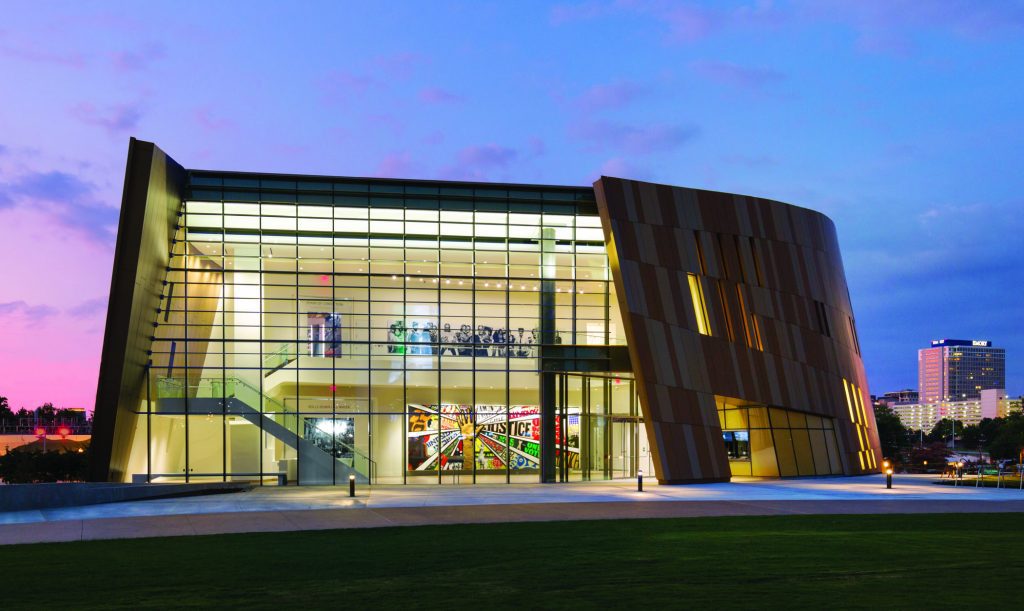
On this last day of Women’s HERstory Month, I wanted to honor some very important women to the City of Atlanta. The city is home to many attractions and the Center for Civil and Human Rights is the moral center of our culture. For almost three years now, The Center helped inspire and empower a spirit of self-determination and resilience in the global community, as informed by the Civil and Human Rights Movement of which Atlanta is world renown. Each and every day we witness more people come to see the history of civil and human rights both nationally and internationally. The CENTER has found its place in the noble history of Atlanta and now finds itself poised to become one of the top attractions not only in Atlanta, but throughout the United States. The question then becomes what is behind this incredible success? The simple yet principled answer is the Women Power of The Center’s staff. These women are integral in running an attraction, museum and Center of intellectual discourse all in one. The reason why this is especially unique is that most of the work that makes The Center highly ranked is typically held by males. Roles like Chief Financial Officer, Facilities Manager, Director of Visitor Services, Manager of Education and Exhibits and so many more essential positions to The Center are held by the strongest of females. As the CEO of the organization, I can tell our visitors and friends that I have found this women power to represent more than a gender diversity and inclusion principle. Rather, I see the performance of my female counterparts as representing the best people for the job. Without the extensive professional expertise, empathy and sympathy of my fellow colleagues, I don’t think The Center would have enjoyed such early success given the incredible pressure we face everyday to keep its doors open. I am proud of these women for their abilities because they are real and they are changing the world as we know it. I want to take this opportunity to celebrate and the Powerful Women behind the scenes at the Center for Civil and Human Rights during this month of March and throughout the year. Thank you to the Women of The Center; keep setting the bar high!
Brown vs. Board of Education: Rewind and Fast Forward by Keisha Lewis
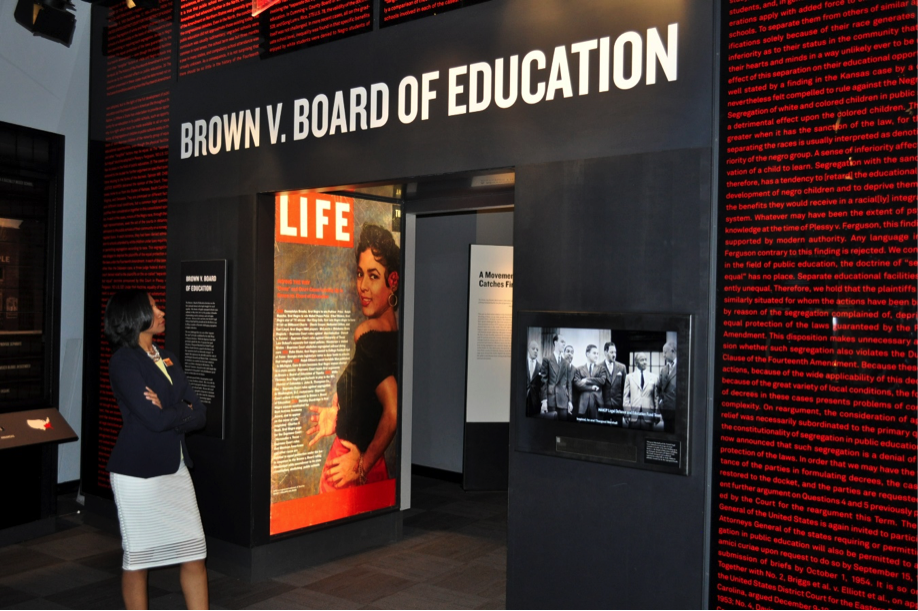
Author of this blog post, Keisha Lewis, is the Director of Visitor Services at the Center for Civil and Human Rights. As I arrived at work, busses unloaded anxious middle school students eager to begin their field trip. As each student stepped off the bus I reflected on my time in middle school and the friends I made along the way. I thought about my social media connections/friends and the diversity in race and gender among these groups. I contemplate being in the high school marching band, making so many friends and not feeling alienated by my race or gender. My mind drifted to how I was able to obtain these relationships (meanwhile the kids at The Center are freely talking to one another as they enter the building). After a morning Operations meeting, I began a morning walkthrough of The Center. I stopped at The Brown vs. Board of Education exhibit and thought of my mother’s and courage in the 1960’s as the “Movement Catches Fire”. I reminisced back to when I was 13 years old, sitting on my mother’s bed after school and asked a question that would spark my curiosity for years. “What was it like for you in school, mom?” She told my sister and I that school was fun and that she learned a lot up until 1967 – her Junior Year in High School. During that year, she was pulled into a room with about 13-14 other students at Lemon Street High, the only school Black youth could attend up until then. Adults briefed the students on integrating with white students at a new High School in Cobb County (which is ironically my Alma Mater). Brown vs. Board of Education changed her life forever, as well as mine. The day the students were integrated, she was taunted as she stepped out of the van delivering them to this unfamiliar school filled with unfamiliar faces. She was called a “Nigger”, spat on and a sign was taped to her back without her knowledge that read, “Since when do Niggers have red hair?” I could go on and on but for sake of time I will leave it at that. Although she was horrified by these experiences, she continued to hustle up her pride and return to school every day for months. For years, it unsettled me that I did not understand the full story of why people were so hateful to her so when I made it to College my journey began. My obsession with knowing more about the American Civil Rights Movement led me to earn a B.A. in History with a concentration in Civil Rights and a focus in Brown vs. Board of Education/integration. None of this could happen before literally taking a walk down memory lane with my mother as she walked me through what remained of Lemon Street High School. My mother recounted how black businesses in Marietta thrived before desegregation and how she didn’t finish high school because it became too hard to take. Did I mention that the bus she rode to school would not return them home some days so that black students on her street were forced to walk many miles home? Many people ask me “Why history? It’s so boring.” My answer is now: this “boring” history was my mother’s reality. Our mother’s story transformed me and my sister’s perspective on history. My sister Mia, determined to teach and obtain the highest level within the Education field, earned her Doctoral degree in Education. I am currently the Director of Visitor Services at the Center for Civil and Human Rights. You never know how someone else’s story can impact your life! I believe in celebrating the unsung pioneers of a movement and inspiring others to see how they can make a difference. Forward! Keisha Lewis Director of Visitor Services
Women and Politics with Adrienne White: New Episode of Rights Not Reserved

Adrienne White, VP of Finance at The National Center for Civil and Human Rights, talked with us about Women and Politics on our latest episode of our podcast, Rights Not Reserved. Topics include: Adrienne’s transformative experience with Black Girls Run Putting love back into politics Government’s role as counterbalances to market forces Gerrymandering Personalizing bills such as Georgia HB 51 How to get involved in politics The sexism faced by women running for office CLICK HERE TO SUBSCRIBE VIA ITUNES
“Until…”: Telling Stories of Civil and Human Rights through Recycled Materials
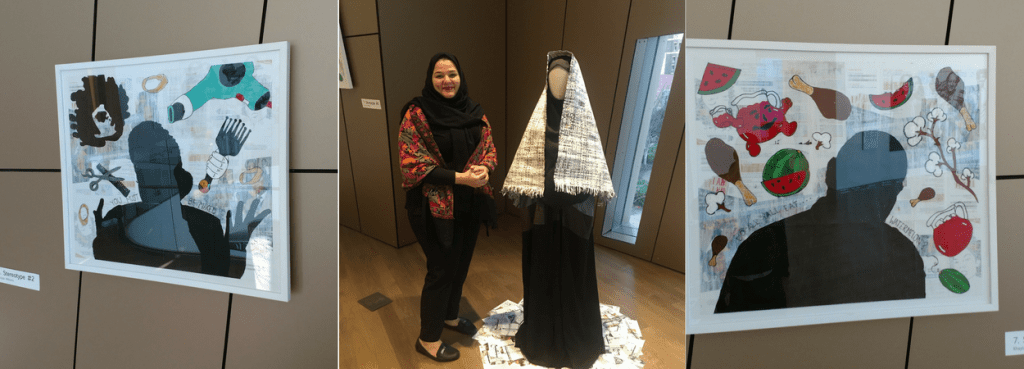
“Until…” is a temporary art display featured inside the Center for Civil and Human Rights through March 11, 2017. The display located on our 3rd floor tells the stories of civil and human rights through recycled CCHR materials. Students of the Savannah College of Art and Design repurposed CCHR brochures into art. Each piece expresses the artists’ personal journey regarding civil and human rights. Topics include stereotypes, social protest, and the “Spirit Hand” of aboriginal artists. This project is in partnership with Savannah College of Art and Design professor V. Elizabeth Turk and the Associate Chair of Photography Michael O’Brien. The display may be seen during The Center’s hours of operation. Click here for tickets.
Let’s Foster Both Love and Human Rights on Valentine’s Day

Author Deborah Richardson is the Senior Advisor for Partner Engagement of The National Center for Civil and Human Rights Two of the most prevalent symbols of Valentine’s Day are chocolate and roses. However, if you have not visited the Center for Civil and Human Rights, you may not know that these two items, especially to meet the high volume created by Valentine’s Day, are responsible for egregious labor exploitation of women and vulnerable children. Seventy percent of roses sold in the United States are imported from Ecuador. Human rights groups and universities have documented the horrific working conditions of the women in Ecuador who toil long hours in the fields. According to the New York Times, “due to repeate exposure to the pesticides used to produce high quality roses, women in the industry had more miscarriages than average and that more than 60 percent of all workers suffered headaches, nausea, blurred vision or fatigue (Thompson 2003).” These health risks are in addition to the very low wages that keep their families impoverished. The harvesting of cocoa beans is especially troubling as seventy percent of the workers are children in West Africa. Major chocolate companies have been under fire by both Congress and consumer groups since 2001 to end their practices of recruiting and hiring child labor. Activists report that chocolate companies have repeatedly missed the deadlines that they agreed to. In a story by the CNN Freedom Project, they share the story of Abdul, who was recruited to pick cocoa beans after his mother died when he was seven. At the time of the story Abdul was 10 years old, had no formal education, and had performed this grueling work for over 3 years. The sad irony is that Abdul had never tasted chocolate. We have freedom to choose how we spend our dollars, however, we can make choices where our consumerism isn’t tied to the explicit exploitation of others. Flowers grown locally can be found with a web search, and there are certainly many creative options of gifts to express your love and care for your special someone. It will be an even greater demonstration of affection knowing that it wasn’t given by taking away the freedom of others.
MEDIA ALERT: Memorial Honoring Sexual and Human Trafficking Victims to be Installed at the Center for Civil and Human Rights in downtown Atlanta

For Immediate Release Memorial Honoring Sexual and Human Trafficking Victims to be Installed at the Center for Civil and Human Rights in downtown Atlanta Former U.S. Congressman Mike Honda to Speak at Atlanta Press Conference Atlanta, Georgia. A press conference to announce the installation of a permanent outdoor Memorial honoring female victims of sexual and human trafficking during World War II at the Center for Civil and Human Rights will take place Thursday, February 9, 2017 at noon. Former U.S. Congressman Mike Honda (CA 17th Dist.), a longtime advocate for sexual and human trafficking victims and the lead sponsor of U.S. House Resolution 121, will be speaking. The Memorial, slated to be installed in late Spring, honors the approximately 200,000+ women and girls throughout Asia and the Dutch East Indies who were trafficked and sexually enslaved before and during World War II by the Japanese Imperial Army. Known as the “comfort women,” their tragedy is one of the largest known cases of human trafficking in the 20th century. The Memorial project is a partnership between the Atlanta Comfort Women Memorial Task Force and the National Center for Civil and Human Rights, who has agreed to serve as the site host. Roger Baik Kyu Kim serves as the Chair of the 24 member Task Force, and Congressman Mike Honda serves as the National Task Force Advisor. Georgia Public Service Commissioner Timothy Echols, who is a longtime advocate against sexual and human trafficking in Georgia, serves as the Task Force Statewide Advisor. “Protecting the rights of women is paramount to why the National Center for Civil and Human Rights exists,” said Derreck Kayongo, CEO of the National Center for Civil and Human Rights, “We are honored to memorialize these brave women who sacrificed so much.” WHAT: Press Conference to Announce Public Launch of Comfort Women Memorial Project. WHEN: Thursday, February 9th at 12:00 PM WHERE: Center for Civil and Human Rights, 100 Ivan Allen Jr Blvd NW, Atlanta, GA 30313, ground floor, Event Room B. WHO: Former U.S. Congressman Mike Honda; Task Force Chair Roger Baik Kyu Kim; and Senior Advisor for Partner Engagement for the National Center for Civil and Human Rights, Deborah Richardson. CONTACT: Helen Kim Ho (Atlanta Comfort Women Memorial Task Force, 404-232-5219 or Kristie C. Raymer (National Center for Civil and Human Rights), 404-835-4281
Marking the Anniversary of the UDHR: Support Refugees

Author of this blog post, Jill Savitt is a human rights advocate with expertise in the fields of genocide prevention and strategic communications for advocacy campaigns on human rights issues. She is also the Human Rights Curator of The Center’s SPARK OF CONVICTION exhibition. December 10, Human Rights Day, will mark the 68th anniversary of the Universal Declaration for Human Rights (UDHR) – the bill of rights for all mankind. Created in the aftermath of the horrors of World War II, and built from the tenets of constitutions and religions around the world, the UDHR outlines a set of universal standards for human dignity. One core principle addresses the right of everyone to leave their country if they have a credible fear of being harmed there – killed, tortured, or politically persecuted – and to find safety and protection in another country. An entire body of law has developed around the rights of refugees – and the obligations of governments to take in those forced to flee their homes. Right now, according to the United Nations, there are now some 20 million refugees around the world – the largest number since World War II. Syrians account for the greatest number – more than half the country’s population is displaced, by barrel bombs and chemical attacks and other violence from the Assad regime, and more recently, from violence by the so-called Islamic State. Most have fled to neighboring countries – Turkey, Lebanon and Jordan. But the humanitarian commitment from Western governments to aid refugees has fallen considerably below the level of need, which has put an increased burden on the countries closest to Syria. As a result, neighboring countries have imposed restrictions on allowing more refugees in, and have made life even harder — and harsher — for those who have already fled. That’s why so many more Syrians have attempted to get into Europe – more than a million over the past year. Some have attempted the dangerous journey by sea – and lost their lives, as was so tragically represented by the images of three-year-old Alan Kurdi, who drowned; since 2014, more than 7,000 people have died at sea making the journey. Despite the evidence of so much despair, Europe has been closing its borders, and the United States has been equally unwelcoming. Historically the global leader on refugee resettlement and humanitarian aid, the United States, as of this fall, had resettled just 10,000 Syrians – less than 0.2 percent of the total Syrian refugee population. In part, the response is because of an upsurge in nativism. Populist leaders in Europe and the US have launched full-throated campaigns to demonize refugees – claiming, often with no concrete evidence, that refugees will take jobs, burden economies and commit terrorist acts. These populists distort legitimate fears and anxieties for their own political gain. One country’s response to Syria’s refugees has been entirely different. Canada has welcomed tens of thousands of Syria’s refugees, and the country’s president, Justin Trudeau, has even greeted new arrivals at the airport. In addition to a traditional government program for refugee resettlement, Canada allows private citizens to sponsor individual refugees and their families. Private citizens agree to pay for refugees’ travel, as well as their housing and food for one year, and commit to helping refugees integrate into life in Canada. Groups of friends, family or co-workers form to share the costs. The bonds of friendship that have formed between Canadians and new arrivals are life affirming – and show what is possible when people connect on a human level. Perhaps more importantly, Canada has experienced absolutely no negative economic or security consequences for its generosity. The United States does not yet allow private sponsorship by citizens, though US refugee advocates are increasingly putting this issue on the policy agenda. But we don’t need to wait for an official program to welcome refugees, especially those who have arrived recently from Syria or elsewhere; over the past decade, the US has resettled more than a million refugees – so there are many people to meet, welcome, and embrace. From inviting a refugee for coffee or dinner to pushing back on racist claims on social media, Americans can make good on the promises and spirit of the UDHR. This would make an enormous contribution to changing the negative, and false, narrative that has taken hold about refugees. In polarized and perilous times, individual acts of humanity are essential to turn the tide. This requires people to act their conscience – to not only think in new ways, but to act. Will you commit to making December 10, the anniversary of the UDHR, the day you do?
The Way Forward by Deborah Richardson

Deborah Richardson is the Executive Vice President of The National Center for Civil and Human Rights, Inc. There has been much analysis on the outcome of our recent Presidential Election. I applaud Secretary Clinton for her gracious concession and addressing her supporters regarding the need to move past the divisive culture created in the campaign toward peace and conciliation. This evening, I had the pleasure of having dinner with my niece and nephew who both attended Georgetown University and are certainly part of the Talented Tenth that Dr. Dubois refers to as the black intelligentsia charged with leading the race forward. They shared that they both were despondent, afraid of the future, and the uncertainty of how to begin reconciliatory dialogues among friends who clearly did not share their same political views. In reflecting on this moment, I am reminded that as a country, we have been down this path before. The outcomes of Presidential elections are always filled with anxiety regarding the uncertainty of the unknown. Will the incoming President’s agenda align with what I care about? There is a huge opportunity before us to ignite our civic engagement responsibilities as citizens, Democracies were never intended to be controlled by those at the top. WE the people elect our political representatives and it is up to WE the people to set the agenda. Instead of passively watching the news and lamenting over the opinions among the political pundits, how about holding our own think tank conversations in our living rooms, faith communities, schools and even at the Center for Civil and Human Rights? What are the issues you care about—economic justice, gender equity, environmental protections, LGBT rights, ending the culture of violence against women in our schools, the military and other institutions? The list of critical issues of our times is long and all deserve attention. Today I was fortunate to attend the JuST (Juvenile Sex Trafficking) National Advisory Council meeting sponsored by Shared Hope International. Policy wonks, law enforcement, child welfare workers, advocates and survivors discussed protocols and priorities recommendations for state governments to implement the recently passed Justice for Juvenile Victims Act together for 6 hours. Based on our diverse perspectives and experiences, there were few items discussed that began with a consensus, but through the hard work of listening deeply, questioning for clarification, and the art of compromise, we ended the day with recommendations that far exceeded what any of us individually could have produced. Our way forward is to reignite citizen participation. Gather persons of differing views and life experiences who share a commitment toward addressing an issue. Our continuing to gather and talk in silos with like-minded people is part of the problem, not the solution. Now is our opportunity to test the model of inclusive democracy, where all persons have a seat at the table, and the outcome is the result of our collective voices. As my friend, Rev. Joanna Adams shared with me—Hope has two daughters–anger and courage. Anger at what ought to be and the courage to make what ought to be, come to be. In the spirit of progress, Deborah J. Richardson Executive Vice President
The Center Counts Down to the Vote!
The Center for Civil and Human Rights is celebrating the right to vote by asking our team members why they believe it is so important to vote!