
It Ain’t Easy Being Green- Part One

Many have heard the phrase, “It ain’t easy being green.” With the rising cost of eco-conscious items, being “green” isn’t cheap either. In our ethical footprint section of The Center, we discuss various ways how we as consumers can make better choices in the products we buy. But have you ever noticed that shopping for ethical and sustainable products tends to cost more money? “Apparently being green costs a lot of green. Forty-two percent of those surveyed stated that they do not live a completely green lifestyle because it is too expensive. Another 70 percent stated that they will only buy eco-friendly products if they cost the same or less than non-green products, RetailMeNot reports.” As a consumer who is striving to use my money for social and economic justice, I don’t mind spending more money on a product produced through ethical means. Buying a fair trade chocolate bar means that I’m supporting cocoa farmers and ethical food production. As consumers, we are also voting with our dollars in the goods we refuse to buy. By choosing fair trade items and products, we’re choosing not to buy goods produced with exploited labor. However, the challenge to ethical shopping is that most Americans have limited incomes. There is a constant battle between buying what is ethical and what is inexpensive. And it follows that the less money you have, the more you will buy cheaper but unsustainable and/or unethical goods. For most people this is done out of necessity. People in impoverished communities are trying their best to obtain the necessities of life within their limited incomes. But contrast this reality with some of the luxury sustainable neighborhoods that have popped up within the last decade. In a recent search for eco-friendly housing, I found a house for sale. It had one bedroom and one and a half bathrooms with an open floor plan measuring 900 sq ft. The house was EarthCraft and Geothermal certified. It was energy-efficient and operated on a renewable energy grid. The house was located in an area with easy access to farms where organic fruits and vegetables were sold. Ideally, all of our houses should be this eco-friendly. But the price of the home was $340,000. With rising income equality, a house like this is out of range and simply impractical for most Americans. Unfortunately, it is those living below the poverty line that needs these products and services the most. It’s a well-known fact that impoverished communities tend to have higher concentrations of pollution. These communities also tend to be food deserts–lacking grocery stores, farmers’ markets or healthy food sellers. So what can we do? Why isn’t the eco-friendly and ethical standard the norm? How can we pursue social justice and earth-friendly lifestyles when corporations have a premium on these goods and services? We have to put pressure on corporations to adapt the ethical and eco-friendly model to all of their goods and services. In the next blog post, I will look into why green living costs so much and what we can do to make green living feasible and more affordable for all of us.
What’s Next for #MeToo

This blog post was written by Amy Gregg, YWCA of Greater Atlanta Advocacy Intern and MPH Candidate Not a single woman I have talked to about #MeToo has seemed surprised that so many women are affected by sexual harassment and sexual violence. Statistics show that one in three women experiences some form of gender-based violence at some point in their lives. If it doesn’t happen to us, we know that it is happening to our sisters, friends, and colleagues. #MeToo is providing a public platform to discuss and shine much-needed light on a widespread problem. But many of us are asking the question – “what can we do about it?” For #MeToo to be more than a trending hashtag, we need to funnel our energy into concrete actions. I think we can look to history for inspiration. The first rape crisis centers were established in the 1970s. They served as spaces for survivors to share their stories, as well as for women to organize and advocate for new policies, from laws against spousal rape to HR policies preventing harassment in the workplace. Let’s use the #MeToo conversation as a launching pad to engage in renewed advocacy work on the personal, organizational, local, state, and national level. We need to believe women who come forward with stories of assault and harassment. We need men to organize with us and call out their peers for dangerous behaviors and attitudes towards women. We need to block harmful legislation that would make it more difficult for victims to come forward and seek support. Now add your next steps to this list…
Rights Not Reserved Episode 13: Nic Stone
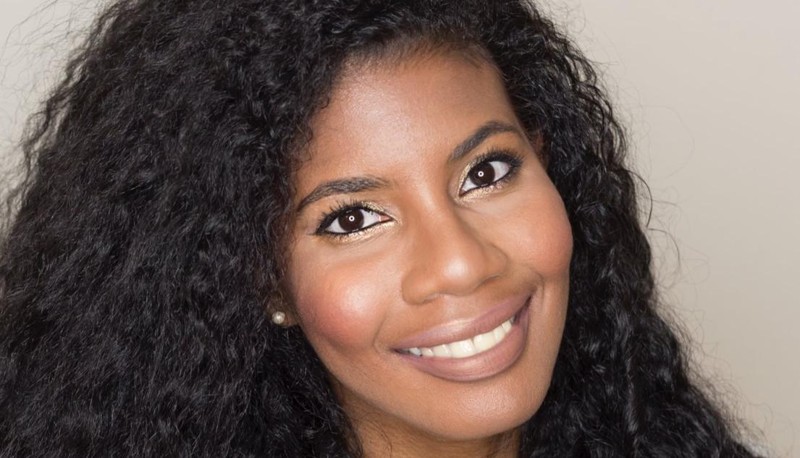
Nic Stone joined us on Rights Not Reserved this month to discuss her new novel Dear Martin. Topics discussed: The debut of Dear Martin at the Center for Civil and Human Rights on October 17 Being one of the only people of color in her high school Microaggressions Nic’s travels to Israel Representation in YA novels The amazing Jason Reynolds Click here to subscribe to Rights Not Reserved. Listen to the episode below: About Nic Stone and Dear Martin: Raw, captivating, and undeniably real, Nic Stone joins industry giants Jason Reynolds and Walter Dean Myers as she boldly tackles American race relations in this stunning debut. Justyce McAllister is top of his class and set for the Ivy League—but none of that matters to the police officer who just put him in handcuffs. And despite leaving his rough neighborhood behind, he can’t escape the scorn of his former peers or the ridicule of his new classmates. Justyce looks to the teachings of Dr. Martin Luther King Jr. for answers. But do they hold up anymore? He starts a journal to Dr. King to find out. Then comes the day Justyce goes driving with his best friend, Manny, windows rolled down, music turned up—way up, sparking the fury of a white off-duty cop beside them. Words fly. Shots are fired. Justyce and Manny are caught in the crosshairs. In the media fallout, it’s Justyce who is under attack.
A New Generation of Activist Athlete

BY PELLOM MCDANIELS III, Curator of African American collections in the Stuart A. Rose Manuscripts, Archives and Rare Books Library where he specializes in sports history, African American athletes and Civil Rights, and black masculinity and visual culture, and former NFL Athlete. It should come as no surprise that someone like Colin Kaepernick has emerged from the age of President Barack H. Obama, inspired, empowered and ready to use his influence to challenge the status quo. Choosing to stand up (or rather take a knee) in protest of the killing of African Americans by law enforcement, the 28 year old former starting quarterback for the San Francisco 49ers has become the firebrand for a new generation of activist athlete. A student of history, Kaepernick has taken it upon himself to become a change agent using what he has at his disposal as a public figure to influence the thinking and actions of the masses. He has set himself apart as a model of selflessness and heroism. While sports have occupied the American imagination as a source of entertainment, enlightenment, and, above all, opportunity, historically we have seen the importance of African American athletes using their celebrity to bring attention to the ills which haunt black life in America. In fact, from the beginning of the twentieth-century to today, there have been numerous individuals, who have challenged both directly and indirectly the “isms” responsible for shaping American culture. Their/these actions have led us to our current climate of dissent and activism. While most of these moments involve African Americans competing against whites in an attempt to claim victory in the arena, and the financial rewards and social mobility that coincided; the greater goal of these African American athletes was in claiming their humanity, citizenship, and their race through their performances on the playing field. I can’t help but recall the 1968 Olympic Games in Mexico City, where Tommie Smith and John Carlos shocked the world, using their victories in the 200-meter dash to protest against the United States and its policies on human rights issues related to African Americans in particular and oppressed people in general. Clad in their USA warm-up suits, wearing black socks without shoes to symbolize poverty and black leather gloves (Smith wearing the right and Carlos wearing the left of the same pair) to symbolize black power and unity, on the award stand they lifted their clinched fists in protest as the American anthem played. And while they were chastised for their actions, they accepted their fate and have endured the consequences of that choice because it was necessary. But isn’t that the point of Kaepernick’s argument? Isn’t he trying to bring attention to the institutionally endorsed mistreatment and abuse of black people that most white Americans don’t seem to care about? Isn’t he trying to bring attention to the system of oppression deeply embedded in American culture that inextricably links blackness to criminality? Isn’t he attempting to show us the way to unify from within, while dismissing the doubters from without? Isn’t he taking a leadership role by doing what needs to be done, to right a wrong of history that continues to feed the prison industrial complex, which depends heavily on black bodies and the fear of a black planet? The fact that he recognized the most expedient and effective way to get the attention of the majority was to stage his protest where they would actually see him is reminiscent of Smith and Carlos’ Olympic protest. In both instances, Carlos, Smith and Kaepernick recognized that black people’s lives mattered most when they were entertaining. In the liminal spaces of the stadium, field house, and arena, blackness is on view as a consumable commodity: one that fulfills certain stereotypical fantasies which hinge on the believed subdued and controlled threat of blackness within those spaces. I’m convinced that Colin Kaepernick understands not only the historical significance of his actions, but recognizes that there are real consequences related to his commitment to social justice that he is willing to pay. Through his symbolic protest and his humanitarian agenda, he clearly knows what he is doing. And doing it very well. His influence has trickled over into the NBA, Major League Baseball, WNBA, and to college and high school sports teams. Clearly, we are at a critical moment in American and world history. A moment that will define the future of our country and the global struggle for the humanity of the marginalized. For those paying attention, we are seeing the rise of the modern black athlete. And while fans and misguided, uninformed politicians continue their assault on the character of the young men and women speaking truth to power, the question I ponder is how far will we support these aspiring leaders? Can they depend upon us? And how can WE contribute to this movement?
The National Center for Civil and Human Rights stands in the protection of all peoples

The National Center for Civil and Human Rights stands in the protection of all peoples. The recent legislation on DACA is an affront to humanity. Our Dreamers through no fault of their own were brought to the United States for a better life, we need to respect and protect them. We honor the statement of the Universal Declaration of Human Rights that all human beings are born free and equal in dignity and rights. There is an innocent voice in these Dreamers that isn’t being heard and it is time to listen. “The future belongs to the people that believe in the beauty of their dreams” – Eleanor Roosevelt
The National Center for Civil and Human Rights demands civil and human rights for all humanity.
The National Center for Civil and Human Rights demands civil and human rights for all humanity. The methods and tactics used by the white supremacist organizations in Charlottesville are abhorrent and run counter to the struggle for human rights both domestically and globally. While we respect the right to peaceful assembly and protest, we condemn the verbal and physical violence of any group that seeks to infringe upon the basic human rights of others. We must all reflect on the past, be inspired by civil and human rights leaders to transform our nation by acting courageously.
What is Race?

During one of my shifts at the Center for Civil and Human Rights, I met a guest from Uruguay. After experiencing the lunch counter sit-in simulator, she was shocked. She couldn’t believe that White and Black people couldn’t eat together in recent American history or that people of different races eating together resulted in violence and/or imprisonment. She told me that in her home country, they never had this legacy of segregation. One statement stuck with me during this conversation: “You know, I didn’t know I was White until I came to the United States.” Americans would tell her that she was White because of her light skin and blonde hair. For her, she was Uruguayan and her nationality was her identity. “Most importantly, why should it matter?” she asked. According to the CIA World Factbook, about 88% of the population of Uruguay is of European descent, 5% of African descent and 3% of Indigenous or Amerindian descent. The remaining 4% consists of various ethnicities from around the world but Uruguayans do not equate their nationality with ethnicity, but with citizenship. This is what makes our countries different. We all identify as Americans but the legacy of chattel slavery, Jim Crow laws, racial segregation and “separate but equal” institutions have made many Americans feel that some citizens are more American than others. Historically, racial categories have been used to keep certain ethnic groups dispossessed while upholding white supremacy. Once you travel the world, you learn that racial dynamics are interpreted differently within various cultures. In my travels to the Middle East, it was somewhat hard explaining my identity as African-American woman. In their eyes, I didn’t look African because I don’t have deep brown skin or typical African facial features. These conversations make it easier to see how race is a social construct. The malleability of race proves that it doesn’t have its own objective reality. So many prejudicial laws and institutions were created all in the service of a concept based on pseudoscience. Scientists of the past created fields dedicated to the supposed inferiority of non-European peoples. This pseudoscience led to the ghastly horrors of eugenics and genocide in the United States. Now Modern-day scientists say, “Racial categories are weak proxies for genetic diversity and need to be phased out.” Or differences – from our hair textures to our facial features to skin colors – are literally skin deep. There are no Black genes or White genes. At our biological core, we are the same. The United States, like Uruguay, has a blending of cultures and races. Despite the social unrest, there are many Americans who take pride in that. It will take a lot of work towards social justice and education to create a future where everyone celebrates racial and ethnic diversity. At least, we can dream of a future where race really doesn’t matter.
Otherness

“Do you know who this is?” Kelli Edwards, the Center for Civil and Human Rights’s Program Manager, asked a group of young children circled around three tables. Kelli held up a coloring page of Malala Yousafzai. The kids squinted, trying to get a closer look to see if they recognized the face printed on the page. A few eager “no”s were shouted in reply as the children waited to hear more. “This is Malala Yousafzai, and she’s a very brave girl,” Kelli said. “She’s also a Muslim.” As I sat among the children attending Interfaith Youth Day at The Center, I watched the ease with which their receptive minds accepted the story of a girl who was different than them. That’s the thing about kids, they often don’t notice a difference until one is pointed out to them. And if they do notice a dissimilarity, they rarely perceive it in a negative light. More each day, I find myself noticing the ways I have been taught to fear “otherness.” I’ve started realizing my tendency to view people based on who they are in relation to me, instead of regarding them simply for who they are. In the midst of beginning the work of undoing these ingrained behaviors within myself, I’ve learned that the most difficult part is not the effort required, it’s the unnerving feeling of being unable to trace the origin of my learned biases. Just because the fear of “otherness” isn’t always taught intentionally, doesn’t make its impact less potent. Imagine if we kept having simple, affirmative conversations with kids about people like Malala Yousafzai. Imagine if we taught them the intrinsic value of every human being independent of another. Imagine the effect those conversations could have on our own deep-set discrimination. Imagine the healing to come.
Powerful People in Progress: Doug Shipman and Derreck Kayongo

Rights Not Reserved is a podcast from the National Center for Civil and Human Rights. We discuss activism, history and today’s pressing human rights concerns with local, national and international leaders in civil and human rights. Episode 11 of Rights Not Reserved features founding CEO of the National Center for Civil and Human Rights, Doug Shipman and current CEO, Derreck Kayongo. They have an inspirational conversation about the history of the Center for Civil and Human Rights and how it resonates with the public in 2017. Doug and Derreck also demonstrate how to take every human’s rights personally with a roleplaying game. Topics covered in this episode Taking Civil and Human Rights personally Museums Education Creating a legacy
What’s in a Name?

Author of this blog post, Kelly Crosby, is a Gallery Assistant at the Center for Civil and Human Rights. What’s in a name? Apparently, everything. I’ve had many interesting conversations with visitors as a gallery assistant. One day, I was in the Morehouse Martin Luther King Jr. Collection with a group of grade school students. We currently have on display original documents detailing the correspondence between Dr. Martin Luther King Jr. and various African leaders and activists. Inside one of the display cases is a party invitation from Ghana. One of the students, a young girl, approached me with a very thought-provoking question. “Why does the party invitation say, “Mr. Martin Luther King and Mrs. Martin Luther King?” I explained to her that in those days, when a woman married, she was often referred to by her husband’s full name. I also explained that it was a common practice. I could only describe the look on her face as incredulous. For a grade school girl, she couldn’t understand why a woman would be obligated to change her name. She also didn’t understand why she would be referred to by her husband’s full name. But that short conversation made me think about women’s identity and how it has been shaped and molded in American culture. For most of human history, at least in most Western societies, women were expected to take their husband’s last name; signaling the abandonment of her “maiden” status for her new marital identity and allegiance to her husband’s family. For us, in our modern-day society, where feminism and women’s rights are common topics, these documents are stark reminders of a not-too-distant past. In the 1970s, the trend of hyphenated names appeared and gave women more options in choosing how to express their identities. Our culture still reflects these trends. While most American women still change their names upon marriage, joined surnames of the wife and husband, are a popular option. It is no longer an assumption that a woman will take her husband’s last name but a choice. Such choices reflect the woman’s choice to shape her own individual identity. And in some states, like California and Georgia, men can legally change their last names on the basis of marriage. Because of these changes, we know Mr. King’s wife as Coretta Scott King. In her book, “My Life, My Love, My Legacy,” she says, “Most people who have followed my career from afar, or even given me a second thought, know me as Mrs. King: the wife of, the widow of, the mother of, the leader of. Makes me sound like the attachments of a vacuum cleaner. In one sense, I don’t mind at all. I’m proud to have been a wife, a single parent, and a leader. But I am more than a label. I am also Coretta.” Because of her husband’s famous legacy, many forget that she was a great civil rights activist in her own right. Our center is a beneficiary of her effort to preserve her husband’s important documents. She continued her efforts to fight for racial equality and was active in the women’s rights movement. She was also a major critic of South African apartheid and an advocate for LGBT civil rights. The efforts of women and men to struggle for women’s rights has made it possible for us to see women as autonomous individuals in their own right—not simply as someone’s mother or wife. Prior to this, the efforts of women like Coretta Scott King, Diane Nash, Claudette Colvin and Dorothy Height were often overshadowed by the men they worked along side with. We have been able to look back and reexamine history to see these women as crucial to the American Civil Rights struggle rather than women on the periphery of that movement. We’ve come a long way but still have a long way to go before all woman can be respected and valued as individual human beings.