
Center and Partners Host 2nd Atlanta Civic Collaboratory
Members of the ATL Civic Collaboratory at the January Meeting Along with our partners, Atlanta History Center and the Arthur M. Blank Family Foundation, the National Center for Civil and Human Rights gathered more than 40 leaders at the end of January for the second Atlanta Civic Collaboratory (ACC). The Collaboratory was developed as a city-wide initiative to foster mutual aid among civic leaders. The project is based on the National Civic Collaboratory developed by Citizens University, a Seattle-based non-profit organization that equips Americans to be civic catalysts. This collaboratory model has resonated with Atlanta civic leaders as our community faces extraordinary challenges, made more intense by disconnection and polarization, resource scarcity, competition, and silos. This model allows us to tackle these current challenges by building a sense of common purpose and collective power. The Collaboratory takes as a given that building trust and common purpose – and creating an ecosystem of mutual aid – can help us go further faster. Collaboratory meetings take place every four months. They consist of a welcome dinner the night before and a lively meeting the next day. The dinner and day-long meetings are core to building trust. When a group breaks bread and cultivates bonds of affection, we strengthen the fabric of local partnerships, which allows us to respond more effectively to community needs. The heart of the day-long gathering is a Rotating Credit Club. This is a time when members of the Collaboratory take turns presenting a project they are working on, and the rest of the Collaboratory offers specific commitments to move their project forward – in the form of funding, introductions, expertise, or elbow grease. Throughout the day, we also have group discussions, inviting everyone to give their perspectives on big questions facing Atlanta. At the first Collaboratory in August, Saba Long of the Atlanta Civic Circle presented a project to the Rotating Credit Club. They seek to address the communication breakdown between metro Atlanta residents, stakeholders, and elected officials. They detailed their goals of creating a data-driven community engagement platform that will be powered by a 10,000-person regional panel to act as a sounding board in real time. In January, Nia Mosby of Made By Us asked for support for Civic Season, a nationwide civics engagement campaign, now in its third year, that aims to reach 75 million people in the United States by 2026 – the number of Gen-Z that will be voting age. Maria Saporta and Ann Cramer of Atlanta Way 2.0 introduced their concept of creating a modern-day movement to bring together diverse stakeholders to improve community relationships, share resources and strengthen the civic fabric of our city through strategic meetings at neighborhood, city, and regional levels. And for the third presentation, Liz Lapidus of Root Local told the group about their goal to grow a sustainability movement in metro Atlanta by expanding their established Pollinator Network to 250 individuals and doubling their public programming, which convenes environmental allies, breaks down silos, and shares local stories. To date, dozens of commitments of help and support have been offered. This mutual investment of capital — social, intellectual, and institutional — has made the Collaboratory a uniquely influential network of action. We look forward to our future gatherings and sharing with you the exciting work our colleagues are undertaking to strengthen Atlanta.
The Voice of an Untamed Heart: Victim of Circumstance amid COVID 19

I woke up this morning to rain falling and echoes of my children talking. It is a normalness that I have been accustomed to but soon I remember that it’s Sunday and I will need to flip on the television or log on to my computer for church service. I admit that I do not go to church regularly but having restrictions of not having the option to put on my Sunday’s best, get in my car, and drive to the brick and mortar for communion is unsettling. Unsettling? There are so many things that are unsettling about our times but in my haste to unscramble my thoughts I remember what is familiar—poverty and inequality. I grew up in a 3-bedroom/1-bath home with 8 other family members. I think about what it felt like to always be in close quarters and how there was no escaping to be alone with my thoughts. There was no central heating or air conditioning so, in the summer, flipping my pillow over throughout the night gave me the illusion that I was cooling off. Having two meals was expected and one came from the free lunch program at school. I remember being in the dark due to no electricity but having one meal that day. Having access to a computer was the furthest thing from my mind and getting access to pen and paper was a challenge at best. I not only think about poverty but inequality and how it is not so different. Not having access to food or space is circumstance but it is also the direct effect of inequality that is deeply rooted in the disproportioned world of African-Americans. So many historical facts and events occurred during or before my childhood. My ancestry is hard to define because of constant tragedy from child lynching to fatal collisions and those events were placeholders that championed poverty. I can remember digging my way out of poverty and fighting to become an educated Black woman with a path to success. Because of inequality and poverty, it did not come easy. Now I see an economy that is crumbling and that more than 30% of African-Americans make up the COVID 19 cases in the U.S., according to the Center for Disease Control and Prevention. Let’s be real, this is a direct reflection of working frontline jobs that barely make ends meet that can be tied to lack of education, lack of transportation, and many racial inequalities that affect how we function in society. Ralph Emerson said, “Cause and effect are two sides of one fact”. (Gray 293)The truth is, in this country, poverty is an effect of inequality and inequality is the cause of poverty. I see poor children (just like I was) suffering because their parents have been laid off or they have no transportation to get the one meal that is offered through the school lunch program. I see children that have no access to continuing their education at home (which is a requirement in this state—Georgia) because they have no computer or internet access. I see families living in 3-bedroom/1-bath homes shared by 9 people that, once, had hoped to change their environment and circumstance, now, having to choose between having electricity or eating a meal. I also see these same people not having the ability to gain healthcare that can save their lives. What do their futures look like? How do those children become first-generation college students? How do they recover from the Coronavirus without healthcare? We are at war with a pandemic that has robbed us of social and economic liberties. So, as we shelter in place, COVID 19 is a reminder that social and economic liberties have different definitions—that’s all I am saying. We hold these truths to be self-evident that all men are created equal. Right? References: ABC News, ABC News Network, abcnews.go.com/Health/coronavirus-updates-trump-speak-world-leaders-coronavirus-response/story?id=70178711. Gray, Henry David. Emerson: A Statement of New England Transcendentalism as Expressed in the Philosophy of Its Chief Exponent. Nabu Press, 2010.
A Note from the Executive Director of IHTI

In critical times, those who are most vulnerable suffer much more than those of us blessed with stable families, support systems, and resources. Some see this as an opportunity to profit off the exploitation of others. During the Corvid-19 pandemic, there are millions of children out of school. Some children are locked indoors with no supervision or, at worst, an abuser. Their parents are facing a mountain of uncertainties. Many are still working, and childcare is not easily accessible. While parents who are at home, are not aware of the increased exposure of their child to predators on online platforms. We can Human Traffick Proof our youth by educating ourselves on how to eliminate the risks online. Please read this article, then act by signing up for free online training at ihtinstitute.org/get-educated schedule to the right. The protection of our children is the International Human Trafficking Institute’s most urgent agenda. View the schedule of events this week.
Joan Trumpauer Mulholland: More Than An Ally
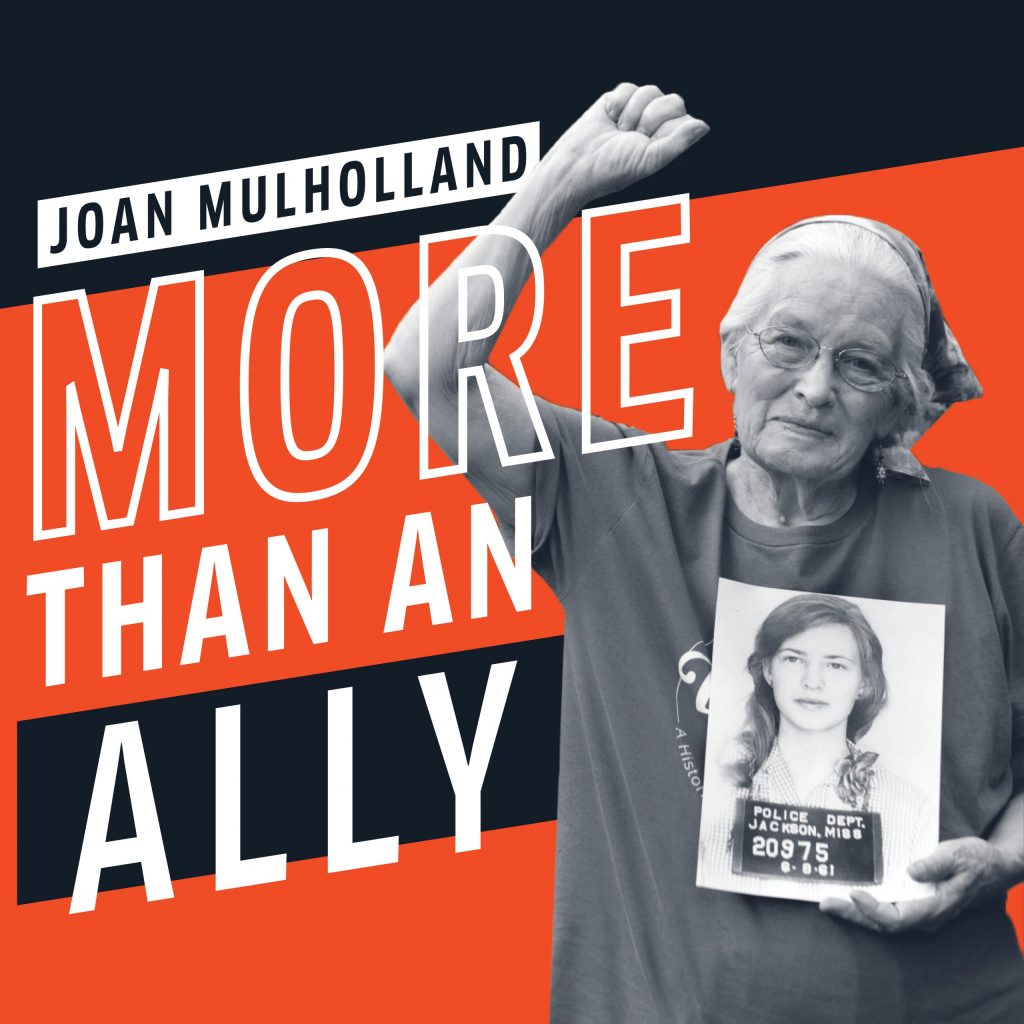
At an early age, Joan Trumpauer Mulholland realized that she needed to be an agent for change and fight for racial equality. As a student at Duke University in 1960, Joan began her life as a civil rights activist, participating in sit-ins and supporting organizations like the Nonviolent Action Group, to the disapproval of her family and the schools administration. After dropping out of Duke, Mulholland joined the Freedom Rides in 1961, and found herself sentenced to Parchman Prison in Mississippi for two months for her participation. She refused bail, and had her sentence extended until she could pay the $200 fine leveled against her as well. Once freed from Parchman, Mulholland continued her activism, integrating Tugaloo College in Mississippi as the first white student and becoming the first white member of Delta Sigma Theta Sorority, Inc. From sit-ins to Freedom Summer training, if there was an opportunity to help the Civil Rights Movement and fight for justice and racial equality, Joan was there. She was alongside Anne Moody in Jackson when counter protesters doused them with food and beverage at Woolworth’s, assisted with the organization of the March on Washington and participated in the march from Selma to Montgomery. Joan Tumpauer Mulholland was and continues to be an example of what ally ship truly embodies, and is able to share those lessons with young people today through the Joan Trumpauer Mulholland Foundation, which “seeks to eradicate racism through education” Learn more about Joan Trumpauer Mulholland and other Fearless Women at The Center. Plan your visit today and experience how we’re more than a museum. STAY CONNECTED WITH THE CENTER & GET THE MOST UP-TO-DATE INFORMATION ON SOCIAL BY FOLLOWING US @CTR4CHR #FEELTHEPOWER
Mamie Till: More Than A Mother
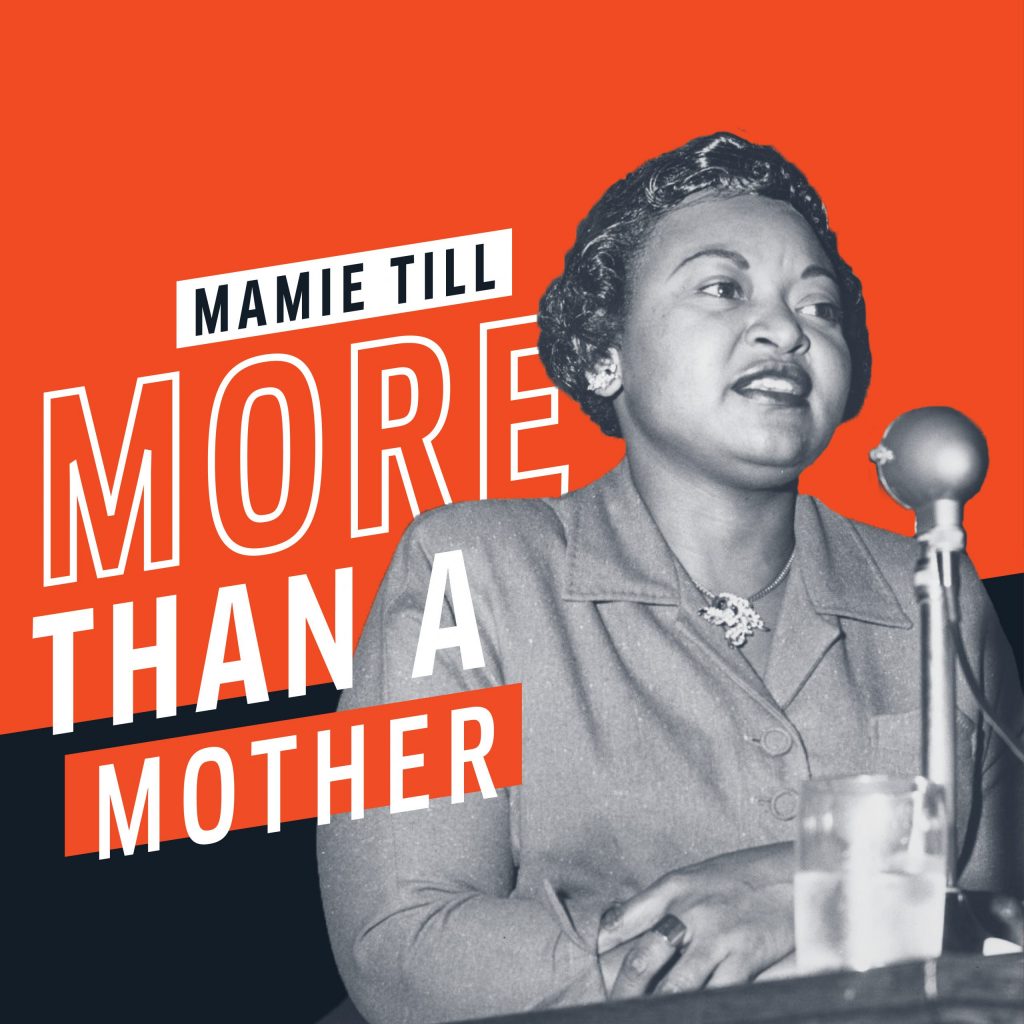
In August 1955, Mamie Till-Mobley tragically became an agent of change when her 13-year old son, Emmett, was murdered while visiting family in Mississippi. Till-Mobley’s decision to show her son’s brutalized body in an open casket served for many as a catalyst to act against the injustices perpetuated against African Americans. Seeing graphic images of his corpse in Jet Magazine and the Chicago Defender made it hard for people to ignore the violence being perpetrated against Black bodies. In fact, her own tragedy served as her own wakeup call as she mentioned in one of her speeches: Two months ago I had a nice apartment in Chicago. I had a good job. I had a son. When something happened to the Negroes in the South I said, ‘That’s their business, not mine.’ Now I know how wrong I was. The murder of my son has shown me that what happens to any of us, anywhere in the world, had better be the business of all of us. After her son’s death, Mamie Till-Mobley became an outspoken advocate in the fight for civil rights, speaking to groups around the country with the NAACP, and serving as an advocate for education. As a teacher in the Chicago Public School system for twenty-three years, Till-Mobley worked with young people both inside and outside of the classroom. She also continued to seek justice for her son in the years following his death, lending her voice to various documentaries and writing an autobiography Death of Innocence: The Story of the Hate Crime that Changed America, that was published posthumously. Learn more about Mamie Till and other Fearless Women at The Center. Plan your visit today and experience how we’re more than a museum. STAY CONNECTED WITH THE CENTER & GET THE MOST UP-TO-DATE INFORMATION ON SOCIAL BY FOLLOWING US @CTR4CHR #FEELTHEPOWER
The Time is Right
In this time of medical crisis and instability, please enjoy this reminder that Atlanta is a strong and vibrant community that can rise to the occasion of any inequity or injustice. Since June 23, 2014, when The Center opened, we have shared stories of struggle and triumph throughout the world. One surprise we’ve discovered along the way is, that when our visitors walk through our galleries, they are often inspired to share their stories. W have so many stories, in fact, that we needed the means to begin collecting them—thus, “The Time is Right” project was born. Working with a group of local professional photographers under the name “#weloveatl,” we sought out the stories of Atlantans who have been or are active in the community working for social justice. During the course of the project, we shot 40 portraits and video interviews of folx from all different walks of life: teachers, mayors, students, business leaders, etc. The film, debuting at the 2017Atlanta Celebrates Photography Festival, is a story of hope, dedication, and love for thy neighbor.
JoAnn Robinson: More Than A Teacher
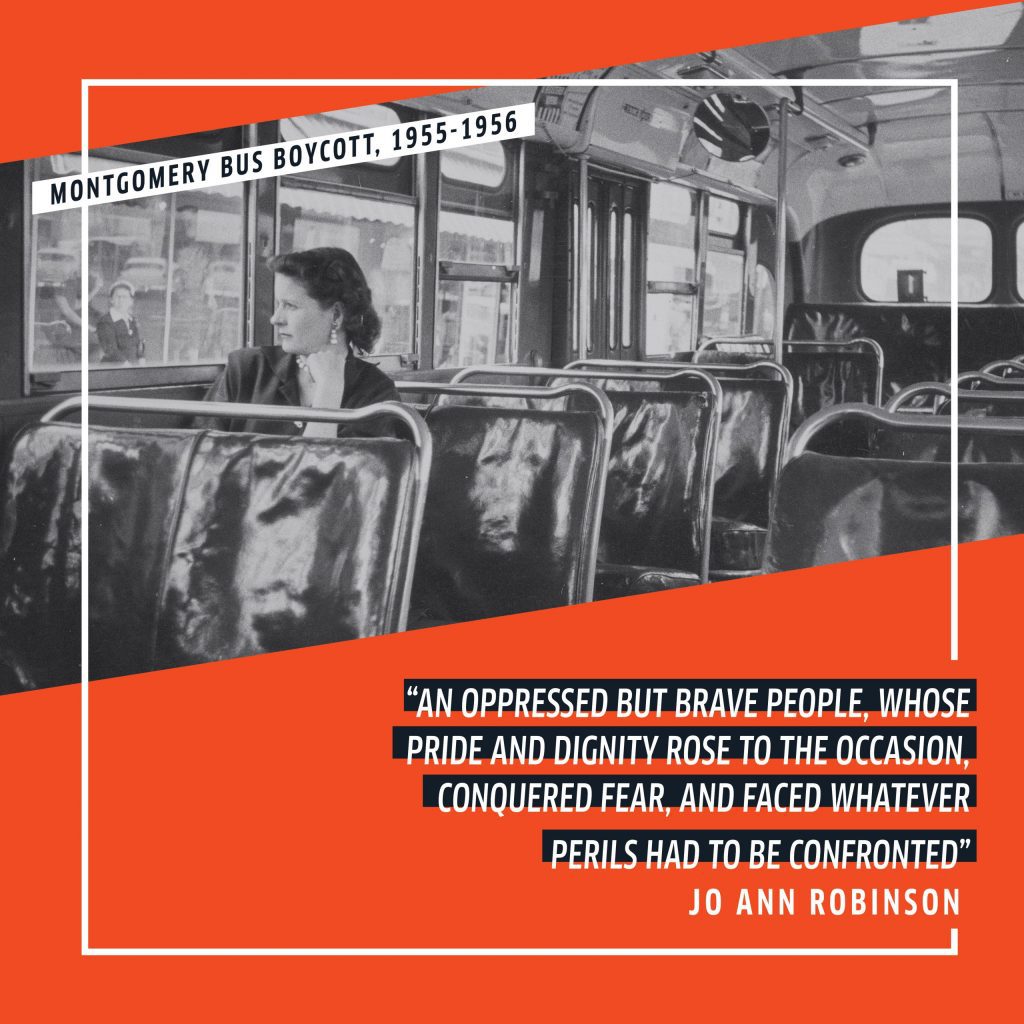
JoAnn Robinson began her career in public service as an educator in Macon, Georgia, working in public schools as an educator. She would go on to earn her master’s degree from Atlanta University and attend Columbia University. A job at Alabama State College for Negroes (now Alabama State University) brought Robinson to Montgomery, where she would join the Women’s Political Council. The WPC was an organization of African American women activists who were faculty of Alabama State College, teachers in the public schools and wives of other African American professionals in Montgomery. These women came together to fight the discrimination and racism African Americans faced on a daily basis. Prior to Rosa Parks’ 1955 arrest, the Women’s Political Council had begun discussing the possibility of a bus boycott. JoAnn Robinson was the WPC president at the time, and met with city officials during 1953 and 1954, pressing them to adopt reforms that would keep segregation in place but no longer require that black passengers surrender their seats to whites. When they received word that Rosa Parks had been arrested the WPC sprang into action. Robinson who was still an English professor at nearby Alabama State College, copied thousands of flyers urging African Americans to boycott buses on the day of Parks’ trial. WPC members canvassed Montgomery’s African American community to spread the word. The one-day boycott proved so successful that the Montgomery Improvement Association (MIA) was formed to direct the movement to change the bus laws. A simple demand that blacks be able to keep their seats evolved into a battle to end segregated buses altogether. The boycott lasted nearly a year, with a U.S. Supreme Court decision finally ruling the Alabama laws unconstitutional. The victory made Martin Luther King, the young president of the MIA, a household name, thanks in large part to the actions and activism of JoAnn Robinson and the Women’s Political Council. Learn more about JoAnn Robinson and other Fearless Women at The Center. Plan your visit today and experience how we’re more than a museum.
A Message from the Executive Director of the IHTI

There is an intersection between sex and labor trafficking. As an example, minors who are sold to Buyers, are also forced to participate in online pornography. This month’s news cycle shined a light on the realities of Illegal Massage Parlors. We see them in strip malls and stand-alone buildings throughout every community, and their illegal core business is hidden in plain view. According to the Polaris Project, there are over 9,000 Illegal Massage Parlors in the United States, generating $2.5b in revenue. There are several differentiating factors between health massage professionals, and Illegal Massage Parlors (IMP). IMP offer massages far below the market rate of legitimate massage therapists. IMPs also offer sexual acts as part of its menu of services. How do you spot an IMP? They are often a locked door at the entrance, as well as, a secondary entrance around the back or the side for their frequent customers; the workers are from other countries with limited English speaking skills. IMPs are operated by a criminal network of owners, who exploit their workers with low wages, crowded living conditions, and little freedom to come and go as they please. IMP’s are a public health and public safety concern wherever they exist. If there is an IMP in your community, other organized criminal activities are taking place. There are two things citizen groups may do: At your next neighborhood meeting, as a group of concerned citizens, ask your local police how do they monitor IMPs and how everyday citizens may support their policing efforts? Contact the Secretary of State office and ask how they regulate Massage Parlors? It was a Florida state Inspector, during a routine visit, who discovered the evidence of human trafficking activities. By only focusing on one aspect of human trafficking, we miss other activities to occur around us, hidden in plain view Onward Deborah Richardson, Executive Director
The Legacy of Dorothy Height
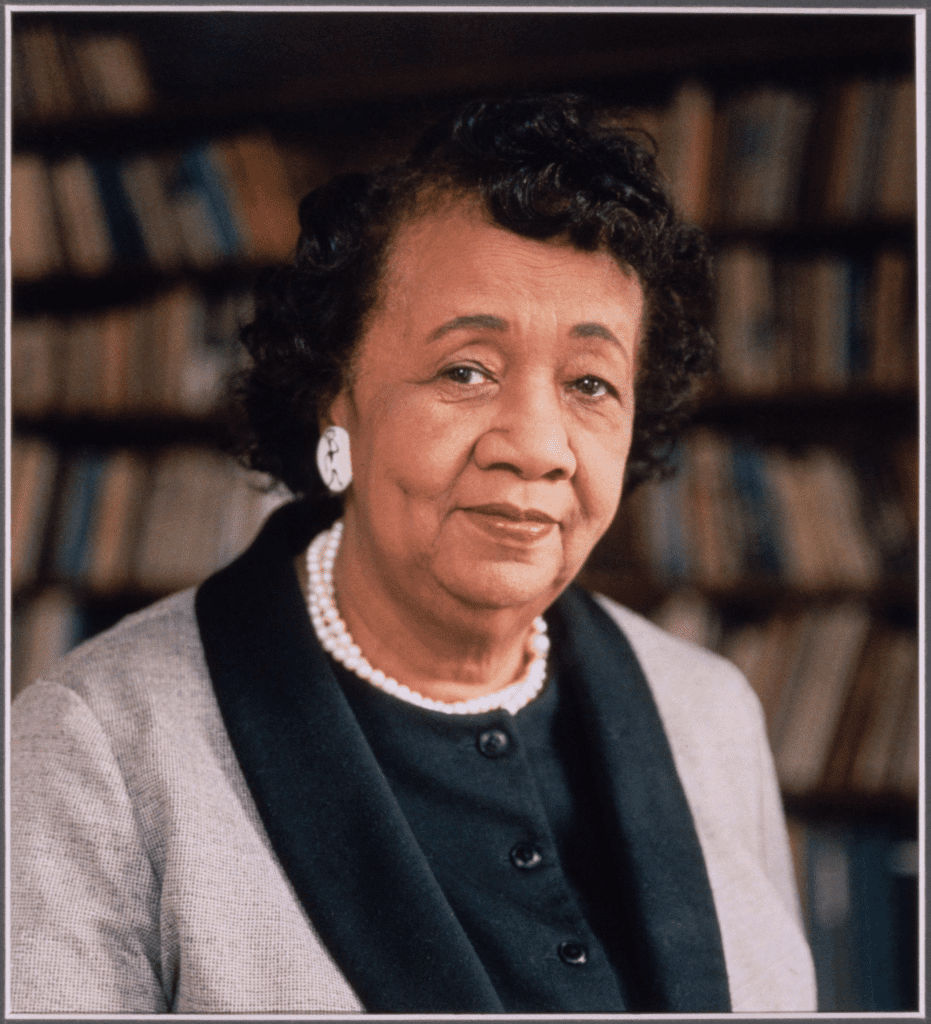
Born in Richmond, Virginia March 24, 1912, Dorothy Irene Height became for many, an example of a life of service. In high school, she began her activism, participating in anti-lynching campaigns of the 1920s. After attending New York University and Columbia University, Height became a social workers and transformed that career into one as an activist for civil and women’s rights. While working for the Harlem YWCA, she met Mary McLeod Bethune and Eleanor Roosevelt. After moving to the National YWCA office, Dorothy led the integration efforts, seeing desegregation at all YWCA’s in 1946. The following year, she began her tenure as the National President of Delta Sigma Theta Sorority, Inc—a position she would hold until 1957. Early in her career, Height became a member of the National Council of Negro Women, and after she completed her time as the president of Delta Sigma Theta, she became the president of NCNW, holding that position for forty years. While most are familiar with the men involved with the Civil Rights Movement, the roles of women were instrumental in the movement’s successes. Dorothy Height was extremely active, organizing Wednesdays in Mississippi as well as assisting with the organization and execution of the March on Washington for Jobs and Freedom. Height worked closely with Bayard Rustin on the complex logistics surrounding the March, used her vast network of contacts to raise funds, and offered the NCNW headquarters in Washington as a meeting place. She also helped mediate and resolve differences among the other organizers of the March as ideas and egos clashed throughout the planning process. While not allowed to give one of the keynote speeches that day, Height was seated as the only woman on the platform behind the speakers, after she had convinced the organizers to let Martin Luther King, Jr. to speak toward the end of the program. After the Civil Rights Movement, Height continued to serve her community through service on national committees. Her lifetime of work was acknowledged in popular culture, TV’s A Different World included “Dorothy Height Hall,” a residence hall named in her honor, and she was celebrated with various awards including the Presidential Medal of Freedom while her image was immortalized on a United States Postage Stamp in 2017. The world lost this trailblazing icon on April 20, 2010, but her legacy of leadership and activism still thrives in all the communities she touched.
Game Changer, Dr. Grace Lee Boggs

Dr. Grace Lee Boggs, activist and game changer, was the daughter of Chinese immigrants born in Providence, Rhode Island. Earning her Ph.D. in 1940 from Byrn Mawr College, Boggs, spent her adult life fighting for the rights of others by speaking out against poor living conditions that many faced, and focusing on struggles prevalent in the African American community. After marrying James Boggs, a black auto worker and fellow activist in 1953, Grace moved to Detroit where she would become a noted figure of the Detroit Black Power Movement and advocate of civil rights. Dr. Boggs wrote five books in her lifetime, her last The Next American Revolution: Sustainable Activism for the Twenty-First Century coming four years before her death in 2015. Dr. Boggs continued to lift up her community in 1992 when she started Detroit Summer, a multicultural, intergenerational youth program that “develops youth leadership for today’s movement by involving university youth from all over the country with local youth.” In 2013 she helped open the James and Grace Lee Boggs School in Detroit, whose mission is to “nurture creative, critical thinkers who contribute to the well-being of their communities.” Serving as an activist for 70 years, Grace Lee Boggs died in 2015 at the age of 100. She continues to serve as an inspiration for community activists and we are thankful for her contributions to many of the social movements that occurred in her lifetime.