
Shirin Ebadi and the Fight for Women’s Rights in Iran

Shirin Ebadi’s story is one of legal brilliance, moral courage, and unwavering resolve in the face of personal risk. This Women’s History Month at the National Center for Civil and Human Rights, we honor her legacy and explore how Ebadi’s work applies international human rights principles to daily life. A Judge Turned Advocate Shirin Ebadi broke barriers as one of Iran’s first female judges. After the 1979 revolution, she was stripped of her position solely because of her gender. Refusing to be silenced, she became a tireless advocate, representing political dissidents, journalists, and families seeking justice. In 2003, Ebadi was awarded the Nobel Peace Prize for her courageous efforts to advance democracy and human rights—especially for women and children. She was the first Iranian and the first Muslim woman to receive this honor. Ebadi’s work underscores both the necessity and the feasibility of applying human rights standards in ways that transcend cultural and governmental boundaries. Defending the Rights of Women and Children Ebadi’s impact on global human rights is deeply rooted in her commitment to legal reform and accountability. Through countless cases and public advocacy, she fought discriminatory laws and defended freedom of expression. The Nobel Women’s Initiative recognizes her unwavering call for peaceful change—grounded always in the rule of law. Her influence extends worldwide, as she speaks at universities and international forums about the need for independent courts and strong civil societies. The Shirin Ebadi Foundation works to advance democracy and protect human rights defenders. Learning from Ebadi’s Work Today, communities everywhere still face threats to free speech, equality, and women’s rights. Shirin Ebadi’s story reminds us that the defense of human dignity often begins with individuals who find the courage to speak out, even at great personal risk. Her journey broadens our understanding of civil and human rights, showing that these rights are not limited by borders—they are established by the universal standard that everyone, everywhere deserves fairness, safety, and opportunity. This Women’s History Month, the National Center for Civil and Human Rights invites you to visit our Global Human Rights gallery to learn more about Shirin Ebadi and other committed women around the world whose advocacy for human rights continues to shape our collective future. Sources:Shirin Ebadi – Facts – NobelPrize.org Shirin Ebadi – Nobel Women’s Initiative Dr. Shirin Ebadi | Yale Law School Home – Shirin Ebadi Foundation
Documenting Greenwood: Mary Jones Parrish and the Tulsa Massacre

When we think about civil rights education and the fight for human dignity, few acts are as vital as preserving the truth. Mary Jones Parrish’s work during and after the Tulsa Race Massacre shows us that documenting injustice is itself a powerful act of resistance. This Women’s History Month at the National Center for Civil and Human Rights, we honor pathbreaking women by shining a light on Parrish’s efforts to ensure the events of 1921 would not be forgotten. Preserving Truth in the Face of Violence In May and June of 1921, the Greenwood District of Tulsa, Oklahoma—a vibrant Black community known as Black Wall Street—was attacked by a white mob. Homes and businesses were destroyed, and hundreds of Black residents were killed or displaced. In the aftermath, officials and community leaders often tried to obscure or silence discussion of what happened. Mary Jones Parrish, a teacher and journalist, chose to bear witness. She gathered firsthand accounts from survivors and published them in her 1922 book, “Events of the Tulsa Disaster.” Through her writing, Parrish documented the devastation, loss, and resilience of Greenwood’s residents. At a time when many wanted to move on without accountability, she insisted that the truth be preserved. Why Documentation Is Civil Rights Work The histories of Mary Jones Parrish and the Tulsa Race Massacre are deeply connected. Her writing stands as one of the earliest comprehensive records of the tragedy. By safeguarding eyewitness testimony, she built a foundation for future generations to understand the truth and seek justice. Much of what we know today about the massacre comes from the testimonies Parrish preserved. Her efforts remind us that civil rights work doesn’t only happen in courts or legislatures—it also starts with listening, documenting, and refusing to let stories fade into oblivion. Connecting Past to Present Today, conversations about racial justice, historical memory, and repair continue nationwide. Mary Jones Parrish’s legacy teaches us that acknowledging harm is the first step toward meaningful change. Without honest history, accountability and reconciliation are impossible. In the Broken Promises: The Legacy of Reconstruction gallery at the National Center for Civil and Human Rights, visitors can sift the impact of Mary Jones Parrish and the Tulsa Race Massacre. Her story prompts us to consider whose stories we preserve—and whose remain unheard. This Women’s History Month, we invite you to visit the Center and reflect on the power of truth-telling. Remembering women like Mary Jones Parrish honors the courage it takes to document injustice and reaffirms our shared responsibility to protect human dignity. Source Links: https://www.newyorker.com/news/us-journal/the-women-who-preserved-the-story-of-the-tulsa-race-massacre https://tupress.org/author/mary-e-jones-parrish/ https://19thnews.org/2023/06/mary-parrish-book-tulsa-massacre-history-legacy/ https://blackwallstreetwomen.com/mary-elizabeth-jones-parrish/
The Enduring Legacy of Eleanor Roosevelt

Few have done more to promote human dignity and globalize the modern conception of human rights than Eleanor Roosevelt. Her life is a testament to the power of moral courage, public service, and unwavering persistence to transform history. This Women’s History Month at the National Center for Civil and Human Rights, we honor Roosevelt by exploring her pivotal role in shaping modern human rights—and showing why her legacy continues to inspire. From Public Advocate to Global Leader Eleanor Roosevelt transformed the traditionally ornamental role of First Lady into one of active civic engagement. She held press conferences, wrote a daily newspaper column, and traveled the country to witness the realities Americans faced. She used her lofty platform to champion the rights of workers, women, and communities subjected to discrimination. After President Franklin D. Roosevelt’s passing, Eleanor expanded her influence on the world stage. Appointed by President Truman as a delegate to the United Nations, she chaired the committee that drafted the Universal Declaration of Human Rights. Adopted in 1948, this landmark document owes much to her determination, vision, and skillful leadership in guiding it through intense debate and political tension. Defining Modern Human Rights Roosevelt’s work on the Universal Declaration of Human Rights forever linked her to global human rights leadership. The document set a universal standard: all people are born free and equal in dignity and rights. It affirmed essential protections—freedom of speech, freedom of religion, and the right to education and work, for example—that continue to shape societies worldwide. As Roosevelt famously said, human rights begin in “small places, close to home.” Her vision connected international agreements to daily life, carrying human rights from the realm of abstraction to the places we inhabit every day–our schools, workplaces, communities, even our homes. Why Her Legacy Endures Today’s conversations about freedom, equality, and justice stand on the foundation Eleanor Roosevelt helped lay. Her example inspires ongoing efforts, advocacy, and legal protections in the pursuit of human rights. Roosevelt reminds us that progress demands persistence, dialogue, and an enduring belief in our shared humanity. In the Global Human Rights gallery at the National Center for Civil and Human Rights, you can learn more about Eleanor Roosevelt’s extraordinary legacy and consider how her work shapes today’s world. This Women’s History Month, we invite you to reflect on her story—and how each of us can help protect and advance human rights in our own communities. Sources: Biography: Eleanor Roosevelt Eleanor Roosevelt Biography – FDR Presidential Library & Museum Eleanor Roosevelt | Biography, Human Rights, Accomplishments, & Facts | Britannica
How Ida B. Wells Used Journalism to Fight Racial Violence

When considering major figures in civil rights education and the struggle for human dignity, Ida B. Wells has few peers. Wells was a pioneering 19th-century investigative journalist, suffragist, and anti-lynching crusader who used her writing to expose racial terror in the Jim Crow South. Her life story shows how truth and courage can challenge injustice, even when systems are determined to hide it. This Women’s History Month at the National Center for Civil and Human Rights, we honor Ida B. Wells and invite you to explore her legacy in our Broken Promises: The Legacy of Reconstruction gallery as part of our commitment to connecting history to the present. A Life Shaped by Freedom and Struggle Born into slavery in 1862 in Holly Springs, Mississippi, Ida B. Wells came of age during the transition from enslavement to freedom. These were years of both great possibility and fierce resistance to Black citizenship and rights. Orphaned by yellow fever as a teenager, Wells became a teacher to support her siblings. These early challenges forged her belief that knowledge and truth are essential tools for justice. Journalism as Resistance Wells emerged as one of the era’s most courageous investigative journalists. In Memphis, she co-owned and edited The Memphis Free Speech, boldly using her platform to uncover and denounce racial violence and injustice. Her unflinching reports on lynching shattered the myths used to excuse racial terror and brought hard evidence to the center of national discourse. In 1895, her landmark exposé, A Red Record, laid bare the widespread and systemic reality of lynchings across the United States. Her activism came at great personal risk. After a mob destroyed her newspaper office, she continued her work in Chicago and traveled to England to raise international awareness of racial violence in America. Fighting for Women’s Rights and Community Wells understood that gender and racial justice are inseparable. She co-founded Chicago’s Alpha Suffrage Club—the city’s first Black women’s suffrage organization—empowering African American women to vote and make their voices heard. Her leadership in the struggle to expand both racial and women’s rights demonstrated that movements for justice must include all voices, especially those marginalized by race and gender. Beyond journalism and suffrage, Wells co-founded organizations such as the Negro Fellowship League, which provided resources to Black migrants during the Great Migration. Her work showed that civil rights education and civic engagement strengthen both community and democracy. Lessons from Ida B. Wells Wells’s life reminds us that civil rights education means more than learning facts—it calls us to see injustice clearly and act. Her commitment to truth and equality resonates in our work today at the National Center for Civil and Human Rights, where history guides us in understanding present-day inequalities and inspires collective action. As you visit the museum this Women’s History Month, we hope Ida B. Wells’s story inspires you to reflect on how knowledge sparks change and how each of us can use our voice to fight for justice. Sources: National Women’s History Museum Ida B. Wells Society League of Women Voters of Chicago WTTW
Bank of America’s Museums on Us® Program Returns in 2026 with Free Admission at the National Center for Civil and Human Rights
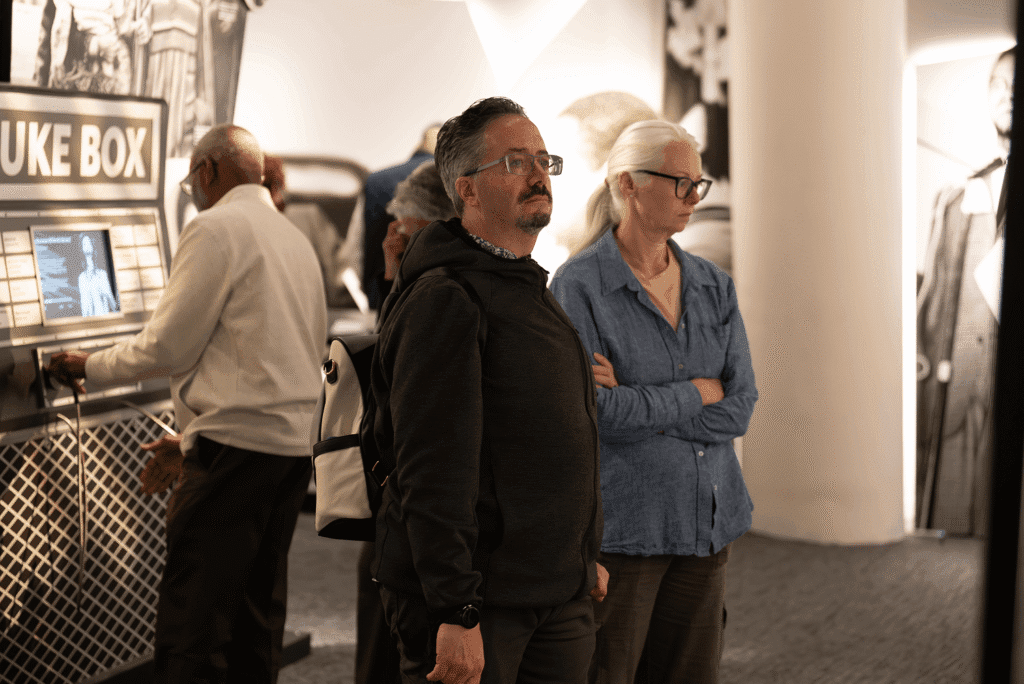
Atlanta, GA — The National Center for Civil and Human Rights will participate in Bank of America’s Museums on Us® program throughout 2026, offering free general admission to eligible cardholders on the first full weekend of each month. As part of this nationwide initiative, cardholders can enjoy complimentary access to the Center’s immersive exhibitions, which explore the history, struggles, and changemakers shaping the ongoing pursuit of civil and human rights. The program reflects a shared commitment to expanding access to cultural institutions and fostering community engagement through education and storytelling. Eligible visitors must present an active Bank of America®, Merrill®, or Bank of America Private Bank® credit or debit card, along with a matching photo ID, at the ticketing window to receive free admission. The offer applies to the individual cardholder only and is available on select dates throughout the year. Exact dates for each month are listed on the Center’s Upcoming Events page. The Center is grateful for our continued partnership with Bank of America and the critical role they play in the museum’s development. In addition to accepting us into their Museums on Us program, they were a founding supporter, contributed $6.7MM in tax credits toward the expansion of our museum, and have been a sponsor of our annual event, Power to Inspire. Their long-term support has helped us expand access, deepen community engagement, and ensure that the Center remains a space where history can be told. For more information about the Museums on Us® program, visit Bank of America’s official program page. About the National Center for Civil and Human Rights The National Center for Civil and Human Rights is a museum and cultural organization that inspires the changemaker in each of us. Opened in 2014, the Center connects US civil rights history to global human rights movements today. Our experiences highlight people who have worked to protect rights and who model how individuals create positive change. For more information, visit civilandhumanrights.org. Follow us on Facebook, TikTok, Instagram, YouTube, and LinkedIn @civilandhumanrights. Media Contact: Tenisha Griggs, Interim Vice President of Marketing & Communications [email protected]
National Center for Civil and Human Rights Advances Digital Transformation with Support from Bloomberg Philanthropies

Atlanta, GA – The National Center for Civil and Human Rights announced today the successful expansion of its digital capabilities through its participation in Bloomberg Philanthropies’ Digital Accelerator for Arts and Culture, a global initiative supporting nonprofit cultural organizations in strengthening technology, leadership, and operational capacity. Developed with the support of Bloomberg Philanthropies’ Digital Accelerator for Arts and Culture, this project enabled the Center to revitalize its website and improve how audiences engage with its mission, programs, and exhibitions. As part of the program, the Center invested in upgraded digital tools and strategies that enhance visitor experience, expand audience reach, increase fundraising potential, and support long-term sustainability. For the National Center for Civil and Human Rights, these improvements aligned closely with a period of renewal and reopening, ensuring that its digital platforms reflect the strength and relevance of its physical spaces. In addition to internal improvements, the program emphasizes the development of best practices that can be shared across a global network of nonprofit cultural organizations. Through collaboration with peer institutions, the Center contributed to and benefited from shared learning that strengthens the broader cultural sector. Participation in the Bloomberg Philanthropies Digital Accelerator reinforces the National Center for Civil and Human Rights’ commitment to innovation, accessibility, and impact, ensuring that its stories and educational resources continue to reach diverse audiences locally and globally. About Bloomberg Philanthropies Bloomberg Philanthropies invests in 700 cities and 150 countries worldwide to ensure better, longer lives for the greatest number of people. The organization focuses on the Arts, Education, Environment, Government Innovation, and Public Health. In 2023, Bloomberg Philanthropies distributed $3 billion. Learn more at bloomberg.org. About the National Center for Civil and Human Rights The National Center for Civil and Human Rights is a museum and cultural organization that inspires the changemaker in each of us. Opened in 2014, the Center connects US civil rights history to global human rights movements today. Our experiences highlight people who have worked to protect rights and who model how individuals create positive change. For more information, visit civilandhumanrights.org. Follow us on Facebook, TikTok, Instagram, YouTube, and LinkedIn @civilandhumanrights. Media Contact: Tenisha Griggs, Interim Vice President of Marketing & Communications [email protected]
National Center for Civil and Human Rights to Honor Dr. Martin Luther King, Jr. With Free Admission Day and MLK Day Programming
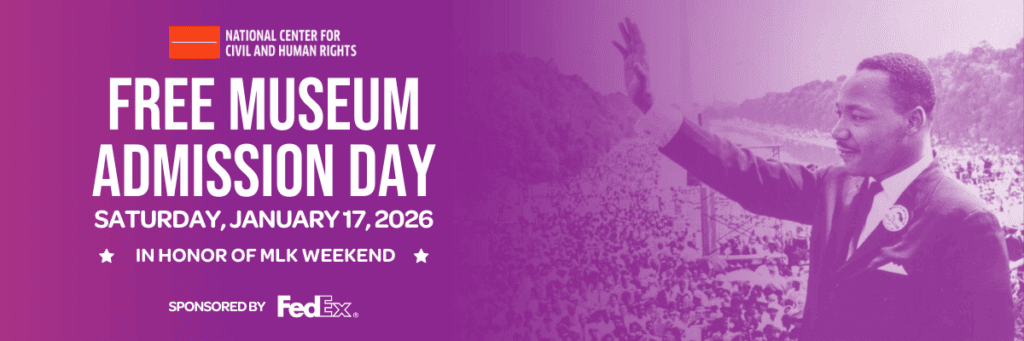
Atlanta, GA – The National Center for Civil and Human Rights will honor the life and legacy of Dr. Martin Luther King, Jr. through two special offerings in January 2026: a Free Admission Day presented by FedEx on Saturday, January 17, and MLK Day programming on Monday, January 19, featuring family-friendly activities and opportunities for reflection, learning, and engagement. On Saturday, January 17, the Center will host Free Admission Day, presented by FedEx, offering guests the opportunity to explore the Center’s exhibitions at no cost. Tickets for Free Admission Day are available on a first-come, first-served basis, and advance reservations are strongly encouraged. On Monday, January 19, the Center will observe MLK Day at the Center, a day dedicated to honoring Dr. King’s enduring impact through exhibitions and interactive, family-friendly programming. Visitors of all ages are invited to engage in activities designed to connect Dr. King’s legacy to today’s ongoing work for civil and human rights, encouraging reflection, dialogue, and action. “We are proud to honor Dr. King’s legacy by creating space for reflection, education, and civic engagement,” said Quisa D. Foster, Ed.D., Chief Development Officer at the National Center for Civil and Human Rights. “Through our Free Admission Day, we are inviting the community to engage deeply with Dr. King’s work and the responsibility it calls us to today.” FedEx Free Admission Day is presented as part of an ongoing sponsorship supporting accessibility and community engagement at the Center. For more information about Free Admission Day on January 17, visit here, and for MLK Day programming on January 19, visit here. About the National Center for Civil and Human Rights The National Center for Civil and Human Rights is a museum and cultural organization that inspires the changemaker in each of us. Opened in 2014, the Center connects US civil rights history to global human rights movements today. Our experiences highlight people who have worked to protect rights and who model how individuals create positive change. For more information, visit civilandhumanrights.org. Follow us on Facebook, Twitter, Instagram @civilandhumanrights and LinkedIn at linkedin.com/company/ncchr.
New Reconstruction Era Exhibition Shows How Reform and Resistance Have Shaped U.S. Civil Rights
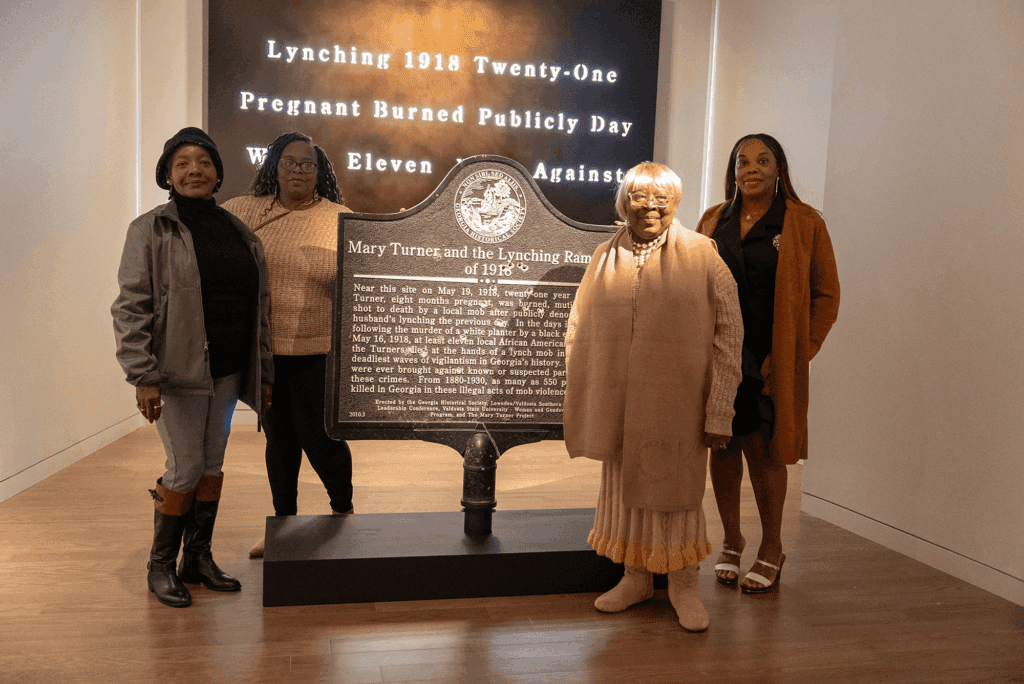
National Center for Civil and Human Rights Unveils Broken Promises Gallery “Guided” by Ida B. Wells The National Center for Civil and Human Rights’ new gallery, “Broken Promises,” is a permanent exhibit on Reconstruction—the period after the Civil War and Emancipation when America first attempted to build a multi-racial democracy. The Center invites people to experience the new gallery which opens to the public today, December 5, 2025, as part of the Center’s $58 million expansion. The gallery presents Black progress during the Reconstruction Era, when nearly four million newly freed Black Americans claimed their rights as citizens, voted, won elected office, created schools, and reshaped economic and civic life across the South. It also presents the violent backlash that met and then suppressed those gains — through racial terror, political disenfranchisement, and Jim Crow legal segregation. “Reconstruction reminds us that the expansion of rights in America has never moved in a straight line. Every reform toward wider freedom has been accompanied by efforts to limit those rights,” said Jill Savitt, the CEO of the Center. “Recognizing that pattern helps us understand the forces that have long shaped America, up until today.” Curated by the Center’s Chief Program Officer, Kama Pierce, the gallery has anti-lynching crusader Ida B. Wells as its “docent,” and focuses on three cities — Wilmington, N.C., Atlanta, Ga., and Tulsa, Okla. In each city, Black achievement provoked white backlash that resulted in massacres and racial terror. The immersive gallery contains artifacts from the Without Sanctuary Collection, including a fragment of a noose and photographs of lynchings that were turned into postcards for entertainment. The artifacts deepen visitors’ understanding of how racial terror was wielded as a strategy. The gallery’s memorial space features a historical marker honoring Mary Turner, who was lynched in 1918. Turner’s family erected the public marker to honor her — but it was consistently defaced. The family donated the marker — marred by 11 bullet holes — to the Center. Artist Lonnie Holley has interpreted the marker in the gallery’s memorial space. “The Mary Turner marker is a powerful artifact that bears witness twice — first to the original terror, and again to the present resistance to let the truth be told,” said Pierce. The Center decided to add a gallery on Reconstruction because the era has not always been fully or accurately represented in American classrooms. The Center also wanted to provide more context for its signature gallery on the Civil Rights Movement. “After Reconstruction, the United States entered a decades-long period of Jim Crow segregation and unequal protection for Black Americans,” said Pierce. “The Civil Rights Movement emerged not as a new struggle, but as a renewed demand to enforce the promises first made during Reconstruction.” The Center received a $2 million grant from the Mellon Foundation for the exhibition. About the National Center for Civil and Human Rights The National Center for Civil and Human Rights is a museum and cultural organization that inspires the changemaker in each of us. Opened in 2014, the Center connects US civil rights history to global human rights movements today. Our experiences highlight people who have worked to protect rights and who model how individuals create positive change. For more information, visit civilandhumanrights.org. Follow us on Facebook, Twitter, Instagram @civilandhumanrights and LinkedIn at linkedin.com/company/ncchr. ### Media Contact: Tenisha Griggs, Senior Director, Marketing [email protected]
A Memorable Reopening

From left to right: Mayor Andre Dickens, Board Member Ed Potter, CEO Jill Savitt, Board Member W. Imara Canady, philanthropist Arthur M. Blank, former Mayor Shirley C. Franklin, Board Member Egbert Perry, Board Member AJ Robinson, Board Member Michelle Moorehead, Board Member Katie FahsPhoto by Sam Nunez, courtesy of Juneau Construction Company The National Center for Civil and Human Rights welcomed supporters, partners, and community members for a ribbon cutting that marked the reopening of the expanded Center. The morning carried a sense of pride as people gathered to watch the ribbon fall and the doors open once again. Arthur M. Blank, former Mayor Shirley Clarke Franklin, Mayor Andre Dickens, Board Chair Egbert Perry, Co Chair AJ Robinson, CEO Jill Savitt, and Juneau Construction CEO Nancy Juneau stood together at the entrance before cutting the ribbon. Students from CJ Hicks Elementary began the ceremony with a thoughtful performance that set the tone for the day. Jill Savitt spoke about the meaning of the moment. “This Center was built to show how history speaks to the present,” she said. “These new spaces give people room to reflect, learn, and take part in shaping what comes next.” Shirley Clarke Franklin reflected on the Center’s journey. “When we opened the Center, we wanted history to live in the present,” she said. “Seeing it reopen even stronger shows that Atlanta’s commitment to truth and justice continues.” Mayor Andre Dickens shared the city’s support. “This ribbon cutting shows what progress looks like,” he said. “This project brings people together, and it strengthens the spirit of our city.” Opening Day: Welcoming the Community Back Inside Four days later, the Center held its Opening Day celebration. Guests of all ages explored the new and reimagined galleries, including the signature Lunch Counter experience. Families, students, and longtime supporters moved through the building at their own pace, taking time to absorb the stories and voices that shape the Center’s work. Giyawen Mata, an all-female African drum and dance troupe, welcomed guests with a moving performance. Their presence gave the day a sense of reflection and joy. Photos of them performing in the main lobby captured the spirit of the event: open, warm, and grounded in community. The day also featured music from V-103 with Big Tigger broadcasting live, drawing visitors from across the city and filling the plaza with steady energy. Looking Ahead The coming year will bring a full calendar of programs, conversations, and community gatherings. The expanded spaces will allow for student groups, public events, and new opportunities for people to explore stories that shape our shared life. If you have not yet visited, now is the time. Walk through the galleries. Sit at the Lunch Counter. Spend a few moments with Dr. King’s papers. Experience the reimagined installations that show where we have been and where we are going. We invite you to plan your visit and be part of this next chapter. The doors are open, and there is much to see.
The National Center for Civil and Human Rights to Reopen November 8 with Major Expansion and New Exhibits
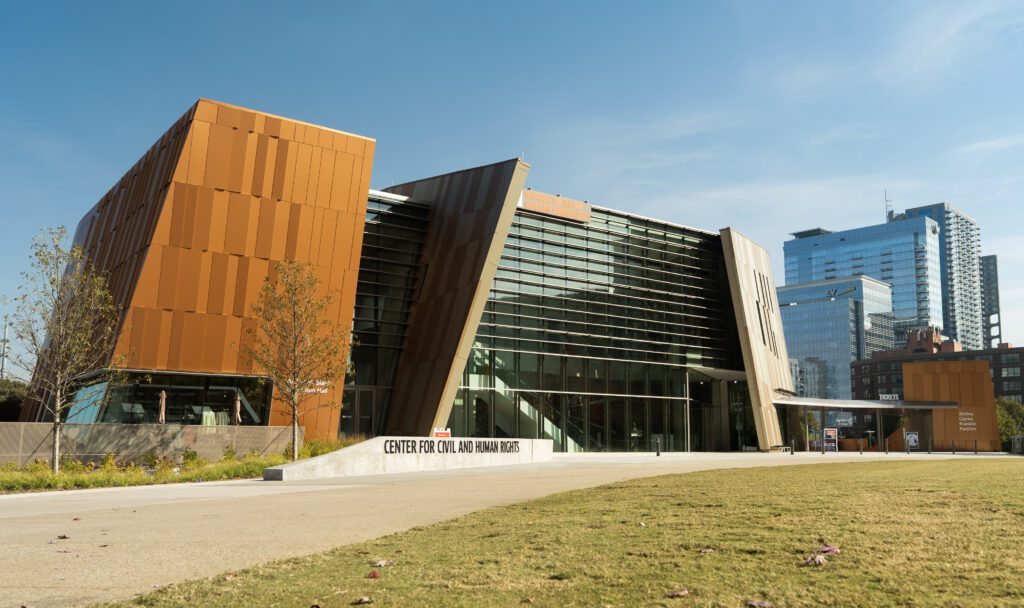
ATLANTA—The National Center for Civil and Human Rights reopens November 8, 2025 after a $57.9 million expansion adding 24,000 sq. ft., six new galleries, three classrooms, flexible event and meeting spaces, and interactive experiences that connect history to today. Highlights include the updated “Rolls Down Like Water,” a reimagined Morehouse College Martin Luther King, Jr. Collection, “Everyone. Everywhere.” global human rights gallery, the Action Lab, Reconstruction-era “Broken Promises,” and the children’s “Change Agent Adventure.” New wings—Shirley Clarke Franklin Pavilion and Arthur M. Blank Inspiration Hall—offer skyline views and venue options. Reserve reopening-day tickets or purchase memberships now at civilandhumanrights.org; event bookings available for 2025–26.