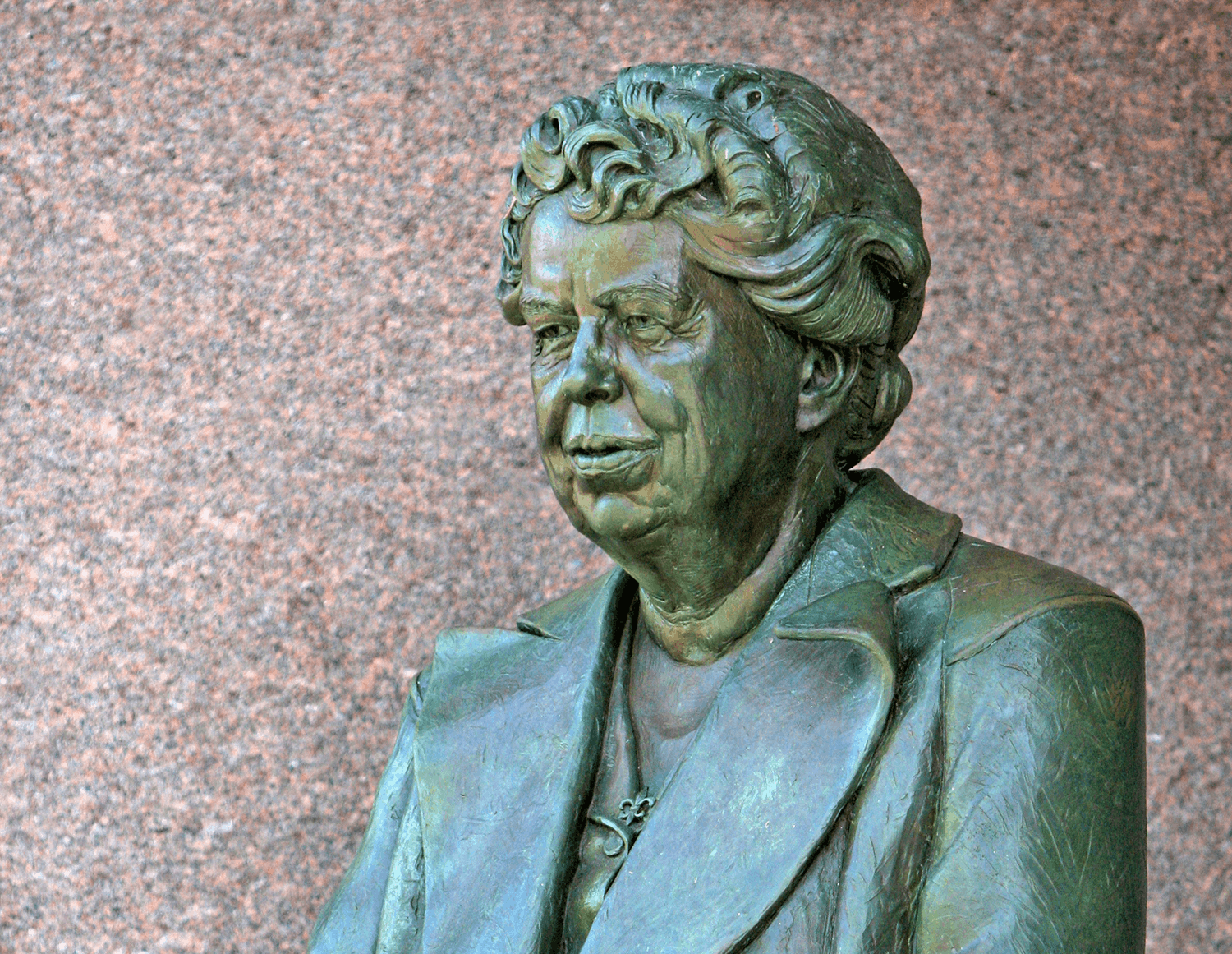
Few have done more to promote human dignity and globalize the modern conception of human rights than Eleanor Roosevelt. Her life is a testament to the power of moral courage, public service, and unwavering persistence to transform history. This Women’s History Month at the National Center for Civil and Human Rights, we honor Roosevelt by exploring her pivotal role in shaping modern human rights—and showing why her legacy continues to inspire.
From Public Advocate to Global Leader
Eleanor Roosevelt transformed the traditionally ornamental role of First Lady into one of active civic engagement. She held press conferences, wrote a daily newspaper column, and traveled the country to witness the realities Americans faced. She used her lofty platform to champion the rights of workers, women, and communities subjected to discrimination.
After President Franklin D. Roosevelt’s passing, Eleanor expanded her influence on the world stage. Appointed by President Truman as a delegate to the United Nations, she chaired the committee that drafted the Universal Declaration of Human Rights. Adopted in 1948, this landmark document owes much to her determination, vision, and skillful leadership in guiding it through intense debate and political tension.
Defining Modern Human Rights
Roosevelt’s work on the Universal Declaration of Human Rights forever linked her to global human rights leadership. The document set a universal standard: all people are born free and equal in dignity and rights. It affirmed essential protections—freedom of speech, freedom of religion, and the right to education and work, for example—that continue to shape societies worldwide.
As Roosevelt famously said, human rights begin in “small places, close to home.” Her vision connected international agreements to daily life, carrying human rights from the realm of abstraction to the places we inhabit every day–our schools, workplaces, communities, even our homes.
Why Her Legacy Endures
Today’s conversations about freedom, equality, and justice stand on the foundation Eleanor Roosevelt helped lay. Her example inspires ongoing efforts, advocacy, and legal protections in the pursuit of human rights. Roosevelt reminds us that progress demands persistence, dialogue, and an enduring belief in our shared humanity.
In the Global Human Rights gallery at the National Center for Civil and Human Rights, you can learn more about Eleanor Roosevelt’s extraordinary legacy and consider how her work shapes today’s world. This Women’s History Month, we invite you to reflect on her story—and how each of us can help protect and advance human rights in our own communities.
Sources:
Biography: Eleanor Roosevelt
Eleanor Roosevelt Biography – FDR Presidential Library & Museum
Eleanor Roosevelt | Biography, Human Rights, Accomplishments, & Facts | Britannica