
A Message from the Executive Director of the IHTI

There is an intersection between sex and labor trafficking. As an example, minors who are sold to Buyers, are also forced to participate in online pornography. This month’s news cycle shined a light on the realities of Illegal Massage Parlors. We see them in strip malls and stand-alone buildings throughout every community, and their illegal core business is hidden in plain view. According to the Polaris Project, there are over 9,000 Illegal Massage Parlors in the United States, generating $2.5b in revenue. There are several differentiating factors between health massage professionals, and Illegal Massage Parlors (IMP). IMP offer massages far below the market rate of legitimate massage therapists. IMPs also offer sexual acts as part of its menu of services. How do you spot an IMP? They are often a locked door at the entrance, as well as, a secondary entrance around the back or the side for their frequent customers; the workers are from other countries with limited English speaking skills. IMPs are operated by a criminal network of owners, who exploit their workers with low wages, crowded living conditions, and little freedom to come and go as they please. IMP’s are a public health and public safety concern wherever they exist. If there is an IMP in your community, other organized criminal activities are taking place. There are two things citizen groups may do: At your next neighborhood meeting, as a group of concerned citizens, ask your local police how do they monitor IMPs and how everyday citizens may support their policing efforts? Contact the Secretary of State office and ask how they regulate Massage Parlors? It was a Florida state Inspector, during a routine visit, who discovered the evidence of human trafficking activities. By only focusing on one aspect of human trafficking, we miss other activities to occur around us, hidden in plain view Onward Deborah Richardson, Executive Director
The National Center for Civil and Human Rights Announces 2019 Power to Inspire Honorees

Fifth annual event celebrates leaders’ significant contributions to advance justice and promote civil and human rights Atlanta, Ga. (April 30, 2019) – The National Center for Civil and Human Rights (The Center) will present its highest award at its Power to Inspire Tribute Dinner on May 16, 2019, at 6 p.m. at the Georgia Aquarium. For the fifth year, The Center will honor individuals and organizations for their notable civil and human rights impact nationally and locally. 2019 Awardees are: The Honorable Andrew Young – Atlanta civil rights icon, politician, and diplomat Alina Diaz – migrant women farmworker rights advocate Elana Meyers Taylor – President of the Women in Sports Foundation and Olympic Gold medalist Christian Fischer – President and CEO of Georgia-Pacific “Each year, we recognize individuals who make a significant commitment to promoting, protecting and fighting for rights,” said Jill Savitt, The Center’s CEO. “This year, on our fifth anniversary, we honor four leaders doing the hard work of making our world more humane, fair and just.” Previous recipients of the Power to Inspire award include, former Vice President Joe Biden, Dr. Bernice A. King, filmmaker and literary scholar Dr. Henry Louis Gates Jr., the Anti-Defamation League, the NAACP Legal Defense and Education Fund, environmentalist Ted Turner, interfaith activist Sherry Frank and Argentine human rights activist Estela Barnes de Carlotta. The Honorable Andrew Young has devoted his life to promote and protect civil and human rights for all. Young was an early leader in the civil rights movement. As an American diplomat and policymaker at all levels of service, Young has committed his life to create and enforce policies that advance human dignity. His service as Mayor of Atlanta and U.S. Congressman ultimately led to his appointment by President Jimmy Carter as the U.S. Ambassador to the United Nations. Today, he is recognized for his ability to positively impact international issues relating to genocide, 2 poverty, and democracy. Young was also integral in conceiving and aiding former Atlanta Mayor, Shirley Franklin, to establish The Center. Alina Diaz has been a tireless advocate on behalf of immigrant women who face exploitation and sexual violence but fear to report this abuse because of their legal status. Diaz served as a founding board member of Alianza Nacional de Campesinas which works to promote the rights of women farmworkers in the United States. Based in Genessee, NY, Diaz supports and educates farmworkers throughout the Finger Lakes area about their fundamental human rights – to be free from workplace exploitation, harassment, and sexual violence – and connect them with social services. She also advocates for policies to protect immigrant women. Three-time Olympic medalist Elana Meyers Taylor will be honored for her leadership as both a groundbreaking athlete and a champion of equality for women in sports. A Douglasville, Georgia native, Meyers Taylor is the president of the Women’s Sports Foundation. She was the first woman to lead a four-person crew to third place in the U.S. Olympic trials, securing a place to compete for the U.S. national team. Georgia-Pacific in recognition of its work to address human trafficking, devoting significant financial and employee volunteer support, provides a shining example of corporate social responsibility. Christian Fischer, President, and CEO of Georgia-Pacific will accept this honor on behalf of the company. Fischer helped lead a company-wide education program and channeled Georgia-Pacific resources to promote an Atlanta-wide awareness campaign coinciding with The Super Bowl and through 2019. About the National Center for Civil and Human Rights The National Center for Civil and Human Rights in downtown Atlanta is an engaging cultural attraction that connects the American Civil Rights Movement to today’s Global Human Rights Struggle. The Center features a continuously rotating exhibit from The Morehouse College Martin Luther King, Jr. Collection, which includes many of Dr. King’s documents and personal items. Visitors are immersed in experiential exhibits through powerful and authentic stories, historical documents, compelling artifacts, and interactive activities. The Center is a source for ongoing dialogue — hosting educational forums and attracting world-renowned speakers and artists who work on a variety of human rights topics. For more information, visit www.civilandhumanrights.org. Join the conversation on civil and human rights on Twitter @Ctr4CHR and Facebook. Sponsorship packages for the Power to Inspire dinner are available. For sponsorship inquiries or general questions please contact Candice Franklin at [email protected]
Hi, I’m Jill Savitt

Two weeks into my tenure as the CEO of the National Center for Civil and Human Rights, I have not had as much time to check my Twitter feed, and so I’ve been spared my typical daily intake of negativity. One immediate benefit: the furrow in my brow has smoothed a bit. We live amid rampant incivility. Social media food fights are both a cause and an effect of our polarization. Another benefit of my new role: spending so much time within the walls of the Center. Everywhere you look, there are stories of courage, of selflessness, of people working together to achieve a common goal. It’s one of the best antidotes to the digital shrieking all around us. The far sides of the spectrum have taken center stage in so many areas of our lives – but not here. Here’s a sample of what you can catch if you stop in: If you need a reminder of the values we all should — must — be fighting for, come by. I hope to see you there.
The Legacy of Dorothy Height
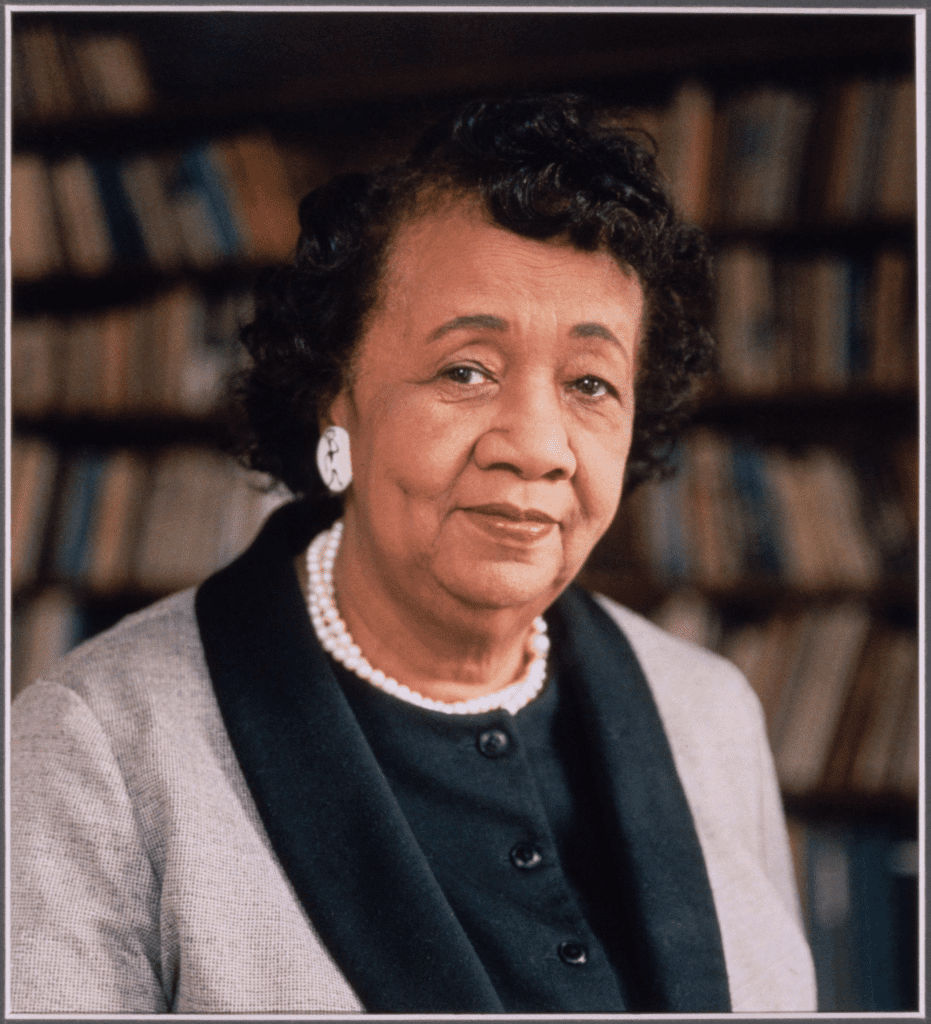
Born in Richmond, Virginia March 24, 1912, Dorothy Irene Height became for many, an example of a life of service. In high school, she began her activism, participating in anti-lynching campaigns of the 1920s. After attending New York University and Columbia University, Height became a social workers and transformed that career into one as an activist for civil and women’s rights. While working for the Harlem YWCA, she met Mary McLeod Bethune and Eleanor Roosevelt. After moving to the National YWCA office, Dorothy led the integration efforts, seeing desegregation at all YWCA’s in 1946. The following year, she began her tenure as the National President of Delta Sigma Theta Sorority, Inc—a position she would hold until 1957. Early in her career, Height became a member of the National Council of Negro Women, and after she completed her time as the president of Delta Sigma Theta, she became the president of NCNW, holding that position for forty years. While most are familiar with the men involved with the Civil Rights Movement, the roles of women were instrumental in the movement’s successes. Dorothy Height was extremely active, organizing Wednesdays in Mississippi as well as assisting with the organization and execution of the March on Washington for Jobs and Freedom. Height worked closely with Bayard Rustin on the complex logistics surrounding the March, used her vast network of contacts to raise funds, and offered the NCNW headquarters in Washington as a meeting place. She also helped mediate and resolve differences among the other organizers of the March as ideas and egos clashed throughout the planning process. While not allowed to give one of the keynote speeches that day, Height was seated as the only woman on the platform behind the speakers, after she had convinced the organizers to let Martin Luther King, Jr. to speak toward the end of the program. After the Civil Rights Movement, Height continued to serve her community through service on national committees. Her lifetime of work was acknowledged in popular culture, TV’s A Different World included “Dorothy Height Hall,” a residence hall named in her honor, and she was celebrated with various awards including the Presidential Medal of Freedom while her image was immortalized on a United States Postage Stamp in 2017. The world lost this trailblazing icon on April 20, 2010, but her legacy of leadership and activism still thrives in all the communities she touched.
Game Changer, Dr. Grace Lee Boggs

Dr. Grace Lee Boggs, activist and game changer, was the daughter of Chinese immigrants born in Providence, Rhode Island. Earning her Ph.D. in 1940 from Byrn Mawr College, Boggs, spent her adult life fighting for the rights of others by speaking out against poor living conditions that many faced, and focusing on struggles prevalent in the African American community. After marrying James Boggs, a black auto worker and fellow activist in 1953, Grace moved to Detroit where she would become a noted figure of the Detroit Black Power Movement and advocate of civil rights. Dr. Boggs wrote five books in her lifetime, her last The Next American Revolution: Sustainable Activism for the Twenty-First Century coming four years before her death in 2015. Dr. Boggs continued to lift up her community in 1992 when she started Detroit Summer, a multicultural, intergenerational youth program that “develops youth leadership for today’s movement by involving university youth from all over the country with local youth.” In 2013 she helped open the James and Grace Lee Boggs School in Detroit, whose mission is to “nurture creative, critical thinkers who contribute to the well-being of their communities.” Serving as an activist for 70 years, Grace Lee Boggs died in 2015 at the age of 100. She continues to serve as an inspiration for community activists and we are thankful for her contributions to many of the social movements that occurred in her lifetime.
Indigenous Peoples Activist, LaDonna Harris

Comanche activist LaDonna Harris is the founder and president of Americans for Indian Opportunity, an organization whose mission “advances, from an Indigenous worldview, the cultural, political and economic rights of Indigenous peoples in the United States and around the world.” Before that, she acquired an incredible resume of Indigenous activism. From founding Americans for Indian Opportunity to being appointed by President Lyndon B. Johnson to the National Council on Indian Opportunity, Harris has been a key figure in fighting for Indigenous Peoples’ Rights. Her influence has touched many organizations including the National Indian Housing Council, the Council of Energy Resource Tribes, the National Tribal Environmental Council, and the National Indian Business Association. Ms. Harris’ Indigenous heritage has always been a part of her life; as a child, she was raised on a farm in a self-governing Indigenous community near Walters, Oklahoma. When she was married to U.S. Senator Fred Harris, she pursued a life of public service but was denied membership into the Junior League of Oklahoma because of her Comanche ethnicity. Ms. Harris didn’t let that stop her, and instead, she began what would be her long history of Indigenous Peoples’ activism by founding the non-profit organization, Americans for Indian Opportunity. While being married to Senator Harris, and living in Washington D.C., she created the course “Indian 101” and began teaching it to members of Congress at the request of President Johnson. Harris taught “Indian 101” for thirty years, and during that time she advised many institutions on Indigenous Peoples’ rights as well as helping return native lands to many Alaskan and New Mexico tribes. Still an activist and leader as the president of Americans for Indian Opportunity, Harris has helped establish an ambassador program that pulls young professionals to represent their nation. You can learn more about LaDonna Harris by watching the PBS program, “LaDonna Harris: Indian 101” and learn more about the Americans for Indian Opportunity here.
“Who the hell is Diane Nash?”`
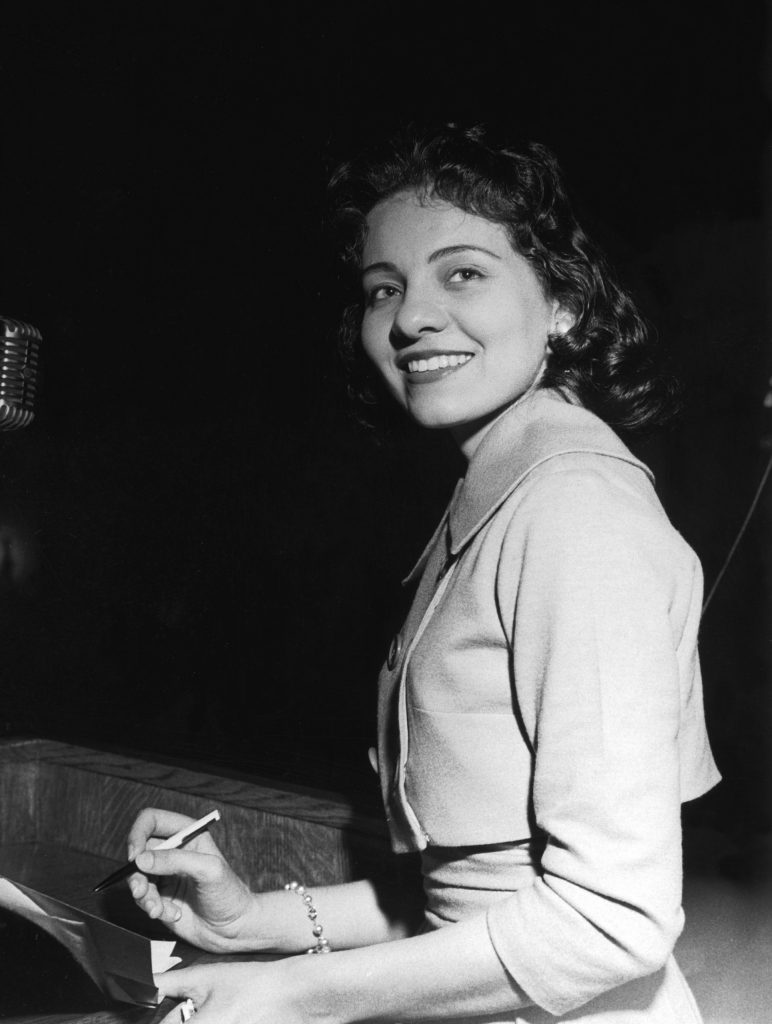
“Who the hell is Diane Nash?” Those words delivered to John Seigenthaler by Attorney General Robert Kennedy in 1961 was not just a question of query and frustration, as Freedom Riders were headed from Nashville to Birmingham, but an introduction to Diane Judith Nash, American civil rights activist, strategist, and all around force to be reckoned with. As a student at Fisk University in Nashville, TN, Ms. Nash took part in nonviolent training sessions, then became a leader in the Nashville student sit-in movement and was a founding member of SNCC. Her leadership, commitment, and courage also showed during the Freedom Rides when she insisted that the rides continue despite the violence and intimidation. In 1962, after receiving a two-year sentence for encouraging young people in nonviolent direct action, she chose to go to jail rather than accept a plea despite being four months pregnant. As she stated, “This will be a black baby born in Mississippi, and thus wherever he is born he will be in prison…If I go to jail now it may help hasten that day when my child and all children will be free.” She ended up spending ten days in prison before the judge reduced her sentence. Nash was also a key strategist for the Birmingham Campaign, the March on Washington, and the voter registration campaigns around Selma, Alabama. Continuing her fight for justice, Diane Nash built upon her civil rights movement work by actively opposing the Vietnam War, and has continued to be involved in peace movements. A long-time educator in the Chicago public schools, she has also been a strong supporter of women’s rights, and has organized around tenant and welfare rights issues.
The Coca-Cola Foundation Makes $1 Million Donation to National Center for Civil and Human Rights
ATLANTA, Jan. 24, 2019 — The Coca-Cola Foundation today announced it is making a $1 million donation to the National Center for Civil and Human Rights to allow free admission for the tens of thousands of people coming to Atlanta for the Big Game over the next few weeks. The grant will allow free admission for anyone visiting the civil rights landmark starting Monday, January 28 through the end of February. “There is no better way to celebrate this exciting moment in Atlanta’s history than to give back to our hometown,” said Helen Smith Price, President, The Coca-Cola Foundation. “We are proud of our city’s remarkable civil and human rights history and are pleased to offer residents and visitors alike the opportunity to learn more about how diversity, inclusion, and unity are central to the story of modern Atlanta.” In honor of the Martin Luther King Jr. holiday, The Coca-Cola Foundation also announced three $100,000 grants to Atlanta-area organizations dedicated to promoting Dr. King’s legacy and the cause of understanding: The Martin Luther King Jr. Center for Nonviolent Social Change; The Joseph and Evelyn Lowery Institute for Justice & Human Rights; and New American Pathways. Over the last decade, The Coca-Cola Company and The Coca-Cola Foundation have invested more than $160 million and tens of thousands of volunteer hours in support of social, economic and environmental programs throughout Atlanta, including a gift of the land where the Center for Civil and Human Rights Center now sits. In addition to serving its hometown of Atlanta, The Coca-Cola Foundation has contributed more than $1 billion to help protect the environment, promote recycling, empower women and enhance communities around the world. —– About The Coca-Cola Foundation The Coca-Cola Foundation is the global philanthropic arm of The Coca-Cola Company. Since its inception in 1984, the Foundation has awarded more than $1billion in grants to support sustainable community initiatives around the world. For more information about The Coca-Cola Foundation, please visit www.coca-colacompany.com/our-company/the-coca-cola-foundation. Learn more about free admission here
2nd Annual FedEx Free Day

The National Center for Civil and Human Rights will be FREE for all visitors on Saturday, February 2nd thanks to presenting sponsor FedEx. Explore new exhibits including The Meaning of Hope: The Best of the Morehouse College Martin Luther King, Jr. Collection and Breaking Barriers: Sports for Change. Visitors will enjoy free admission to The Center—courtesy of FedEx, engaging interactive exhibits, and riveting content. The National Center for Civil and Human Rights located in downtown Atlanta is a safe place for you to explore the fundamental rights of all human beings. Visitors leave inspired and empowered to join the ongoing dialogue about human rights in their communities. In expectation of crowds, The Center will be implementing timed ticketing for admission. Timed tickets will be available on a first come, first served. Click Here to Get Tickets Thomas Davis Meet-and-Greet Meet 14 year NFL veteran, Linebacker, 3-time Pro Bowl winner, 2014 Walter Payton NFL Man of the Year award recipient, and University of Georgia football alumnus, Thomas Davis! He will be taking photos and signing complimentary footballs for fans on Saturday!
FedEx Provides Free Admission to National Center for Civil and Human Rights Super Bowl Saturday in Atlanta
Atlanta, Ga. (January 23, 2019) – The National Center for Civil and Human Rights will host a FedEx Free Day, Saturday February 2, providing free admission to all visitors courtesy of presenting sponsor FedEx. The day before Super Bowl LIII, guests can engage with permanent and new exhibitions, including Breaking Barriers: Sports for Change, an installation in partnership with ESPN that highlights athletes’ journeys to activism and how these champions have used their sport to inspire action. Also featured, in addition to The Center’s permanent civil rights and human rights exhibits: a new MLK installation entitled, Fragments, sponsored by The Arthur M. Blank Family Foundation, The Meaning of Hope, The Best of The Morehouse College Martin Luther King, Jr. Collection, and a display of The AIDS Memorial Quilt featuring athletes from various sports. “We are thrilled to continue our collaboration with FedEx to share the meaningful experience of The Center with visitors to Atlanta during Super Bowl weekend,” said Brian Tolleson, Interim CEO of the National Center for Civil and Human Rights. “We look forward to welcoming visitors from across the globe, learning about the African American Civil Rights Movement, interacting with our new exhibitions and understanding the power athletes can generate to drive social change.” The second annual event builds on the momentum of 2018’s FedEx free day, which saw The Center’s highest attendance day ever, on April 4th, commemorating the 50th anniversary of Dr. Martin Luther King Jr.’s assassination. “FedEx is committed to celebrating the differences that make us a unique company and supporting organizations that educate and empower diverse communities,” said Shannon A. Brown, senior vice president of Air, Ground and Freight Services and chief diversity officer at FedEx Express. “Super Bowl weekend brings people from all over to a common place. As part of this special event, we are giving more museum goers the opportunity to build connections and celebrate the cultures and history that define our communities.” In expectation of crowds, the National Center for Civil and Human Rights will implement timed ticketing for admission. Timed tickets will be issued at the box office starting Saturday, February 2nd beginning at 9:00am on a first-come-first served basis. For more information, visit www.civilandhumanrights.org and click on “Plan Your Visit” —– About the National Center for Civil and Human Rights The National Center for Civil and Human Rights in downtown Atlanta is an engaging cultural attraction that connects the American Civil Rights Movement to today’s Global Human Rights Struggle. The Center features a continuously rotating exhibit from The Morehouse College Martin Luther King, Jr. Collection, which includes many of Dr. King’s documents and personal items. Visitors will be immersed in experiential exhibits through powerful and authentic stories, historic documents, compelling artifacts, and interactive activities. The Center is a source for ongoing dialogue — hosting educational forums and attracting world-renowned speakers and artists who work on a variety of human rights topics. For more information, visit www.civilandhumanrights.org. Join the conversation on civil and human rights on Twitter @Ctr4CHR and Facebook. About FedEx Corp. FedEx Corp. (NYSE: FDX) provides customers and businesses worldwide with a broad portfolio of transportation, e-commerce and business services. With annual revenues of $69 billion, the company offers integrated business solutions through operating companies competing collectively and managed collaboratively, under the respected FedEx brand. Consistently ranked among the world’s most admired and trusted employers, FedEx inspires its more than 450,000 team members to remain focused on safety, the highest ethical and professional standards and the needs of their customers and communities. To learn more about how FedEx connects people and possibilities around the world, please visit about.fedex.com. Media Contacts: Shani Drake Director of Marketing National Center for Civil and Human Rights [email protected] James Richards National Center for Civil and Human Rights [email protected] 646.789.1375 Learn more about free admission here