
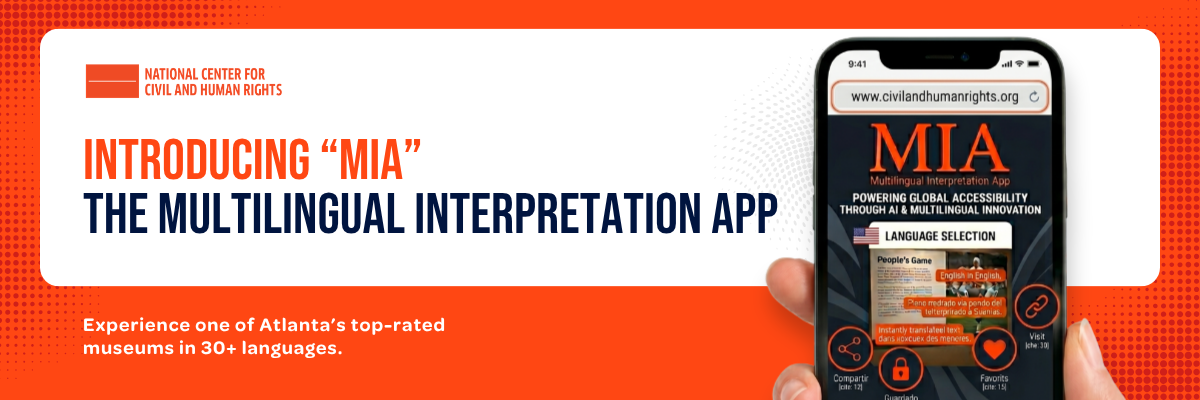
Introducing the MIA app
The National Center for Civil and Human Rights is expanding access to cultural experiences for all through MIA, a multilingual, accessible digital platform that transforms how visitors engage with exhibits and creates a more inclusive experience for people of all abilities, backgrounds, and languages.
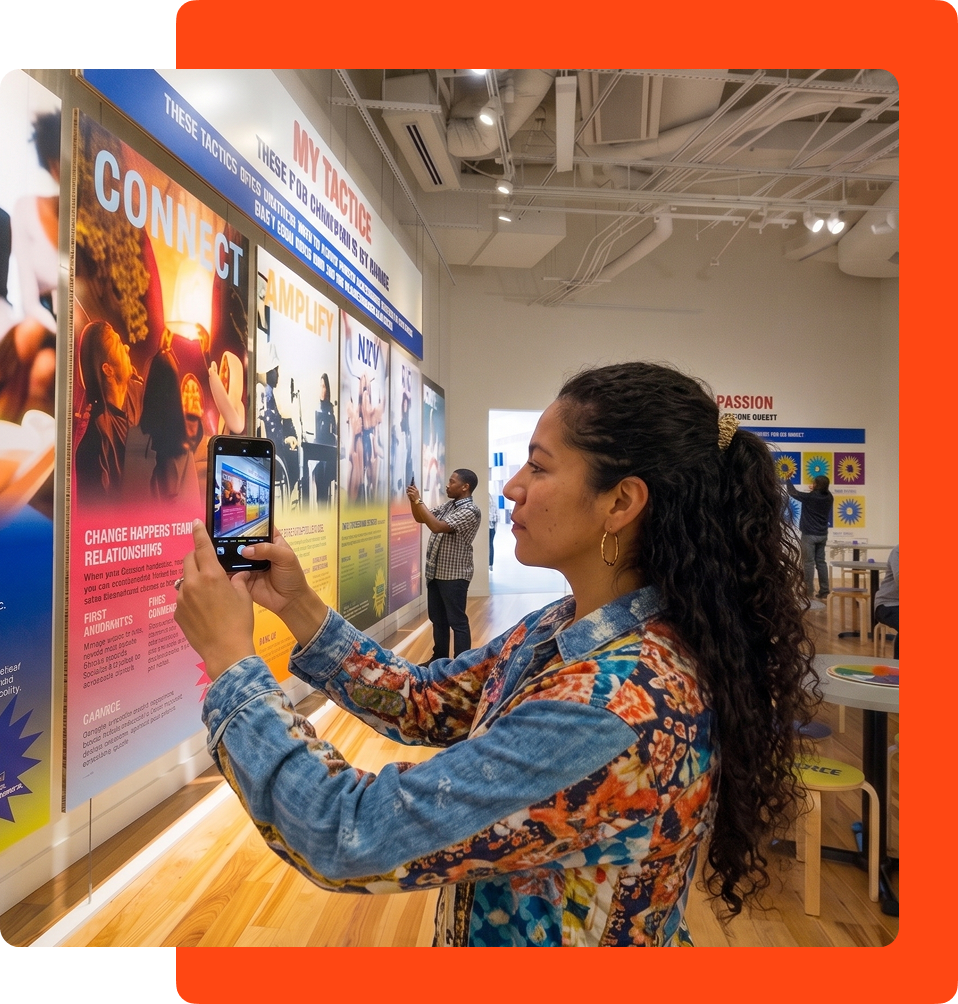
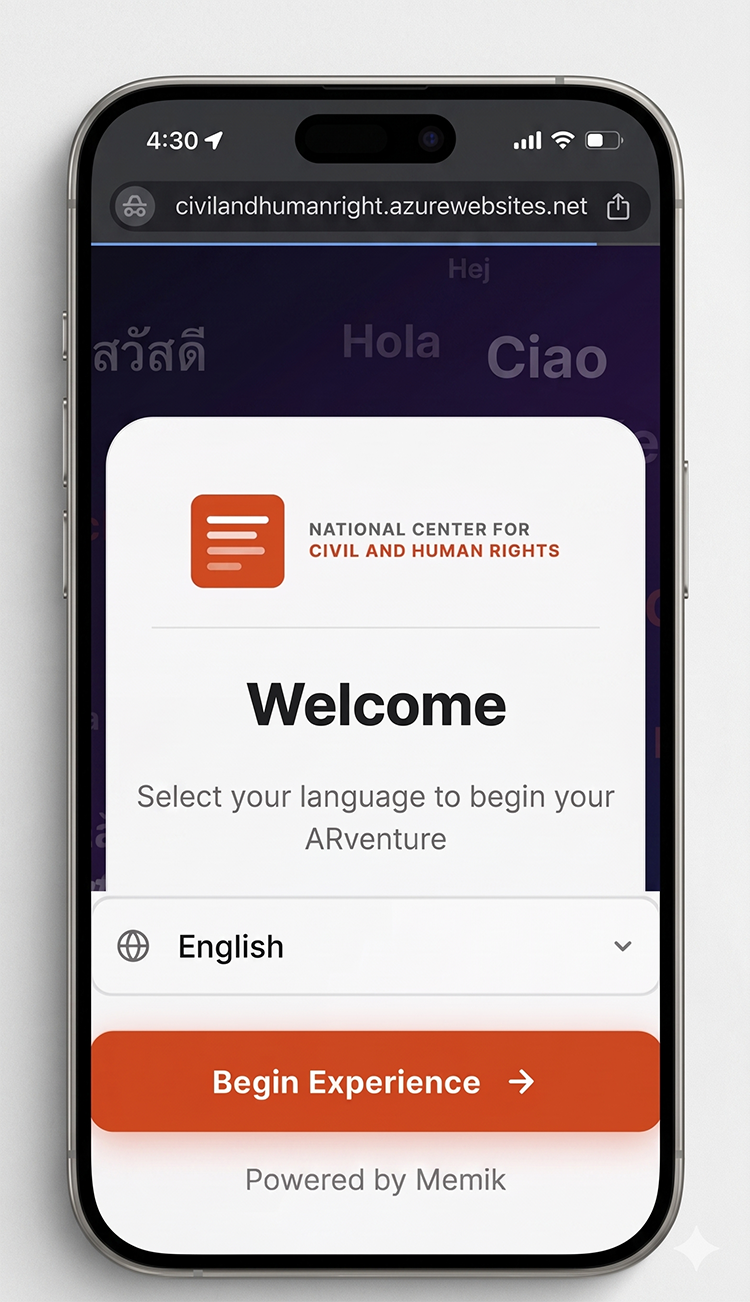
Delivered through a partnership with The Legacy Line, MIA is a web-based, mobile-first app that visitors access instantly through QR codes placed throughout the museum. By scanning exhibit photos, artifacts, or panels, visitors can select their language and explore the content through translated text and audio.
Breaking Language Barriers in Real Time
Visitors can instantly access exhibit content in more than 30 languages, ensuring a personalized and inclusive experience.
MIA allows global audiences to read or listen to content in the language they understand best, making cultural storytelling accessible across borders and communities.
How MIA Works
- Scan a QR code using your smartphone
- Select your preferred language
- Instantly explore exhibit content through text or audio
Frequently Asked Questions
What is the MIA app?
MIA is a multilingual, accessible, web-based app that allows visitors to explore exhibit content through translated text and audio. It is designed to remove language and accessibility barriers and create a more inclusive museum experience for visitors of all abilities and backgrounds.
What languages does MIA support?
MIA supports more than 30 languages, allowing visitors to read or listen to exhibit content in the language they understand best. This helps ensure a personalized and inclusive experience for global audiences.
How does MIA improve accessibility?
MIA addresses common access barriers by providing multilingual text and audio content through visitors’ own devices. It helps support visitors who are non-English speakers, Deaf or hard of hearing, have visual impairments, or benefit from flexible digital access.
How do visitors use MIA in the museum?
Visitors scan QR codes placed throughout the museum on exhibit panels, photographs, or artifacts, then select their language to instantly explore translated content in text or audio. The experience is seamless and intuitive.