
National Center for Civil and Human Rights Advances Digital Transformation with Support from Bloomberg Philanthropies

Atlanta, GA – The National Center for Civil and Human Rights announced today the successful expansion of its digital capabilities through its participation in Bloomberg Philanthropies’ Digital Accelerator for Arts and Culture, a global initiative supporting nonprofit cultural organizations in strengthening technology, leadership, and operational capacity. Developed with the support of Bloomberg Philanthropies’ Digital Accelerator for Arts and Culture, this project enabled the Center to revitalize its website and improve how audiences engage with its mission, programs, and exhibitions. As part of the program, the Center invested in upgraded digital tools and strategies that enhance visitor experience, expand audience reach, increase fundraising potential, and support long-term sustainability. For the National Center for Civil and Human Rights, these improvements aligned closely with a period of renewal and reopening, ensuring that its digital platforms reflect the strength and relevance of its physical spaces. In addition to internal improvements, the program emphasizes the development of best practices that can be shared across a global network of nonprofit cultural organizations. Through collaboration with peer institutions, the Center contributed to and benefited from shared learning that strengthens the broader cultural sector. Participation in the Bloomberg Philanthropies Digital Accelerator reinforces the National Center for Civil and Human Rights’ commitment to innovation, accessibility, and impact, ensuring that its stories and educational resources continue to reach diverse audiences locally and globally. About Bloomberg Philanthropies Bloomberg Philanthropies invests in 700 cities and 150 countries worldwide to ensure better, longer lives for the greatest number of people. The organization focuses on the Arts, Education, Environment, Government Innovation, and Public Health. In 2023, Bloomberg Philanthropies distributed $3 billion. Learn more at bloomberg.org. About the National Center for Civil and Human Rights The National Center for Civil and Human Rights is a museum and cultural organization that inspires the changemaker in each of us. Opened in 2014, the Center connects US civil rights history to global human rights movements today. Our experiences highlight people who have worked to protect rights and who model how individuals create positive change. For more information, visit civilandhumanrights.org. Follow us on Facebook, TikTok, Instagram, YouTube, and LinkedIn @civilandhumanrights. Media Contact: Tenisha Griggs, Interim Vice President of Marketing & Communications [email protected]
National Center for Civil and Human Rights to Honor Dr. Martin Luther King, Jr. With Free Admission Day and MLK Day Programming
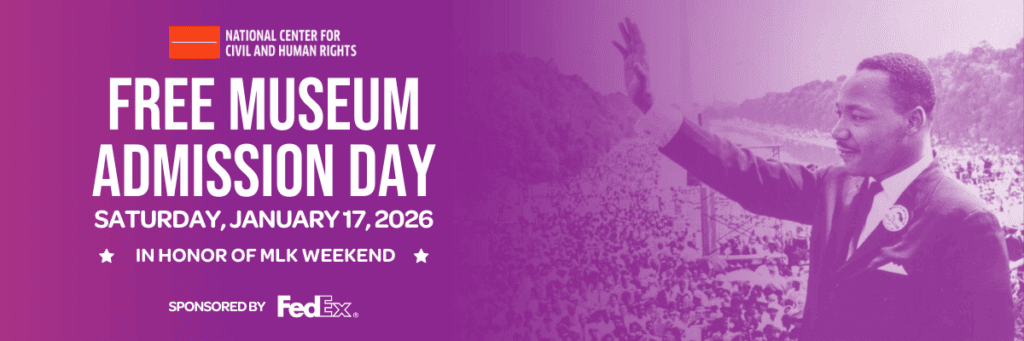
Atlanta, GA – The National Center for Civil and Human Rights will honor the life and legacy of Dr. Martin Luther King, Jr. through two special offerings in January 2026: a Free Admission Day presented by FedEx on Saturday, January 17, and MLK Day programming on Monday, January 19, featuring family-friendly activities and opportunities for reflection, learning, and engagement. On Saturday, January 17, the Center will host Free Admission Day, presented by FedEx, offering guests the opportunity to explore the Center’s exhibitions at no cost. Tickets for Free Admission Day are available on a first-come, first-served basis, and advance reservations are strongly encouraged. On Monday, January 19, the Center will observe MLK Day at the Center, a day dedicated to honoring Dr. King’s enduring impact through exhibitions and interactive, family-friendly programming. Visitors of all ages are invited to engage in activities designed to connect Dr. King’s legacy to today’s ongoing work for civil and human rights, encouraging reflection, dialogue, and action. “We are proud to honor Dr. King’s legacy by creating space for reflection, education, and civic engagement,” said Quisa D. Foster, Ed.D., Chief Development Officer at the National Center for Civil and Human Rights. “Through our Free Admission Day, we are inviting the community to engage deeply with Dr. King’s work and the responsibility it calls us to today.” FedEx Free Admission Day is presented as part of an ongoing sponsorship supporting accessibility and community engagement at the Center. For more information about Free Admission Day on January 17, visit here, and for MLK Day programming on January 19, visit here. About the National Center for Civil and Human Rights The National Center for Civil and Human Rights is a museum and cultural organization that inspires the changemaker in each of us. Opened in 2014, the Center connects US civil rights history to global human rights movements today. Our experiences highlight people who have worked to protect rights and who model how individuals create positive change. For more information, visit civilandhumanrights.org. Follow us on Facebook, Twitter, Instagram @civilandhumanrights and LinkedIn at linkedin.com/company/ncchr.
New Reconstruction Era Exhibition Shows How Reform and Resistance Have Shaped U.S. Civil Rights
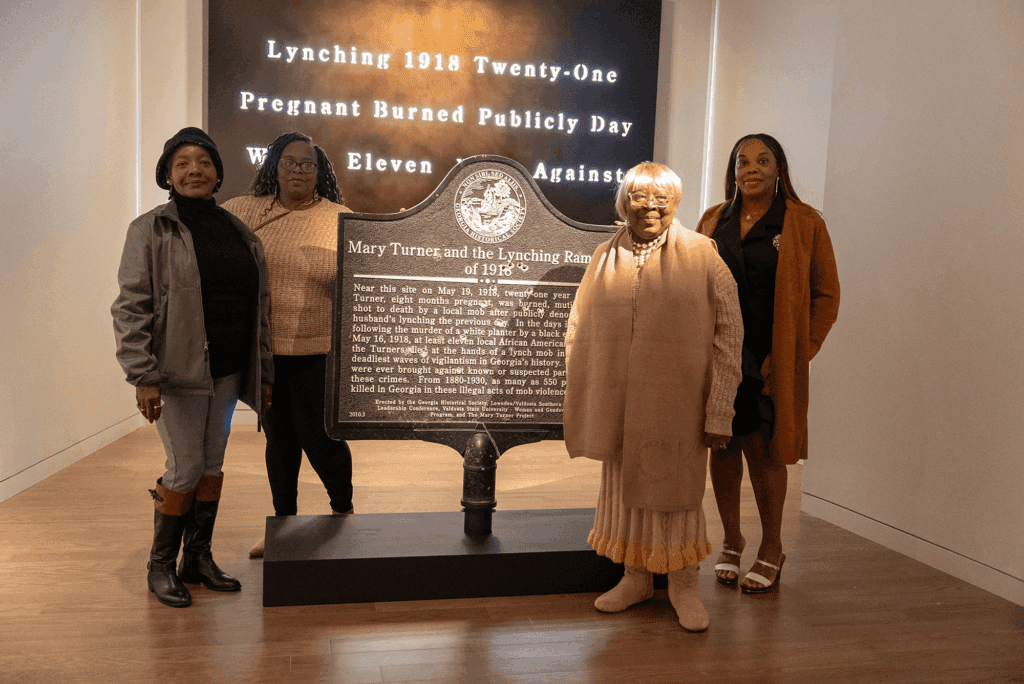
National Center for Civil and Human Rights Unveils Broken Promises Gallery “Guided” by Ida B. Wells The National Center for Civil and Human Rights’ new gallery, “Broken Promises,” is a permanent exhibit on Reconstruction—the period after the Civil War and Emancipation when America first attempted to build a multi-racial democracy. The Center invites people to experience the new gallery which opens to the public today, December 5, 2025, as part of the Center’s $58 million expansion. The gallery presents Black progress during the Reconstruction Era, when nearly four million newly freed Black Americans claimed their rights as citizens, voted, won elected office, created schools, and reshaped economic and civic life across the South. It also presents the violent backlash that met and then suppressed those gains — through racial terror, political disenfranchisement, and Jim Crow legal segregation. “Reconstruction reminds us that the expansion of rights in America has never moved in a straight line. Every reform toward wider freedom has been accompanied by efforts to limit those rights,” said Jill Savitt, the CEO of the Center. “Recognizing that pattern helps us understand the forces that have long shaped America, up until today.” Curated by the Center’s Chief Program Officer, Kama Pierce, the gallery has anti-lynching crusader Ida B. Wells as its “docent,” and focuses on three cities — Wilmington, N.C., Atlanta, Ga., and Tulsa, Okla. In each city, Black achievement provoked white backlash that resulted in massacres and racial terror. The immersive gallery contains artifacts from the Without Sanctuary Collection, including a fragment of a noose and photographs of lynchings that were turned into postcards for entertainment. The artifacts deepen visitors’ understanding of how racial terror was wielded as a strategy. The gallery’s memorial space features a historical marker honoring Mary Turner, who was lynched in 1918. Turner’s family erected the public marker to honor her — but it was consistently defaced. The family donated the marker — marred by 11 bullet holes — to the Center. Artist Lonnie Holley has interpreted the marker in the gallery’s memorial space. “The Mary Turner marker is a powerful artifact that bears witness twice — first to the original terror, and again to the present resistance to let the truth be told,” said Pierce. The Center decided to add a gallery on Reconstruction because the era has not always been fully or accurately represented in American classrooms. The Center also wanted to provide more context for its signature gallery on the Civil Rights Movement. “After Reconstruction, the United States entered a decades-long period of Jim Crow segregation and unequal protection for Black Americans,” said Pierce. “The Civil Rights Movement emerged not as a new struggle, but as a renewed demand to enforce the promises first made during Reconstruction.” The Center received a $2 million grant from the Mellon Foundation for the exhibition. About the National Center for Civil and Human Rights The National Center for Civil and Human Rights is a museum and cultural organization that inspires the changemaker in each of us. Opened in 2014, the Center connects US civil rights history to global human rights movements today. Our experiences highlight people who have worked to protect rights and who model how individuals create positive change. For more information, visit civilandhumanrights.org. Follow us on Facebook, Twitter, Instagram @civilandhumanrights and LinkedIn at linkedin.com/company/ncchr. ### Media Contact: Tenisha Griggs, Senior Director, Marketing [email protected]
The National Center for Civil and Human Rights to Reopen November 8 with Major Expansion and New Exhibits
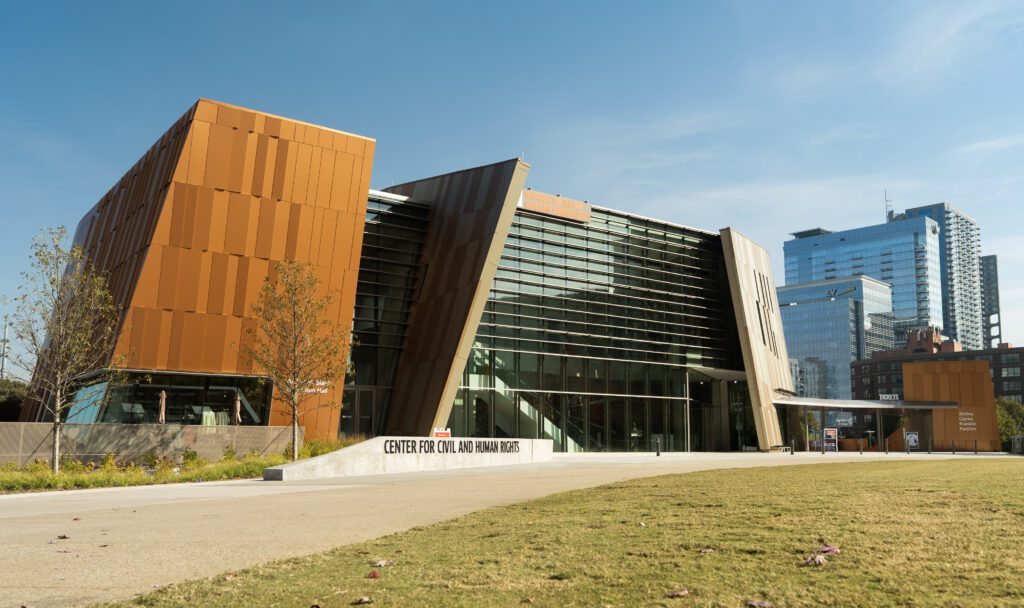
ATLANTA—The National Center for Civil and Human Rights reopens November 8, 2025 after a $57.9 million expansion adding 24,000 sq. ft., six new galleries, three classrooms, flexible event and meeting spaces, and interactive experiences that connect history to today. Highlights include the updated “Rolls Down Like Water,” a reimagined Morehouse College Martin Luther King, Jr. Collection, “Everyone. Everywhere.” global human rights gallery, the Action Lab, Reconstruction-era “Broken Promises,” and the children’s “Change Agent Adventure.” New wings—Shirley Clarke Franklin Pavilion and Arthur M. Blank Inspiration Hall—offer skyline views and venue options. Reserve reopening-day tickets or purchase memberships now at civilandhumanrights.org; event bookings available for 2025–26.
The National Center for Civil and Human Rights Welcomes Three New Board Members, Expanding Leadership at a Pivotal Time
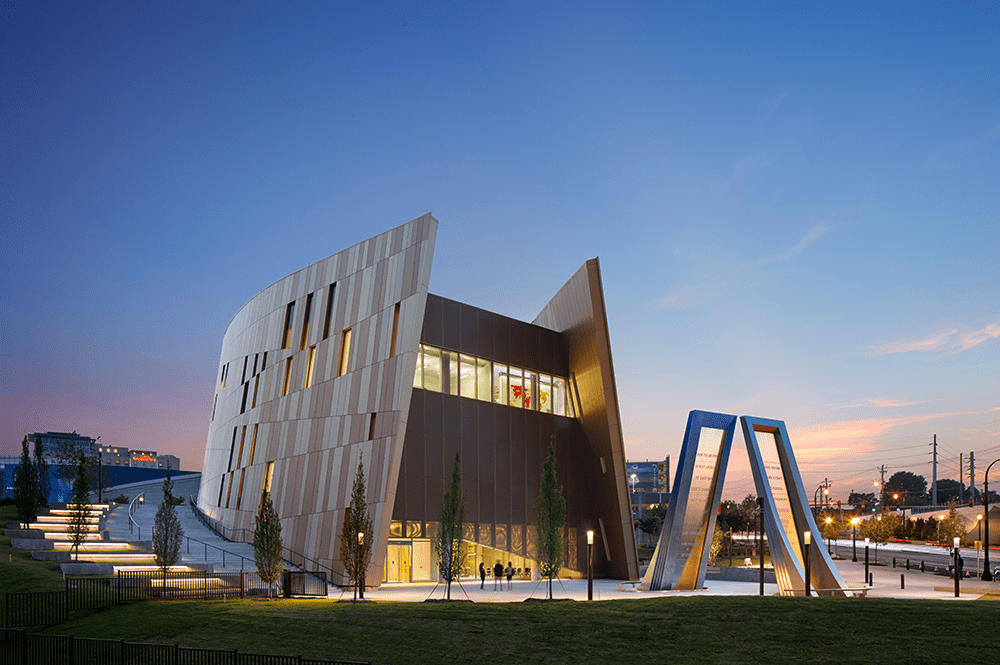
ATLANTA (May 29, 2025) – The National Center for Civil and Human Rights is proud to announce the addition of three distinguished professionals to its Board of Directors, deepening the organization’s strategic capacity in operations, marketing, and community engagement. Joining the Center’s board are: · Nikki Tinsley Harland, Chief Operating Officer of Paradies Lagardère · Verónica Maldonado-Torres, President and CEO of the Georgia Hispanic Chamber of Commerce · Ivan Shammas, Founder and CEO of Hispanic Plug “These new members add to the skills and expertise of our already outstanding Board of Directors,” said Jill Savitt, the Center’s President and CEO. “As the Center prepares to reopen its expanded space and reimagined galleries, our Board of Directors provides leadership that supports the Center’s mission and impact.” Currently under construction, the Center is undergoing a transformative 24,000-square-foot expansion that includes two new wings. These will feature immersive new galleries, classrooms, flexible meeting spaces, and a café—all designed to extend the institution’s educational reach and cultural influence. The Center is set to reopen in Fall 2025. As part of this expansion, the Center is honoring visionary leadership through the naming of its two new wings. The Shirley Clarke Franklin Pavilion, named for the Center’s founding force and former Mayor of Atlanta, will anchor the east wing and serve as a central space for educational programming and community engagement. On the west side, the Arthur M. Blank Inspiration Hall will house three new galleries, including a Special Exhibitions Gallery, a gallery dedicated to the Reconstruction Era, and the Change Agents Headquarters—an interactive, family-friendly gallery experience designed to inspire the next generation of changemakers. Board Chair Egbert Perry, Chairman and CEO of The Integral Group, LLC, and Vice Chair AJ Robinson, President of Central Atlanta Progress, continue to guide the Center’s strategic vision. Board members serve two three-year terms. Board Member Biographies Nikki Tinsley Harland is an accomplished executive with a career spanning leadership roles at Old Navy, the Atlanta Braves, Turner Broadcasting, and Babies “R” Us. She holds a BA in Psychology from Spelman College and an MBA in Marketing from Clark Atlanta University. Harland is deeply involved in civic life, serving on the boards of Children’s Healthcare of Atlanta and The Girl Scouts of Greater Atlanta. She was recently honored as a Georgia TITAN 100 (2025) and received the Airport Experience News Outstanding Woman In Leadership-Operations (2024) award. Verónica Maldonado-Torres has led the Georgia Hispanic Chamber of Commerce through a period of major expansion since 2021. Recognized by Georgia Trend as one of the 100 Most Influential Georgians of 2024, she also serves on the boards of the American Heart Association and The Assembly CID in DeKalb County. Her leadership has brought greater visibility and resources to Hispanic businesses across Georgia, especially in underserved regions. Ivan Shammas is a trailblazer in multicultural media and marketing. As Founder and CEO of Hispanic Plug, he brings more than 25 years of experience in revenue management, operations, and communications. Shammas previously led Univision Atlanta and North Carolina and now supports several nonprofit boards, including The Same House and Cristo Rey Atlanta. About the National Center for Civil and Human Rights The National Center for Civil and Human Rights is a museum and cultural organization that inspires the changemaker in each of us. Founded in 2014, NCCHR connects the US civil rights movement of the 1950s and 1960s to global human rights movements around the world. Its immersive and empathy-building experiences highlight people who have worked to protect rights and model how individuals create positive change. Follow us on Facebook, Twitter, Instagram @ctr4chr, and LinkedIn at linkedin.com/company/ncchr.
The New Reality for DEI Leaders in 2025: Challenges and the Path Forward
In 2025, the landscape of diversity, equity, and inclusion (DEI) has changed dramatically. Once a central pillar of organizational culture and social responsibility, DEI initiatives are now under intense scrutiny and pressure. Legislative pushback, a shifting political climate, and corporate realignment have forced DEI professionals to adapt quickly—or risk seeing years of progress undone. For those charged with leading inclusive culture efforts, the challenges are both complex and urgent. Below are the 10 key concerns facing today’s DEI leaders and why strategic resilience is more critical than ever. Erosion of Former DEI Initiatives Following President Trump’s re-election in 2024, many companies and educational institutions have scaled back or eliminated DEI programs altogether. This rollback raises serious concerns about the long-term viability of diversity and inclusion efforts, particularly those undertaken in response to past public pressure rather than embedded cultural values. Legislative Restrictions Several states have passed legislation that restricts or outright bans DEI efforts in public institutions. Georgia’s House Bill 127, for example, seeks to ban DEI programs in public schools and higher education, sending a chilling message to professionals working in these spaces and leaving many to navigate uncertain legal terrain. Legal Challenges and Compliance The legal landscape surrounding DEI has become increasingly murky. Judicial decisions have begun to question the legality of affirmative action and identity-based programming, forcing organizations to revise their policies to comply with rapidly changing law while still striving for equity. Lack of Executive Support A recent Gartner survey confirmed what many DEI professionals already know: the primary challenge in the field today is the lack of support from senior leadership. Without executive champions, DEI strategies often stall, underfunded and underprioritized. Resource Constraints Even among organizations still committed to inclusion work, limited budgets and staffing are persistent obstacles. DEI teams—often composed of one or two people—are expected to lead large-scale cultural change with minimal resources. Resistance to Change Whether subtle or overt, resistance from employees continues to undermine DEI initiatives. Some feel threatened by change, while others are skeptical of DEI’s value. Addressing this pushback requires strong communication strategies, leadership modeling, and a culture of trust. Balancing Legal and Reporting Obligations Professionals in the DEI space must now walk a tightrope: staying compliant with shifting laws while maintaining transparency with stakeholders who expect impact reporting. Striking this balance is critical for credibility, accountability, and long-term success. Retention of Underrepresented Groups Hiring diverse talent is no longer enough—retaining that talent is the true challenge. Without addressing systemic issues within workplace culture, underrepresented employees may feel unsupported and leave, undoing progress toward workforce equity. Measurement and Accountability Developing meaningful metrics that go beyond surface-level diversity stats remains an ongoing challenge. DEI leaders must define success clearly and work to embed accountability across all levels of the organization. Adapting to Political Climate Shifts With DEI increasingly politicized, professionals must stay agile. Strategies that worked in previous years may now attract legal or political backlash. Navigating these shifts while staying grounded in core equity values is essential. Conclusion: Progress Under Pressure Addressing these challenges requires professionals to be strategic, adaptable, and resilient, ensuring that efforts to improve organizational culture continue to progress despite external pressures. At the National Center for Civil and Human Rights, we’re committed to helping organizations meet this moment through our Culture Connections program—an adaptable, dialogue-based learning experience grounded in history, empathy, and practical strategies. In Q1 of 2025, the most requested modules from our partners include: The Significance of Acceptance Cross-Generational Differences Navigating Challenging Conversations Cultivating Psychological Safety Cultivating Inclusive Behaviors The Business Case for Creating a Positive Organizational Culture Explore our course offerings and curriculum updates here. Ready to bring this learning to your team? Email our team at [email protected] or schedule a discovery call to explore how Culture Connections can support your work in 2025 and beyond.
Artists as History Trackers: Using Art to Tell the Stories That Matter
By: Daniel Fuller, Director of Curation At the National Center for Civil and Human Rights, we’re dedicated to telling stories rooted in struggle, resistance, dignity, and hope. One of the most powerful ways we do that is through art. Artists are, and always have been, history trackers. They capture the emotional temperature of a moment, the psychological impact of injustice, and the tension between what is and what could be. Their work can whisper or scream, hold contradictions, and ask questions many are afraid to pose. For an institution like ours, this kind of work is invaluable. Art offers an entry point. It invites people in, often when history itself is hard to face. It creates a different kind of learning space—one that’s experiential, reflective, and emotional. A sculpture can make visible the weight of labor. A painting can tell a story the textbooks left out. An installation can recreate the feeling of displacement, protest, or hope. When we show contemporary work in a history museum, we’re not just illustrating the past—we’re showing how the past lives on in the present. We’re giving space to artists who are continuing the legacy of civil rights through their practice. We’re saying that the story didn’t end in 1965. It’s still unfolding. This shift—from curating what’s new to curating what remembers—has reshaped how I think about my work. And more importantly, it’s expanded the ways our museum can connect with our community. We can still teach history. But we can also feel it. We can still honor the past. But we can also amplify the artists who keep it vitally relevant to the present. We can still tell the truth, but now we can do it in more ways: through image, gesture, beauty, pain, and everything in between. Art doesn’t just illustrate history. It carries it. And that’s why it belongs here.
NCCHR Announces Truth-Telling Fellowship Microgrant Winners
Atlanta, Georgia – The National Center for Civil and Human Rights is proud to announce the recipients of the Truth-Telling Fellowship Microgrant, a program dedicated to truth-telling, memorialization, and community healing in Georgia. Focused on the historical and ongoing impacts of forced labor, convict leasing, and criminal justice, this fellowship provides critical support to individuals working to uncover history and foster meaningful dialogue. Along with mentorship and guidance, each fellow will receive a microgrant of $1,000–$2,500 to develop community-centered projects, including memorials, public events, and educational initiatives. Through these efforts, the fellowship aims to uplift historically silenced stories and inspire collective action for justice. “These fellows are doing the crucial work of uncovering hard truths and fostering spaces for reflection, healing, and change,” said Darrin Sims, director of the Truth + Transformation program. “We’re proud to support their efforts and excited to see the impact of their projects.” For more information and to meet the Truth-Telling Fellowship winners, visit here. About the Truth + Transformation program NCCHR’s Truth + Transformation program works to uncover Atlanta’s suppressed legacy of racial terror, forced labor, and systemic racism. They aim to build a nuanced understanding of systematic disenfranchisement, centering individual narratives (historic and current) and convening practitioners to lay the groundwork for effective community mobilization. Visit their website at civilandhumanrights.org/tandt About the National Center for Civil and Human Rights The National Center for Civil and Human Rights is a museum and cultural organization that inspires the changemaker in each of us. Founded in 2014, the Center connects the US civil rights movement of the 1950s and 1960s to global human rights movements for the rights of people of color, women, immigrants, people with disabilities, LGBTQ+ people, and more. Our experiences highlight people who have worked to protect rights and who model how individuals create positive change. For more information, visit our website at civilandhumanrights.org. Follow us on Facebook, Twitter, Instagram @ctr4chr, and LinkedIn at linkedin.com/company/ncchr. Media Contact: Tenisha Griggs Senior Marketing Director National Center for Civil and Human Rights [email protected]
The National Center for Civil and Human Rights Announces Partnership with Norfolk Southern
Media Contact: Tenisha Griggs Senior Director, Marketing National Center for Civil and Human Rights [email protected] ATLANTA (March 14, 2025) – The National Center for Civil and Human Rights announced a new partnership with Norfolk Southern Corporation, reinforcing a shared commitment to advancing education, human dignity, and civil rights. Norfolk Southern has pledged $500,000 to support the Center’s two-wing expansion, helping to broaden its national impact as a leading cultural institution for civil and human rights education and engagement. Norfolk Southern’s gift secures naming for the Freedom Room, one of three new classrooms in the Center’s Shirley Clarke Franklin Pavilion, the new wing on the Center’s east side. The Center is currently closed for construction as it undergoes its 24,000-square-foot expansion, which includes new galleries, educational spaces, and interactive experiences designed to connect history to the present. This Center is scheduled to reopen this Fall with a celebratory ribbon-cutting event. “We were founded to help people understand history’s relevance in our present time, and Norfolk Southern’s commitment allows us to bring that mission to life in meaningful new ways,” said Jill Savitt, CEO of the National Center for Civil and Human Rights. “Our partnership with Norfolk Southern ensures that the Center will be an even more powerful space for education, dialogue, and action — one that prepares people to become engaged within their communities.” Norfolk Southern has been a longstanding partner of the Center, focused on strategic philanthropy that drives meaningful impact and plays a vital role in expanding the Center’s capacity to educate and inspire action. “At Norfolk Southern, we believe in the power of community, education, and advocacy,” said Kristin Wong, Norfolk Southern Community Impact Director. “Our partnership with the National Center for Civil and Human Rights reflects that commitment. We look forward to seeing how these enhanced spaces will inspire visitors and deepen the understanding of civil rights history.” Transforming the Future of Human Rights Education In addition to three new classrooms, the Center’s expansion fulfills its founders’ original vision of spaces that immerse visitors in civil and human rights history while equipping them to take meaningful action. Other new spaces include: Dynamic classrooms – Three advanced learning spaces, including the Freedom Room. Hands-on experiences – An Activation Lab where visitors create personalized civic engagement plans. Collaborative spaces – 5,000+ square feet for community discussions and training. Immersive exhibits – A Family Gallery to inspire young changemakers, a Reconstruction-era display titled “Broken Promises,” and a Special Exhibitions Gallery for rotating collections. The Power of Partnership in Creating Change The National Center for Civil and Human Rights exists to inspire the changemaker in each of us. Through partnerships like this, the Center continues to evolve from a beloved Atlanta landmark into a national institution dedicated to education, training, and community engagement. “If the arc of the moral universe is going to bend toward justice, we must pull together,” added Savitt. “These partnerships — these commitments — are what drive our mission forward and ensure that the Center remains a powerful force for truth, transformation, and progress.” About Norfolk Southern Since 1827, Norfolk Southern Corporation (NYSE: NSC) and its predecessor companies have safely moved the goods and materials that drive the U.S. economy. Today, it operates a 22-state freight transportation network. Committed to furthering sustainability, Norfolk Southern helps its customers avoid approximately 15 million tons of yearly carbon emissions by shipping via rail. Its dedicated team members deliver approximately 7 million carloads annually, from agriculture to consumer goods. Norfolk Southern also has the most extensive intermodal network in the eastern U.S. It serves a majority of the country’s population and manufacturing base, with connections to every major container port on the Atlantic coast as well as major ports across the Gulf Coast and Great Lakes. Learn more by visiting www.NorfolkSouthern.com. About the National Center for Civil and Human Rights The National Center for Civil and Human Rights is a museum and cultural organization that inspires the changemaker in each of us. Founded in 2014, the Center connects the US civil rights movement of the 1950s and 1960s to global human rights movements for the rights of people of color, women, immigrants, people with disabilities, LGBTQ+ people, and more. Our experiences highlight people who have worked to protect rights and who model how individuals create positive change. For more information, visit our website at civilandhumanrights.org. Follow us on Facebook, Twitter, Instagram @ctr4chr, and LinkedIn at linkedin.com/company/ncchr.
NCCHR Names New Wing for Former Mayor Shirley Franklin
Contact: Tenisha Griggs Senior Marketing Director National Center for Civil and Human Rights [email protected] ATLANTA (February 27, 2025) – The National Center for Civil and Human Rights (NCCHR) will name one of its new wings for its visionary founder, former Mayor Shirley Clarke Franklin. NCCHR surprised the former mayor with this announcement on Thursday, February 27, 2025, as part of its Power to Inspire dinner, where Franklin was honored for her lifetime of leadership. Franklin was the Chair of NCCHR’s board of directors since its inception until January 2024. The annual Power to Inspire event celebrates those who have made a significant contribution to protecting the rights of others. The new Shirley Clarke Franklin Pavilion, on the building’s east side, will provide 5,000 square feet of flexible meeting space for classrooms, performances, and events. The wing’s roof will accommodate a new ticketing booth and outdoor event space. “Mayor Franklin’s commitment to education and the relevance of history in our lives today will now be memorialized on our building,” said Jill Savitt, NCCHR’s president and CEO. “This expansion fulfills her original vision and celebrates her commitment to human rights and dignity.” Egbert Perry, NCCHR’s Board Chair and Chairperson and CEO of The Integral Group, LLC, said: “Leading the acquisition of the Morehouse College Collection of Martin Luther King, Jr. Papers, which are displayed at the Center for all of us to study, is an enduring part of Mayor Franklin’s legacy. She had the foresight to create a place where we can learn about the history of rights in America.” The expansion is a $56.6 million project. To date, NCCHR has raised $53.8 million, leaving $2.8 million to raise. The facility is currently closed for construction and will reopen in Fall 2025. During its temporary closure, NCCHR will continue to host programs in the community and pursue its educational work with schools. The other new wing, on the west side of the building, will be named for Arthur M. Blank, as has been previously announced. That wing will be called Arthur M. Blank Inspiration Hall. It will house a café and three new galleries: A Family Gallery for children under 12, designed as a Change Agents Headquarters, will feature immersive, hands-on experiences to inspire interest in rights and justice for a new generation. A gallery that tells the history of the Reconstruction Era and its legacy, called Broken Promises, will include artifacts from the Without Sanctuary collection. A Special Exhibitions Gallery will host rotating, traveling, and temporary exhibitions. Enhancements to the current building will include: A reimagined gallery that displays selected artifacts from the Morehouse College Martin Luther King, Jr. Collection. A new Activation Lab for visitors to reflect on how to tap their power to protect rights and make positive changes in their communities. Expansion of popular installations such as the lunch counter sit-in experience. Updates to the permanent civil and human rights exhibits. The 20,000-square-foot expansion will bring the total size of the building to 62,000 square feet. About the National Center for Civil and Human Rights NCCHR is a museum and cultural organization that inspires the changemaker in each of us. Founded in 2014, NCCHR connects the US civil rights movement of the 1950s and 1960s to global human rights movements for the rights of people of color, women, immigrants, people with disabilities, LGBTQ+ people, and more. Our experiences highlight people who have worked to protect rights and who model how individuals create positive change. For more information, visit our website at civilandhumanrights.org. Follow us on Facebook, Twitter, Instagram, @ctr4chr, and LinkedIn at linkedin.com/company/ncchr.