
The Enduring Legacy of Eleanor Roosevelt

Few have done more to promote human dignity and globalize the modern conception of human rights than Eleanor Roosevelt. Her life is a testament to the power of moral courage, public service, and unwavering persistence to transform history. This Women’s History Month at the National Center for Civil and Human Rights, we honor Roosevelt by exploring her pivotal role in shaping modern human rights—and showing why her legacy continues to inspire. From Public Advocate to Global Leader Eleanor Roosevelt transformed the traditionally ornamental role of First Lady into one of active civic engagement. She held press conferences, wrote a daily newspaper column, and traveled the country to witness the realities Americans faced. She used her lofty platform to champion the rights of workers, women, and communities subjected to discrimination. After President Franklin D. Roosevelt’s passing, Eleanor expanded her influence on the world stage. Appointed by President Truman as a delegate to the United Nations, she chaired the committee that drafted the Universal Declaration of Human Rights. Adopted in 1948, this landmark document owes much to her determination, vision, and skillful leadership in guiding it through intense debate and political tension. Defining Modern Human Rights Roosevelt’s work on the Universal Declaration of Human Rights forever linked her to global human rights leadership. The document set a universal standard: all people are born free and equal in dignity and rights. It affirmed essential protections—freedom of speech, freedom of religion, and the right to education and work, for example—that continue to shape societies worldwide. As Roosevelt famously said, human rights begin in “small places, close to home.” Her vision connected international agreements to daily life, carrying human rights from the realm of abstraction to the places we inhabit every day–our schools, workplaces, communities, even our homes. Why Her Legacy Endures Today’s conversations about freedom, equality, and justice stand on the foundation Eleanor Roosevelt helped lay. Her example inspires ongoing efforts, advocacy, and legal protections in the pursuit of human rights. Roosevelt reminds us that progress demands persistence, dialogue, and an enduring belief in our shared humanity. In the Global Human Rights gallery at the National Center for Civil and Human Rights, you can learn more about Eleanor Roosevelt’s extraordinary legacy and consider how her work shapes today’s world. This Women’s History Month, we invite you to reflect on her story—and how each of us can help protect and advance human rights in our own communities. Sources: Biography: Eleanor Roosevelt Eleanor Roosevelt Biography – FDR Presidential Library & Museum Eleanor Roosevelt | Biography, Human Rights, Accomplishments, & Facts | Britannica
How Ida B. Wells Used Journalism to Fight Racial Violence

When considering major figures in civil rights education and the struggle for human dignity, Ida B. Wells has few peers. Wells was a pioneering 19th-century investigative journalist, suffragist, and anti-lynching crusader who used her writing to expose racial terror in the Jim Crow South. Her life story shows how truth and courage can challenge injustice, even when systems are determined to hide it. This Women’s History Month at the National Center for Civil and Human Rights, we honor Ida B. Wells and invite you to explore her legacy in our Broken Promises: The Legacy of Reconstruction gallery as part of our commitment to connecting history to the present. A Life Shaped by Freedom and Struggle Born into slavery in 1862 in Holly Springs, Mississippi, Ida B. Wells came of age during the transition from enslavement to freedom. These were years of both great possibility and fierce resistance to Black citizenship and rights. Orphaned by yellow fever as a teenager, Wells became a teacher to support her siblings. These early challenges forged her belief that knowledge and truth are essential tools for justice. Journalism as Resistance Wells emerged as one of the era’s most courageous investigative journalists. In Memphis, she co-owned and edited The Memphis Free Speech, boldly using her platform to uncover and denounce racial violence and injustice. Her unflinching reports on lynching shattered the myths used to excuse racial terror and brought hard evidence to the center of national discourse. In 1895, her landmark exposé, A Red Record, laid bare the widespread and systemic reality of lynchings across the United States. Her activism came at great personal risk. After a mob destroyed her newspaper office, she continued her work in Chicago and traveled to England to raise international awareness of racial violence in America. Fighting for Women’s Rights and Community Wells understood that gender and racial justice are inseparable. She co-founded Chicago’s Alpha Suffrage Club—the city’s first Black women’s suffrage organization—empowering African American women to vote and make their voices heard. Her leadership in the struggle to expand both racial and women’s rights demonstrated that movements for justice must include all voices, especially those marginalized by race and gender. Beyond journalism and suffrage, Wells co-founded organizations such as the Negro Fellowship League, which provided resources to Black migrants during the Great Migration. Her work showed that civil rights education and civic engagement strengthen both community and democracy. Lessons from Ida B. Wells Wells’s life reminds us that civil rights education means more than learning facts—it calls us to see injustice clearly and act. Her commitment to truth and equality resonates in our work today at the National Center for Civil and Human Rights, where history guides us in understanding present-day inequalities and inspires collective action. As you visit the museum this Women’s History Month, we hope Ida B. Wells’s story inspires you to reflect on how knowledge sparks change and how each of us can use our voice to fight for justice. Sources: National Women’s History Museum Ida B. Wells Society League of Women Voters of Chicago WTTW
New Reconstruction Era Exhibition Shows How Reform and Resistance Have Shaped U.S. Civil Rights
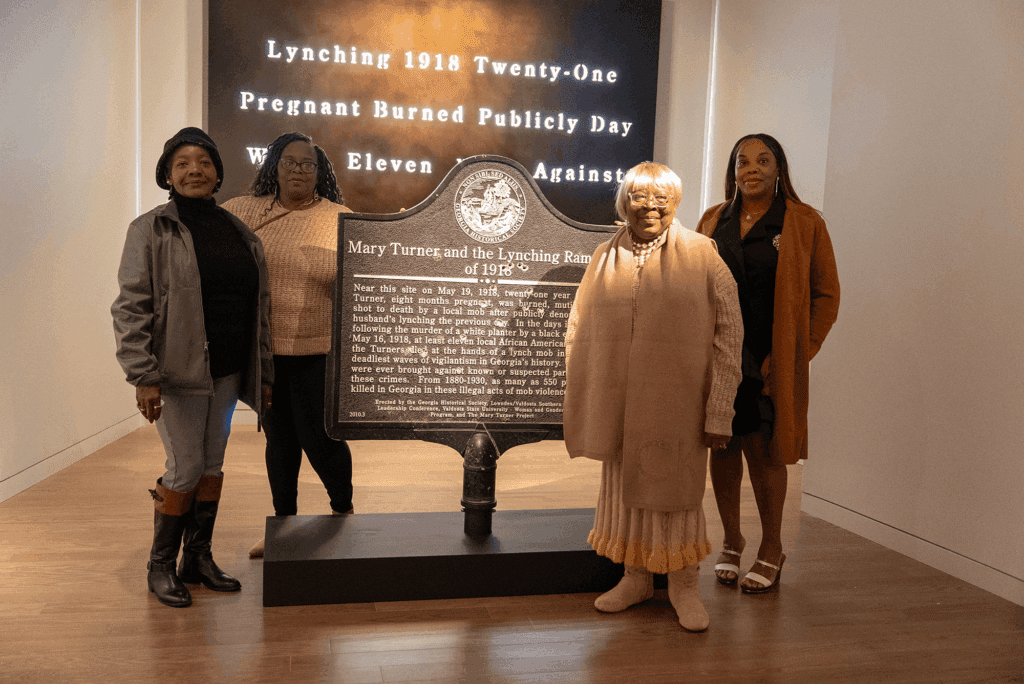
National Center for Civil and Human Rights Unveils Broken Promises Gallery “Guided” by Ida B. Wells The National Center for Civil and Human Rights’ new gallery, “Broken Promises,” is a permanent exhibit on Reconstruction—the period after the Civil War and Emancipation when America first attempted to build a multi-racial democracy. The Center invites people to experience the new gallery which opens to the public today, December 5, 2025, as part of the Center’s $58 million expansion. The gallery presents Black progress during the Reconstruction Era, when nearly four million newly freed Black Americans claimed their rights as citizens, voted, won elected office, created schools, and reshaped economic and civic life across the South. It also presents the violent backlash that met and then suppressed those gains — through racial terror, political disenfranchisement, and Jim Crow legal segregation. “Reconstruction reminds us that the expansion of rights in America has never moved in a straight line. Every reform toward wider freedom has been accompanied by efforts to limit those rights,” said Jill Savitt, the CEO of the Center. “Recognizing that pattern helps us understand the forces that have long shaped America, up until today.” Curated by the Center’s Chief Program Officer, Kama Pierce, the gallery has anti-lynching crusader Ida B. Wells as its “docent,” and focuses on three cities — Wilmington, N.C., Atlanta, Ga., and Tulsa, Okla. In each city, Black achievement provoked white backlash that resulted in massacres and racial terror. The immersive gallery contains artifacts from the Without Sanctuary Collection, including a fragment of a noose and photographs of lynchings that were turned into postcards for entertainment. The artifacts deepen visitors’ understanding of how racial terror was wielded as a strategy. The gallery’s memorial space features a historical marker honoring Mary Turner, who was lynched in 1918. Turner’s family erected the public marker to honor her — but it was consistently defaced. The family donated the marker — marred by 11 bullet holes — to the Center. Artist Lonnie Holley has interpreted the marker in the gallery’s memorial space. “The Mary Turner marker is a powerful artifact that bears witness twice — first to the original terror, and again to the present resistance to let the truth be told,” said Pierce. The Center decided to add a gallery on Reconstruction because the era has not always been fully or accurately represented in American classrooms. The Center also wanted to provide more context for its signature gallery on the Civil Rights Movement. “After Reconstruction, the United States entered a decades-long period of Jim Crow segregation and unequal protection for Black Americans,” said Pierce. “The Civil Rights Movement emerged not as a new struggle, but as a renewed demand to enforce the promises first made during Reconstruction.” The Center received a $2 million grant from the Mellon Foundation for the exhibition. About the National Center for Civil and Human Rights The National Center for Civil and Human Rights is a museum and cultural organization that inspires the changemaker in each of us. Opened in 2014, the Center connects US civil rights history to global human rights movements today. Our experiences highlight people who have worked to protect rights and who model how individuals create positive change. For more information, visit civilandhumanrights.org. Follow us on Facebook, Twitter, Instagram @civilandhumanrights and LinkedIn at linkedin.com/company/ncchr. ### Media Contact: Tenisha Griggs, Senior Director, Marketing [email protected]
A Memorable Reopening

From left to right: Mayor Andre Dickens, Board Member Ed Potter, CEO Jill Savitt, Board Member W. Imara Canady, philanthropist Arthur M. Blank, former Mayor Shirley C. Franklin, Board Member Egbert Perry, Board Member AJ Robinson, Board Member Michelle Moorehead, Board Member Katie FahsPhoto by Sam Nunez, courtesy of Juneau Construction Company The National Center for Civil and Human Rights welcomed supporters, partners, and community members for a ribbon cutting that marked the reopening of the expanded Center. The morning carried a sense of pride as people gathered to watch the ribbon fall and the doors open once again. Arthur M. Blank, former Mayor Shirley Clarke Franklin, Mayor Andre Dickens, Board Chair Egbert Perry, Co Chair AJ Robinson, CEO Jill Savitt, and Juneau Construction CEO Nancy Juneau stood together at the entrance before cutting the ribbon. Students from CJ Hicks Elementary began the ceremony with a thoughtful performance that set the tone for the day. Jill Savitt spoke about the meaning of the moment. “This Center was built to show how history speaks to the present,” she said. “These new spaces give people room to reflect, learn, and take part in shaping what comes next.” Shirley Clarke Franklin reflected on the Center’s journey. “When we opened the Center, we wanted history to live in the present,” she said. “Seeing it reopen even stronger shows that Atlanta’s commitment to truth and justice continues.” Mayor Andre Dickens shared the city’s support. “This ribbon cutting shows what progress looks like,” he said. “This project brings people together, and it strengthens the spirit of our city.” Opening Day: Welcoming the Community Back Inside Four days later, the Center held its Opening Day celebration. Guests of all ages explored the new and reimagined galleries, including the signature Lunch Counter experience. Families, students, and longtime supporters moved through the building at their own pace, taking time to absorb the stories and voices that shape the Center’s work. Giyawen Mata, an all-female African drum and dance troupe, welcomed guests with a moving performance. Their presence gave the day a sense of reflection and joy. Photos of them performing in the main lobby captured the spirit of the event: open, warm, and grounded in community. The day also featured music from V-103 with Big Tigger broadcasting live, drawing visitors from across the city and filling the plaza with steady energy. Looking Ahead The coming year will bring a full calendar of programs, conversations, and community gatherings. The expanded spaces will allow for student groups, public events, and new opportunities for people to explore stories that shape our shared life. If you have not yet visited, now is the time. Walk through the galleries. Sit at the Lunch Counter. Spend a few moments with Dr. King’s papers. Experience the reimagined installations that show where we have been and where we are going. We invite you to plan your visit and be part of this next chapter. The doors are open, and there is much to see.
The National Center for Civil and Human Rights to Reopen November 8 with Major Expansion and New Exhibits
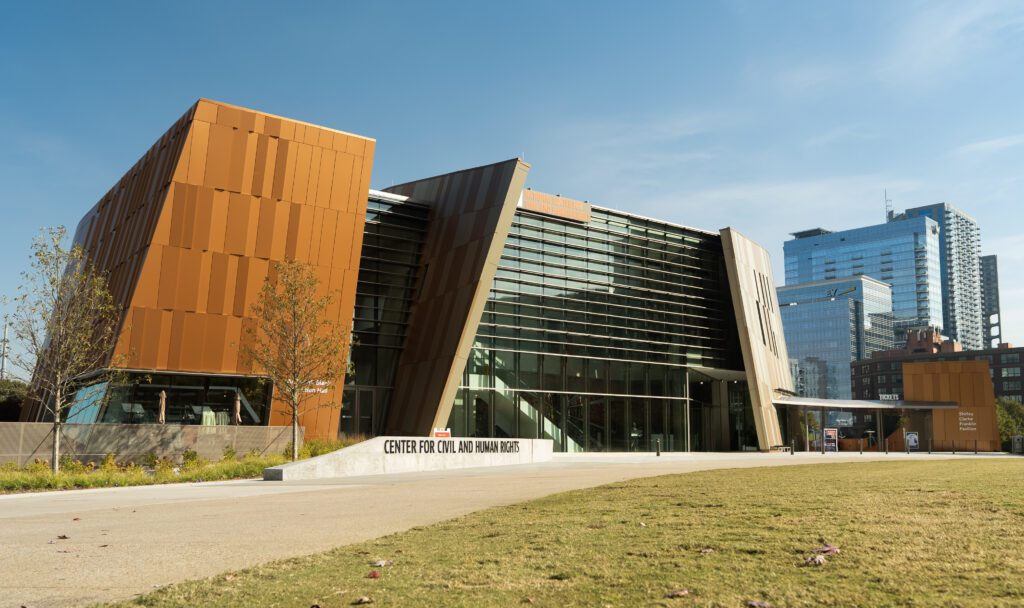
ATLANTA—The National Center for Civil and Human Rights reopens November 8, 2025 after a $57.9 million expansion adding 24,000 sq. ft., six new galleries, three classrooms, flexible event and meeting spaces, and interactive experiences that connect history to today. Highlights include the updated “Rolls Down Like Water,” a reimagined Morehouse College Martin Luther King, Jr. Collection, “Everyone. Everywhere.” global human rights gallery, the Action Lab, Reconstruction-era “Broken Promises,” and the children’s “Change Agent Adventure.” New wings—Shirley Clarke Franklin Pavilion and Arthur M. Blank Inspiration Hall—offer skyline views and venue options. Reserve reopening-day tickets or purchase memberships now at civilandhumanrights.org; event bookings available for 2025–26.
The National Center for Civil and Human Rights to Unveil Commemorative Mural Honoring the1906 Atlanta Race Massacre
ATLANTA (September 22, 2025) – The National Center for Civil and Human Rights invites the public to the unveiling of a new mural by Atlanta-based artist Fabian Williams, created to honor the victims and survivors of the 1906 Atlanta Race Massacre. The event, which marks the 119th anniversary of the massacre, will take place on Saturday, September 27, 2025, from 2:00 to 4:00 PM at Focused Community Strategies, 1297 McDonough Blvd SE, Atlanta, GA 30315. The mural, installed in Historic South Atlanta—once known as Brownsville—commemorates a pivotal yet often overlooked chapter in Atlanta’s history. On September 24, 1906, violence against Black residents erupted across the city. In Brownsville, community members organized to defend themselves, and leaders like Luther J. Price stood as symbols of resistance. The mural honors their courage and resilience while calling Atlanta to remember, reflect, and commit to justice today. “History is not only what we preserve inside museum walls. By bringing this mural to South Atlanta, we are affirming that truth belongs in the open—where families gather and where community members can reflect. It reminds us that healing begins when we face history together,” said Kama Pierce, Chief Program Officer at the National Center for Civil and Human Rights. The commemoration will also feature 1906, an immersive mobile app that uses augmented reality to bring the history of the massacre to life. Developed with Emblematic Group, Agog, and a team of storytellers and producers, the app presents first-hand accounts from the time—including the testimony of early 20th-century journalist Jesse Max Barber—making this history accessible to audiences everywhere. The event will include community tables, interactive demonstrations of the 1906 app, remarks from muralist Fabian Williams and Center staff, and a ribbon-cutting ceremony. A community step show will close the program. Event Details What: 119th Commemoration of the 1906 Atlanta Race Massacre – Mural Unveiling and XR App Launch When: Saturday, September 27, 2025 – 2:00–4:00 PM ET 2–3 PM: Community tables and XR app demos (iPads provided) 3 PM: Remarks, mural unveiling, ribbon cutting Closing: Community step show Where: Focused Community Strategies, 1297 McDonough Blvd SE, Atlanta, GA 30315 A Timely Reopening The Center is currently closed as it undergoes a 24,000-square-foot expansion that includes new galleries, classrooms, and interactive experiences connecting history to the present. The museum reopens to the public on November 8, 2025. About the National Center for Civil and Human Rights The National Center for Civil and Human Rights is a museum and cultural organization that inspires the changemaker in each of us. Opened in 2014, the Center connects the history of civil rights in America to the global human rights movement around the world today. Our exhibitions highlight people who have worked to protect rights and who model how individuals create positive change. For more information, visit our website at civilandhumanrights.org. Follow us on Facebook, Twitter, Instagram @ctr4chr, and LinkedIn at linkedin.com/company/ncchr. Media Contact: Tenisha Griggs Senior Director, Marketing [email protected]
In the Headlines: A Powerful First Look

Last week, the Center welcomed national and local press for an exclusive preview of our newly expanded space. Reporters toured reimagined galleries, experienced new exhibitions, and got a first look at what’s ahead this November. The response was powerful. As we prepare to reopen, we’re giving our community first access. Pre-sale tickets for reopening day are now available. Space is limited, so we encourage you to reserve your spot today. Buy tickets now › The press captured the energy, emotion, and significance of this next chapter. Here’s what they had to say. AJC Atlanta Journal Constitution | Expanded museum hopes to tell nation’s ‘real story’ 11Alive | Look inside expansion at Atlanta’s National Center for Civil and Human Rights | 11alive.com ABC News | https://abcnews.go.com/US/wireStory/national-center-civil-human-rights-expands-critical-moment-1255… AP Associated Press | Atlanta’s civil rights museum expands amid tensions in US | AP News Atlanta Business Chronicle | National Center for Civil and Human Rights sets reopening date – Atlanta Business Chronicle Bozeman Daily Chronicle | The National Center for Civil and Human Rights expands at a critical moment in U.S. history | Assoc… CBS National News | National civil rights museum expanding. Unlike Smithsonian, Trump has no immediate sway over its co… Joplin Globe | The National Center for Civil and Human Rights expands at a critical moment in US history | Nationa… Microsoft Bing | Media Coverage Of National Center For Civil And Human Rights – Search News MSN | The National Center for Civil and Human Rights expands at a critical moment in US history The Grio | The National Center for Civil and Human Rights expands at a critical moment in US history The Independent/UK | The National Center for Civil and Human Rights expands at a critical moment in U.S. history | The I… US News | The National Center for Civil and Human Rights Expands at a Critical Moment in US History WSB-TV | Get a sneak peek at the renovated National Center for Civil and Human Rights WABE | The National Center for Civil and Human Rights expands at a critical moment in US history – WABE WKGT | The National Center for Civil and Human Rights expands at a critical moment in US history – KGET 17… Yahoo News Canada | The National Center for Civil and Human Rights expands at a critical moment in US history Newsday | The National Center for Civil and Human Rights expands at a critical moment in US history – Newsday Georgia Public Broadcasting | The National Center for Civil and Human Rights expands at a critical moment in U.S. history | Georg… WFTV9 | The National Center for Civil and Human Rights expands at a critical moment in US history – WFTV Times Union | The National Center for Civil and Human Rights expands at a critical moment in US history The Daily Gazette | The National Center for Civil and Human Rights expands at a critical moment in US history | Nationa… The Daily Journal | The National Center for Civil and Human Rights expands at a critical moment in US history | Nationa… The Morning Call | National Center for Civil and Human Rights expands at critical moment Click on Detroit | The National Center for Civil and Human Rights expands at a critical moment in US history Saporta Report | Expanded Civil Rights center reaffirms Atlanta’s role in the movement – SaportaReport UATL.com | National Center for Civil and Human Rights to reopen after $57M expansion Ground News | The National Center for Civil and Human Rights Expands at a Critical Moment in U.S. History CBS 17 | The National Center for Civil and Human Rights expands at a critical moment in US history The Daily Star | The National Center for Civil and Human Rights Expands at a Critical Moment in U.S. History WKRG | The National Center for Civil and Human Rights Expands at a Critical Moment in U.S. History Click to Houston | The National Center for Civil and Human Rights Expands at a Critical Moment in U.S. History Fox 21 News Colorado | The National Center for Civil and Human Rights Expands at a Critical Moment in U.S. History CBS 42 | The National Center for Civil and Human Rights Expands at a Critical Moment in U.S. History WJHL | The National Center for Civil and Human Rights Expands at a Critical Moment in U.S. History Watermark Out News | The National Center for Civil and Human Rights Expands at a Critical Moment in U.S. History Daily Oregon Journal of Commerce | Atlanta civil rights museum expands with new galleries
The Fight for Equality: Past, Present, and Future of LGBTQ+ Rights
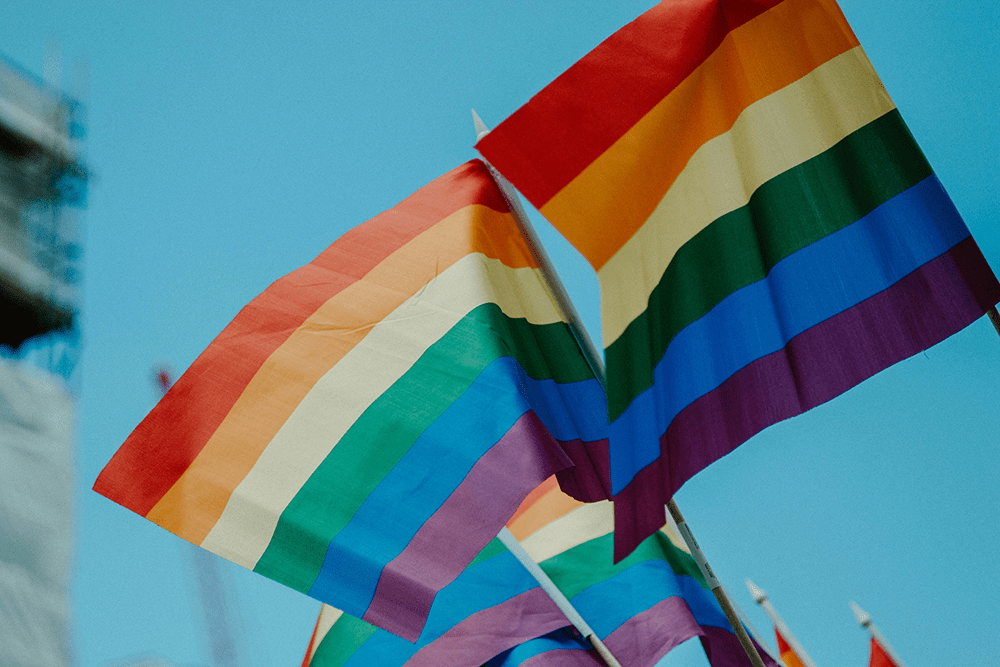
Each June, as rainbow flags fly and communities come together in celebration, Pride Month serves as both a joyful tribute to love and identity—and a solemn reminder of the ongoing struggle for equality. The journey of LGBTQ+ rights in the United States is one of courage, resilience, and relentless advocacy. Looking Back: A Legacy of Resistance and Change The modern LGBTQ+ rights movement was galvanized by the Stonewall Uprising in 1969, a pivotal moment when LGBTQ+ patrons of the Stonewall Inn in New York City stood up to police harassment. What began as a spontaneous act of resistance grew into a nationwide push for civil rights. Over the decades, activists have fought hard-won battles—from the declassification of homosexuality as a mental disorder by the American Psychiatric Association in 1973, to the repeal of “Don’t Ask, Don’t Tell” in 2011, to the landmark Supreme Court ruling in 2015 that granted marriage equality nationwide. Each of these milestones was a step toward greater acceptance and legal protection. The Present: Visibility, Victories, and Setbacks Today, LGBTQ+ individuals have greater visibility in media, politics, and business than ever before. From openly queer elected officials to inclusive advertising campaigns, progress is undeniable. Yet, this visibility has also been met with increasing backlash. In recent years, state legislatures have introduced and passed laws that target transgender youth, restrict gender-affirming care, and limit discussions of LGBTQ+ topics in schools. Hate crimes, especially against transgender people of color, remain disturbingly high. These challenges highlight the fragile nature of progress—and the need for continued vigilance and action. Looking Ahead: Equality for All The fight for LGBTQ+ rights is far from over. True equality means more than legal protections; it means ensuring LGBTQ+ people of all ages, races, genders, and socioeconomic backgrounds can live safely, authentically, and with dignity. Key areas that demand attention include expanding anti-discrimination protections at the federal level, ensuring inclusive healthcare access, protecting LGBTQ+ youth in schools, and fostering environments where coming out isn’t just safe, but celebrated. The future of the movement must be intersectional, recognizing how race, gender identity, disability, and class intersect with queer identities. Take Action: Walk with Pride, Run with Purpose One powerful way to show your support this Pride Month is by participating in the 2025 AIDS Walk Atlanta Music Festival & 5K Run. This event raises critical funds for HIV and AIDS service organizations. While HIV and AIDS have fallen out of the spotlight in recent years, the epidemic is far from over. There are almost 40,000 people living with AIDS in Atlanta alone. Join thousands of advocates and allies as we honor those we’ve lost, celebrate the progress that’s been achieved, and recommit to the work ahead. Register or donate today: https://www.aidswalkatlanta.org/
The Center’s LGBTQ Institute Executive Director, Ryan Roemerman on PRIDE Month
“Today, I had the opportunity to provide the keynote speech at the Georgia Diversity Council’s LGBTQ+ Unity Summit. This year’s theme was “Pride Unites: Reigniting Allyship through Unity, Equity and Inclusion” The event was hosted at Inspire Brands and included C-Suite and diversity, equity, and inclusion officers at various companies. My speech made several connections around allyship, the diversity of our movement, the importance of history, and the need for everyone to have access to it. It also focused on businesses and what they can do beyond pride month. As we move into pride celebrations, I am happy to share my speech with you. I hope that the words inspire you and that you have the opportunity to reflect and then take action to end racism and anti-LGBTQ hate.” Ryan Roemerman LGBTQ Institute Executive Director National Center for Civil and Human Rights _________________________________________________________________________ In the early hours of June 28, 1969, the Stonewall Inn was raided by police. Police harassment was a common occurrence at gay clubs and patrons were fed up. On this night, police raided the New York City bar and harassed and assaulted some 200 queer folks. The raid sparked a riot among bar patrons and police leading to six days of protests. Two trans women of color, Marsha P. Johnson and Sylvia Rivera helped lead a group of bold and brave queer people who together, changed history.[1] In 2016, President Obama designated the site of the uprising as a national monument. As a student of stonewall, this history-changing event serves as a reminder that the movement for equity for queer people and communities of color has always been intertwined and that the work is far from over. As Coretta Scott King said, “Struggle is a never-ending process. Freedom is never really won, you earn it and win it in every generation” If there was any doubt about this fact, look no further than the racist and anti-LGBTQ bills that have been introduced in state legislatures across this country. It is why celebrating pride is important–it helps pave the way for more people to see themselves in full color—to see that they are not alone. It’s why I want to talk about allyship, the diversity of our movement and the importance of history, and the need for everyone to have access to it. The visibility of LGBTQ people and the history that pride presents is a lifeline for many young people especially. Consequently, a growing number of LGBTQ people come out earlier. This year, a Gallup study found that “The proportion of U.S. adults who consider themselves to be LGBT has grown at a faster pace over the past year than in prior years… With one in 10 millennials and one in five Gen Z members identifying as LGBT.” There are still many young people, however, who are not out. For some, it would mean being ostracized, harassed, beaten, or sent into “conversion therapy”–an attempt to change a person’s sexual orientation, gender identity, or gender expression. From a very young age, many understand that who they are is not acceptable to their families or communities. I knew of no one in my childhood who thought being gay was okay. Not one. We place so much value, and rightly so, on the quality of the childhood experience. Our children are our future. When they are born they are helpless. We tend to them to make sure that they are well fed and cared for. And we teach them. We teach them to eat, to read, to love. And sometimes, we teach them to hate. They watch us. They listen to us. They listen to what we say and don’t say. We aren’t born knowing how to hate, we learn it. That is why we must not only teach people not to hate–by being mindful of and willing to explore and understand our own biases and beliefs, but we all must come out. Not just LGBTQ people. But our straight allies must come out as well. Our liberation is tied to each other and because of that, lifelong learning is required. Education is liberation. Understanding others, being willing to listen to someone else’s story, and meeting them where they allow you to welcome the stranger who can become a friend and ally. Reigniting allyship requires a willingness to understand and learn from others and their experiences. If education is liberation, then a key lesson is knowing your history. But even that is now being debated. We have seen this in the manufactured debate around critical race theory. CRT is taught in law schools and higher education courses and explores how racism has shaped public policy. It’s a theory that’s been around since the 70s. It’s not taught in K-12 schools. Nevertheless, according to reporting by ABC News, conservative activists and reporters began amplifying reports that it was being taught in K-12 schools. This was part of a larger effort with one of the leading activists detailing: “We will eventually turn it toxic, as we put all of the various cultural insanities under that brand category. The goal is to have the public read something crazy in the newspaper and immediately think ‘critical race theory.’” Many researchers say this effort to attack education on race and diversity has worked. We have all seen the waves of legislation and debate. Evidence that the term CRT had become toxic was seen in a Monmouth University survey in November 2021. They found only 43% of respondents supported CRT. But when respondents were asked if they supported the idea of education on race, 75% of respondents indicated they were in favor.[2] As one education historian said in Education Week, a k-12 education news journal, “The culture wars are always, at some level, battled out within schools..they’re talking in the language of school and school curriculum—That’s the vocabulary, but the actual grammar is anxiety about shifting social power relations.”[3] Our history is being held hostage by those clinging to power. The chaos these laws
Creating The Change They Wish to See: LGBTQ Artists & Their Activism

by Sam Landis October is LGBTQ+ History Month, the intersection of two things I love – my LGBTQ+ community and history. In the LGBTQ+ community, we do not grow up learning our history in the U.S. Only a handful of states include it in their public school curriculums. This erasure of our existence is linked to the loneliness many LGBTQ+ people feel when coming of age. This is a time when we find we are different from our peers. We would benefit from historical examples to look to, yet school curriculums lack stories that mirror our own experiences. As far as most middle and high school history textbooks go, we do not exist. Even in the arts, a centuries-long refuge for LGBTQ+ individuals, where I found my profession as a graphic designer. For example, as I write this, I am listening to Tschaikowsky—whom I recently learned struggled with his own male desire. Textbook authors who withheld the story deny us the full picture of his life. To divorce his life and music from his sexuality not only erases part of his identity, but detracts from the meaning you can find in his art. As I listen to Tschaikowsky’s music now, I can feel that internal struggle he must have faced as a Queer person in the 19th century. We live in a moment when Pride is more mainstream than ever. Fortune 500 companies sponsor pride celebrations. Stores like Target stock up on rainbow merchandise leading into June. LGBTQ+ representation has expanded on TV, particularly in the last two decades, from early shows like The L-Word and Queer as Folk to Pose and Orange is the New Black. More shows center LGBTQ+ characters. Cis-centric shows with LGBTQ+ characters depict their relationships more fully, and ideas like marriage equality are established. During LGBTQ+ History Month, we must remember that a few decades ago, words like “gay” and “homosexual” were used only in hushed tones, if at all. Yet despite the stigma, there were some courageous enough to use their art to share their own queerness and activism with the world. Whether you are an LGBTQ+ person, an ally, or just someone curious to learn more about our beautiful community, my hope is to reveal the resilience of LGBTQ people as seen through the LGBTQ artists I have chosen to highlight. Frida Kahlo Like many artists, Frida Kahlo was far ahead of her time and was not appreciated in her life like she is revered now. Looking at Khalo’s work I’m captivated by her ability to speak to the intersections of her multitude of identities and experiences. Kahlo was the child of a German immigrant (her father) and indigenous Mexican (her mother). She was disabled for most of her life after an accident as a teenager when a steel bar went through her pelvis. She was a socialist/communist and workers’ rights activist. Khalo was also a women’s rights advocate, and—an LGBTQ icon. Kahlo had relationships with men and women, many iconic in their own right. They included her husband, muralist Diego Rivera, exiled political theorist Leon Trotsky, painter Georgia O’Keeffe, and photographer Nickolas Muray. She also experimented with her own gender identity and gender expression as documented in photographs and her self-portraits. These self-portraits reveal her interior world. As Frida says, “I am my own muse. I am the subject I know best. The subject I want to better.” Through her brutally honest art, we see themes from her life and issues she championed: her indigenous heritage, her disability, addiction, class and race issues of the time, as well as conflicts of love and identity. To learn more about Frida Kahlo and see her work visit: artsandculture.google.com/partner/museo-frida-kahlo Gilbert Baker In 1978, Gilbert Baker conceived of a new symbol to represent the LGBTQ community, the rainbow flag, first displayed at San Francisco’s 1978 Gay Freedom Day Parade. The rainbow flag is a symbol our community still proudly uses today, with new interpretations being made throughout the years. “A rainbow flag was a conscious choice, natural and necessary. The rainbow came from the earliest history as a symbol of hope… a rainbow flag would be our modern alternative to the pink triangle.” – Gilbert Baker Baker’s original flag included eight colored stripes, each with its own symbolic meaning: Pink – Sex, Red – Life, Orange – Healing, Yellow – The Sun, Green – Nature, Turquoise – Art & Magic, Blue – Serenity, and Purple – The Spirit. The pink and turquoise stripes were later dropped due to the cost of dye for those colors, resulting in the better-known six-color design usually seen today. That first year, Baker secured $1,000 to create two flags. The funds were spent on 1,000 yards of muslin, 58 inches wide, 10 pounds of natural dye in eight colors, 100 pounds of salt and ash, and the rest was for art supplies. “The real connection to the public happens with confrontation at the boundaries of fear. Art is like a gun that way.” A lifelong activist, Gilbert Baker participated in protests against the Vietnam War, supported marijuana legalization efforts, and was involved in the gay-rights movement. Baker combined his gifts in the arts with his commitment to justice, using a range of mediums including sewing, painting, design, and performance. This fusion of mediums shine in Baker’s humorously satirical performance art collaborations with the Sisters of Perpetual Indulgence. The Sisters “use humor and wit to expose the forces of bigotry” and have raised millions of dollars for AIDS and LGBTQ+ causes since 1979. Baker continued creating innovative protest art until his death in 2017, but it is the rainbow flag that is his lasting legacy. “It was his gift to the world, he told me when the flag first went up that he knew at that moment it was his life’s work.” – Cleve Jones (The Founder of The AIDS Quilt) speaking about his friend to the New York Times after his death. To learn more about Gilbert Baker and his work visit: glbthistory.org/gilbert-baker Keith Haring “Art should be something that liberates your soul, provokes the imagination and encourages people to go further.” Keith Haring was a popular artist in the 1980’s and 90’s whose imaginative visual style captured the interest of a broad audience from art collectors to kids. Haring believed that art should be for